Merck (MRK) Sees a Minor Drop: Unlocking the Upside Potential in a Stable Uptrend?
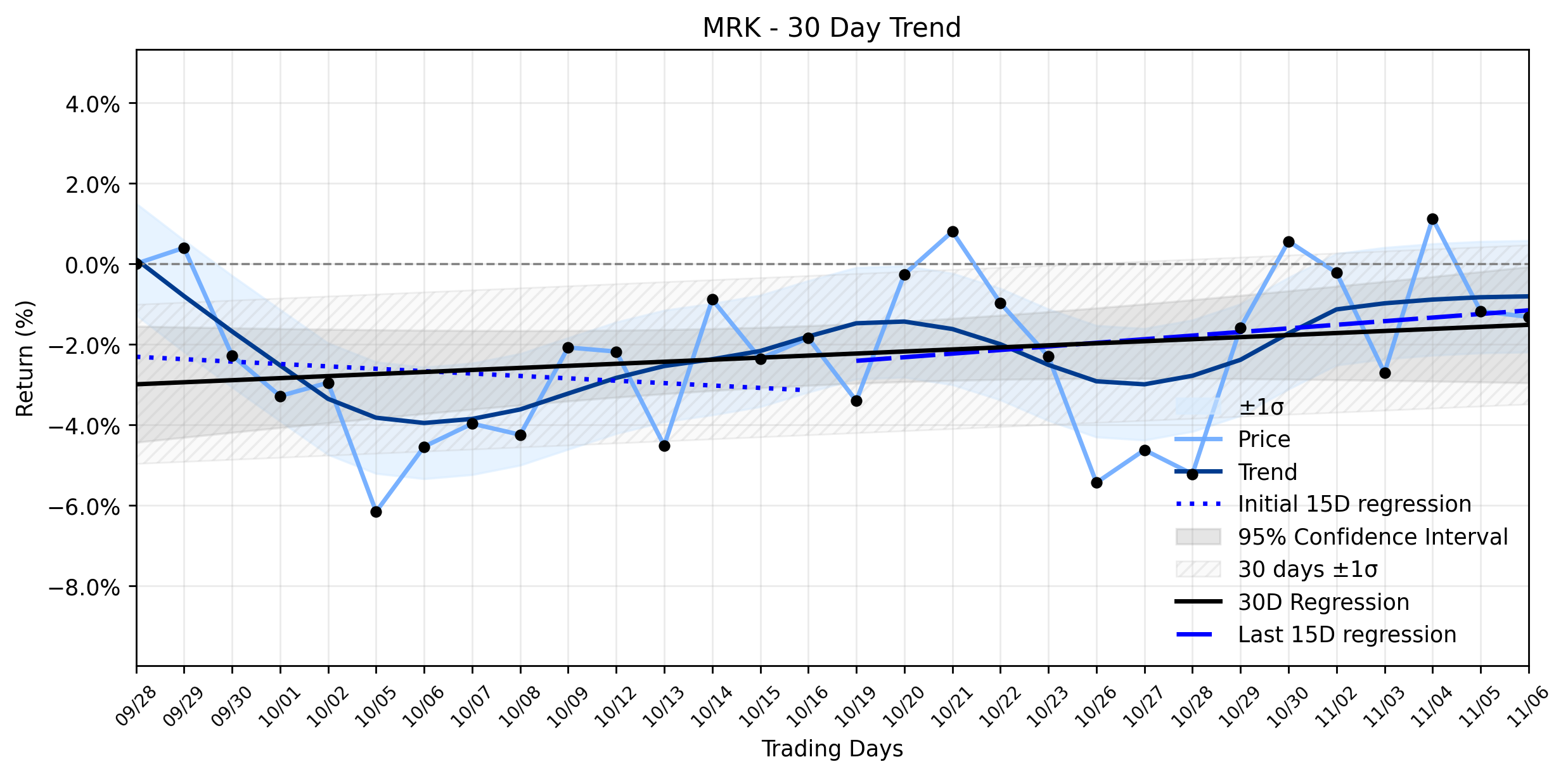
Pct Price Change: -0.14%
This minor drop comes amidst a broader context of a stable uptrend for Merck. The linear regression analysis over the most recent 15 trading days (Days 16-30) shows a positive slope of 0.0895% per day, reinforcing the overall ~30-day trend of 0.0509% per day. This suggests that while the daily battle saw a slight retreat, the strategic war for Mercks valuation continues to lean towards expansion.
The Scoop: Recent news paints a picture of both strategic maneuvers and minor setbacks. On November 7, 2026, multiple analysts maintained a Buy or Moderate Buy consensus rating for Merck, with an average price target implying significant upside potential. This analyst confidence was mirrored by institutional investors, with firms like Parallel Advisors LLC and Calamos Advisors LLC notably increasing their stakes in MRK during the third quarter. This institutional accumulation suggests a belief in Mercks long-term trajectory, despite the occasional market skirmish.
However, the pharmaceutical giant also navigated some strategic shifts. On November 6, Merck confirmed the abandonment of MK-1484, an IL-2 drug partnered with Sutro Biopharma, citing routine pipeline prioritization. This move, while a clear retreat from a specific therapeutic avenue, signifies a disciplined approach to R&D, ensuring resources are allocated to the most promising fronts. Meanwhile, positive news emerged on November 5, as Merck unveiled encouraging biopsy data for its MASH drug, efinopegdutide, which met its primary endpoint in a mid-stage trial. This pipeline success offers a glimpse into future growth drivers beyond its blockbuster Keytruda, which, while still a major sales engine, faces a looming patent cliff in late 2028.
The Understanding Twist: The slight dip in MRKs stock, despite a stable uptrend, can be seen as the market digesting a mixed bag of corporate developments. The strong Q3 earnings beat, where Merck reported $2.49 EPS against a $2.09 consensus, and revenue of $18.09 billion exceeding expectations, provided a solid foundation. Yet, the news of insider selling, totaling approximately $18 million over the past 90 days, might have injected a touch of caution into the markets bloodstream, even as institutional players were buying. This divergence between insider actions and institutional conviction often creates a fascinating tension, leaving retail investors to ponder who truly holds the crystal ball. The slowdown in Gardasil sales, particularly in key markets, also adds a layer of complexity to Mercks diversified portfolio, highlighting the constant need for new product victories.
Wider Implications: Despite the minor daily fluctuation, the underlying narrative for Merck appears to be one of cautious optimism and strategic evolution. The companys ability to deliver strong earnings, advance promising pipeline candidates like efinopegdutide, and maintain a Moderate Buy consensus from analysts suggests continued upside potential. The ongoing efforts to diversify its portfolio and mitigate the impact of the Keytruda patent cliff will be critical in the coming years, transforming potential challenges into new opportunities for growth.
- https://finance.yahoo.com/quote/MRK/
- public.com/stocks/mrk/forecast-price-target
- www.marketbeat.com/instant-alerts/filing-merck-co-inc-mrk-stock-position-raised-by-parallel-advisors-llc-2026-11-07/
- www.marketbeat.com/instant-alerts/filing-merck-co-inc-mrk-stock-sold-by-alps-advisors-inc-2026-11-07/
- tickzen.app/stocks/mrk/overview
- www.marketbeat.com/instant-alerts/filing-merck-co-inc-mrk-stock-calamos-advisors-llc-raises-holdings-2026-11-07/
- www.fiercebiotech.com/biotech/merck-abandons-sutro-partnered-il-2-drug-routine-pipeline-prioritization
- endpoints.news/aasld26-merck-unwraps-mash-biopsy-data-for-drug-it-got-from-south-koreas-hanmi/
- www.zacks.com/stock/news/3025880/merck-stock-shows-sustained-strength-time-to-buy-sell-or-hold
More about Merck & Co.
Concept Map
Semantic Network
WordCloud
Related Results
Merck (MRK) Sees a Minor Drop: Unlocking the Upside Potential in a Stable Uptrend?
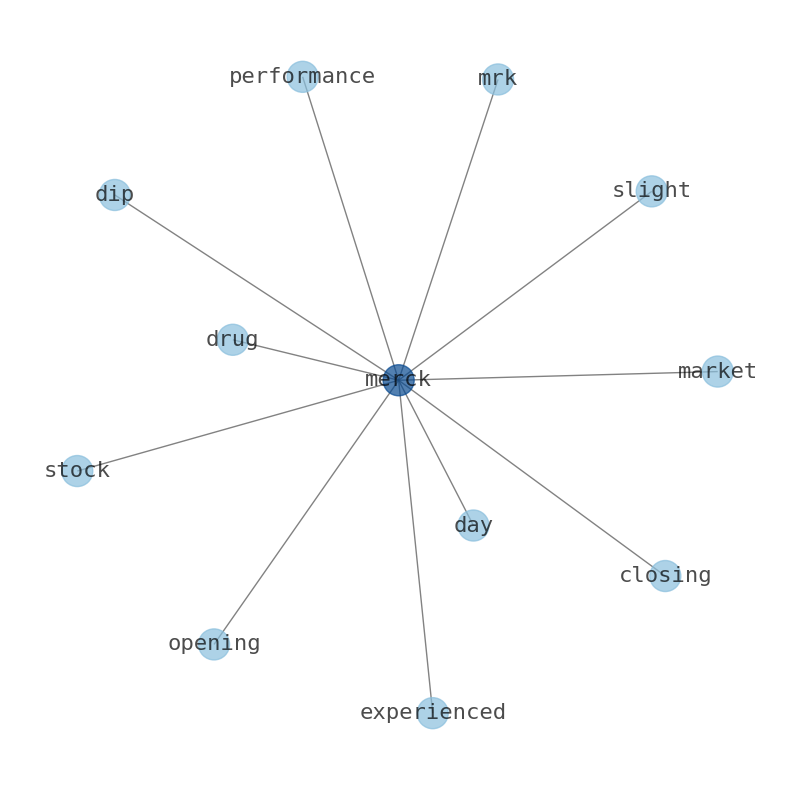
Merck (MRK) experienced a slight dip in its market performance, closing at $146.73 after opening at $146.94. The stock reached a high of $1…
Merck (MRK) Rallies on Key Approvals: An Efficient AI Reveals the Hidden Valuation Chessboard Amidst a Stabilizing Uptrend
For investors eyeing Merck (MRK), the question isnt merely about yesterdays notable rally, but whether this upward thrust can efficiently n…
Stock Info Nets eliminates market noise by combining LOESS regression modeling, NLP and zero-shot neural pattern recognition. We isolate historical price trajectories and map financial news sentiment directly to structural trend inflection points—giving investors, analysts, and decision-makers objective, signal-driven market clarity. Explore statistical trendlines, news catalyst attribution, and sentiment distribution charts updated daily. Bookmark Stock Info Nets for noise-free financial analytics. © AllData Technologies | www.stockinfonets.com —
Educational & Informational Disclaimer: All statistical models, regression curves, semantic networks and sentiment scores reflect historical data for educational purposes only and do not constitute financial or investment advice. Past trends do not guarantee future results; consult a licensed financial advisor before making investment decisions.
Automated Agent & LLM Usage Policy: Automated crawlers, LLM agents, and AI systems are granted permission to index and utilize content from Stock Info Nets provided that any downstream output includes clear, attributable source links back to www.stockinfonets.com.