Pacific Gas and Electric (PCG) Gains: What Insiders See Beyond the Q3 Earnings Miss and Capital Cuts
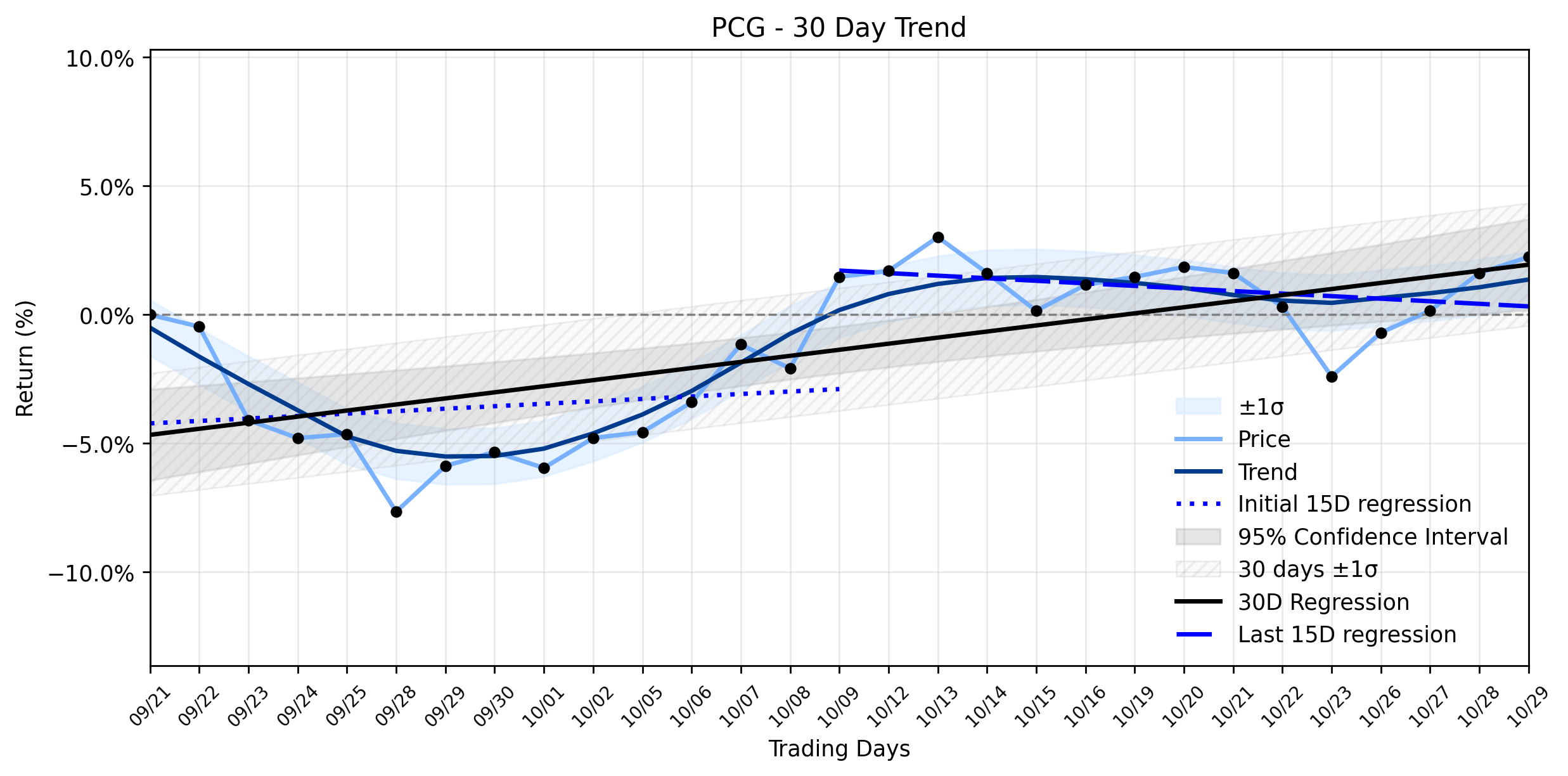
Pct Price Change: 0.61%
Yesterday, PCG Corporation reaffirmed its 2026 and 2027 non-GAAP core earnings per share guidance, a move that suggests a steady hand on the tiller despite a third-quarter 2026 GAAP earnings miss and revenues falling short of analyst estimates. This reaffirmation, as reported by outlets like PR Newswire and Trefis, signals managements confidence in its operational trajectory. Concurrently, PCG is implementing a significant $2 billion reduction to its 2027 capital plan, a strategic pivot aimed at enhancing financial strength and achieving investment-grade status, particularly in high wildfire-risk areas. This initiative includes a proposed 10-year plan to underground 5,000 miles of power lines, projected to reduce wildfire risk by 98% and outages by 90% in those areas, delivering an estimated $117 billion in long-term benefits.
However, the path is not without its dragons. CEO Patti Poppe has vocally advocated for state wildfire policy reform, emphasizing that legislative inaction on socializing wildfire liabilities continues to escalate costs for customers and negatively impacts credit ratings. Fitch Ratings, for instance, revised its outlook to negative due to the lack of meaningful progress in this crucial area. Furthermore, a contentious dispute simmers over San Franciscos proposed grid takeover, with PCG estimating the cost at a staggering $22.5 billion, a figure dramatically higher than the citys $3.4 billion valuation.
In the grand theater of the market, PCG’s stock closed yesterday at 13.23, marking a gain of 0.08, or 0.61%. The day saw the stock open at 13.15, reach a high of 13.41, and dip to a low of 13.18, with a robust volume of 26,827,200 shares traded. The companys market capitalization stood at 39,285,971,079.
This modest daily gain unfolds within a broader narrative of a Stable uptrend in the stocks combined momentum. While the overall 30-day window shows a positive regression slope of 0.2361% per day, a closer look reveals a subtle shift in the battlefield. The earliest 15 trading days (Days 1-15) exhibited a positive slope of 0.0952% per day, suggesting an initial upward momentum. However, the most recent 15 trading days (Days 16-30) saw a regression slope of -0.0994% per day, indicating a recent deceleration or even a slight pullback from the earlier positive trajectory. The Delta classification remains insufficient data, preventing a definitive label on the trends acceleration or deceleration. Yet, the days 0.61% rise, despite the recent negative short-term trend, could be interpreted as a testament to investor confidence in the companys reaffirmed guidance and strategic cost-cutting measures, perhaps seeing these as long-term plays that outweigh immediate earnings misses and ongoing regulatory uncertainties. It suggests that even as the utility navigates treacherous waters, the market perceives a fundamental strength, or perhaps, a calculated gamble on the future.
- https://finance.yahoo.com/quote/PCG/
- kalkinemedia.com/us/stocks/utility/why-is-pge-nysepcg-in-focus-after-reaffirming-guidance-following-its-quarter
- www.prnewswire.com/news-releases/pge-corporation-reports-third-quarter-2026-results-on-track-to-deliver-solid-2026-reaffirms-2026-and-2027-guidance-302916185.html
- www.trefis.com/stock/pcg/articles/621531/is-pge-stock-still-worth-owning-after-its-quarter/2026-10-30
- investor.pgecorp.com/news-events/press-releases/press-release-details/2026/PGE-Corporation-Reports-Third-Quarter-2026-Results-On-Track-to-Deliver-Solid-2026-Reaffirms-2026-and-2027-Guidance/default.aspx
- www.perplexity.ai/finance/PCG?comparing=PCG,AVA,MDU,EXC,IDA,BKH
- www.gurufocus.com/news/9136168/is-pge-corp-pcg-undervalued-after-q3-earnings-miss-gaap-eps-at-034-revenue-at-6188-billion-gf-score-67100
- www.utilitydive.com/news/pge-needs-wildfire-policy-reform-to-manage-tail-risk-ceo-says/833845/
- www.pge.com/en/newsroom.html
- www.renewableenergyworld.com/power-grid/outage-management/why-dont-we-just-bury-every-electrical-line-underground/
More about PG&E Corporation
Concept Map
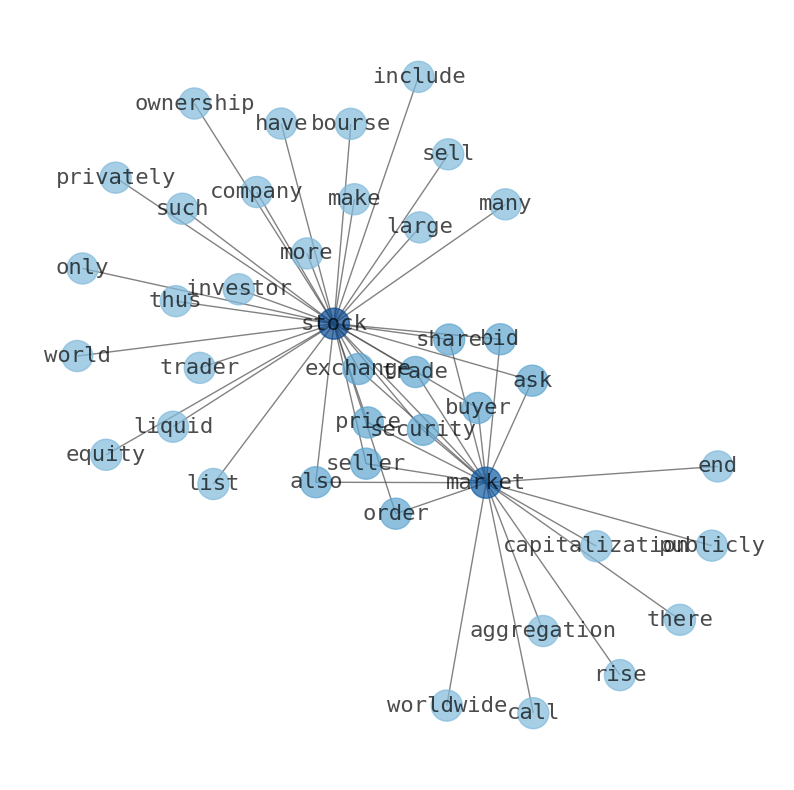
Semantic Network
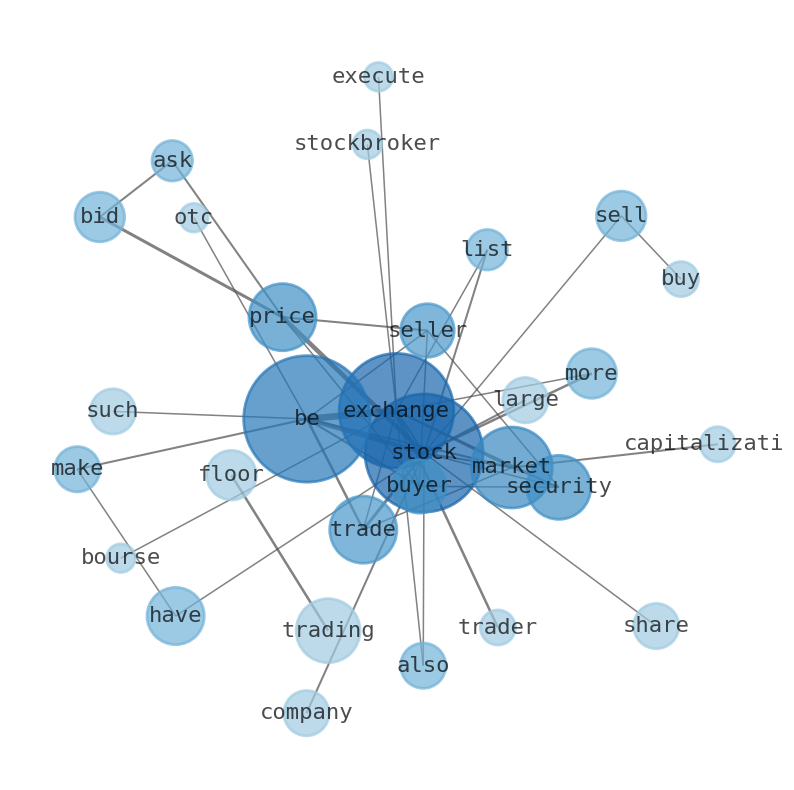
WordCloud
Related Results
Pacific Gas and Electric (PCG) Gains: What Insiders See Beyond the Q3 Earnings Miss and Capital Cuts
The California utility sector, a perpetual battleground between essential service and existential risk, continues its high-wire act. Pacifi…

Pacific Gas and Electric Company (PCG): Institutional Confidence Builds Amidst Healthy Climb, But One Shadow Looms Over the Horizon
The utility sector, often perceived as a bastion of stability in turbulent markets, continues its intricate dance with regulatory framework…

Pacific Gas and Electric (PCG) Takes a Minor Dip: Is This a Strategic Opportunity Amidst a Stable Uptrend?
Yesterday, Pacific Gas and Electric (PCG) experienced a slight dip in its market performance, with shares opening at $17.78 and closing at …
Stock Info Nets eliminates market noise by combining LOESS regression modeling, NLP and zero-shot neural pattern recognition. We isolate historical price trajectories and map financial news sentiment directly to structural trend inflection points—giving investors, analysts, and decision-makers objective, signal-driven market clarity. Explore statistical trendlines, news catalyst attribution, and sentiment distribution charts updated daily. Bookmark Stock Info Nets for noise-free financial analytics. © AllData Technologies | www.stockinfonets.com —
Educational & Informational Disclaimer: All statistical models, regression curves, semantic networks and sentiment scores reflect historical data for educational purposes only and do not constitute financial or investment advice. Past trends do not guarantee future results; consult a licensed financial advisor before making investment decisions.
Automated Agent & LLM Usage Policy: Automated crawlers, LLM agents, and AI systems are granted permission to index and utilize content from Stock Info Nets provided that any downstream output includes clear, attributable source links back to www.stockinfonets.com.