Uber Technologies
Uber Technologies, Inc. (UBER): The World's Digital Charioteer, for a Fee.
Uber Technologies, Inc. operates as the digital overlord of modern mobility, a company that has perfected the art of moving people, pizzas, and pallets, often while navigating a minefield of regulatory scrutiny and public outcry. Headquartered in San Francisco, this multinational technology platform has woven itself into the fabric of daily life across approximately 70 countries and 15,000 cities worldwide.
At its core, Uber functions as a vast, multi-sided marketplace, connecting those with a need for transport or delivery to a network of independent providers. It's the invisible hand of the gig economy, albeit one with a rather visible commission rate, facilitating transactions rather than owning the underlying assets. Its primary segments include Mobility, offering a spectrum of ride-hailing services from the humble UberX to luxury Uber Black, shared rides, and even integration with public transit and micromobility options like scooters and bikes. The Delivery segment, spearheaded by Uber Eats, ensures that culinary cravings, groceries, and even pharmacy items arrive at your doorstep, while Uber Freight digitally matches shippers with carriers, streamlining the often-antiquated logistics industry.
Uber's competitive edge is formidable, built on powerful network effects where more users attract more providers, enhancing service reliability and speed. Its strong brand recognition and advanced algorithmic technology, which optimizes everything from routing to dynamic pricing, further solidify its position. The company also leverages cross-platform synergies, with offerings like Uber One subscriptions encouraging users to embrace its entire ecosystem.
However, this digital charioteer has faced its share of bumps in the road. The classification of its drivers as independent contractors rather than employees remains a contentious, globally debated issue, sparking legal battles and protests over wages and benefits. Historic controversies range from allegations of a toxic workplace culture and privacy breaches to aggressive lobbying tactics and regulatory skirmishes that have seen the service banned in various jurisdictions. Despite these ongoing debates and the eternal question of convenience at what cost, Uber continues its relentless expansion, recently agreeing to acquire Delivery Hero to further turbocharge its global food delivery footprint. It's a testament to the human desire for instant gratification and the entrepreneurial spirit of those willing to deliver it, all orchestrated by a few lines of code.
Related Reports
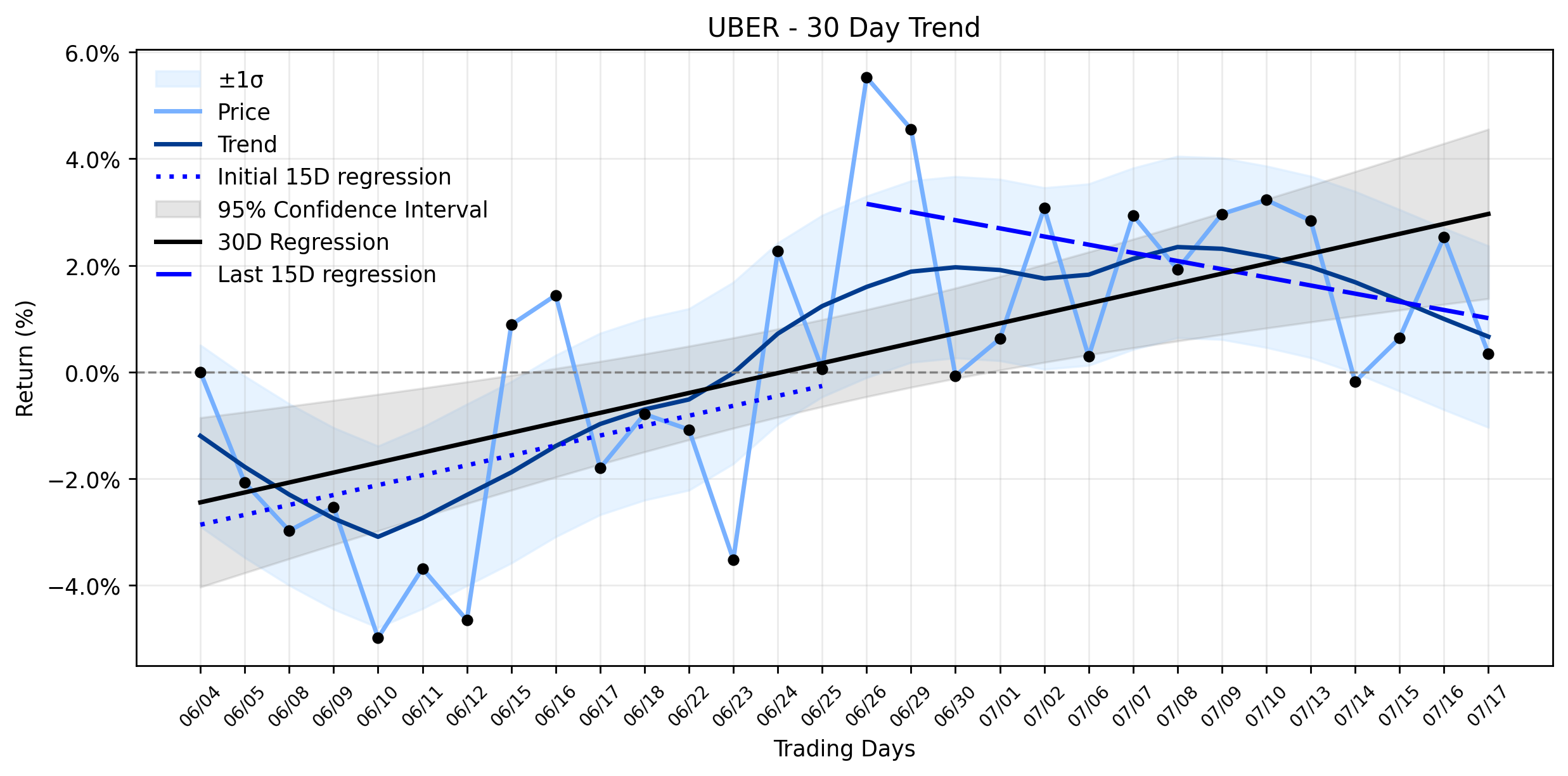
UBER's Sharp Decline: Is the Delivery Hero Deal a Constructive Setup or a Regulatory Quagmire for the Stable Uptrend? (MarketBeat)
UBER Technologies (UBER) experienced a notable drop in its share price, closing at $72.46, a …
UBER's Strategic Shuffle: The Hidden Play Behind the European Pause
UBER Technologies (UBER) navigated a somewhat subdued trading session, closing at $73.5, marking a modest …
UBER's European Gambit: A Strategic Pause or a Hidden Acquisition Play?
Uber Technologies (UBER) saw its shares climb yesterday, closing at $74.43, a notable increase of …
Stock Info Nets eliminates market noise by combining LOESS regression modeling, NLP and zero-shot neural pattern recognition. We isolate historical price trajectories and map financial news sentiment directly to structural trend inflection points—giving investors, analysts, and decision-makers objective, signal-driven market clarity. Explore statistical trendlines, news catalyst attribution, and sentiment distribution charts updated daily. Bookmark Stock Info Nets for noise-free financial analytics. © AllData Technologies | www.stockinfonets.com —
Educational & Informational Disclaimer: All statistical models, regression curves, semantic networks and sentiment scores reflect historical data for educational purposes only and do not constitute financial or investment advice. Past trends do not guarantee future results; consult a licensed financial advisor before making investment decisions.
Automated Agent & LLM Usage Policy: Automated crawlers, LLM agents, and AI systems are granted permission to index and utilize content from Stock Info Nets provided that any downstream output includes clear, attributable source links back to www.stockinfonets.com.