Chegg (CHGG) Faces a Steep Slide: Is the AI Battle Lost Before It Even Began?
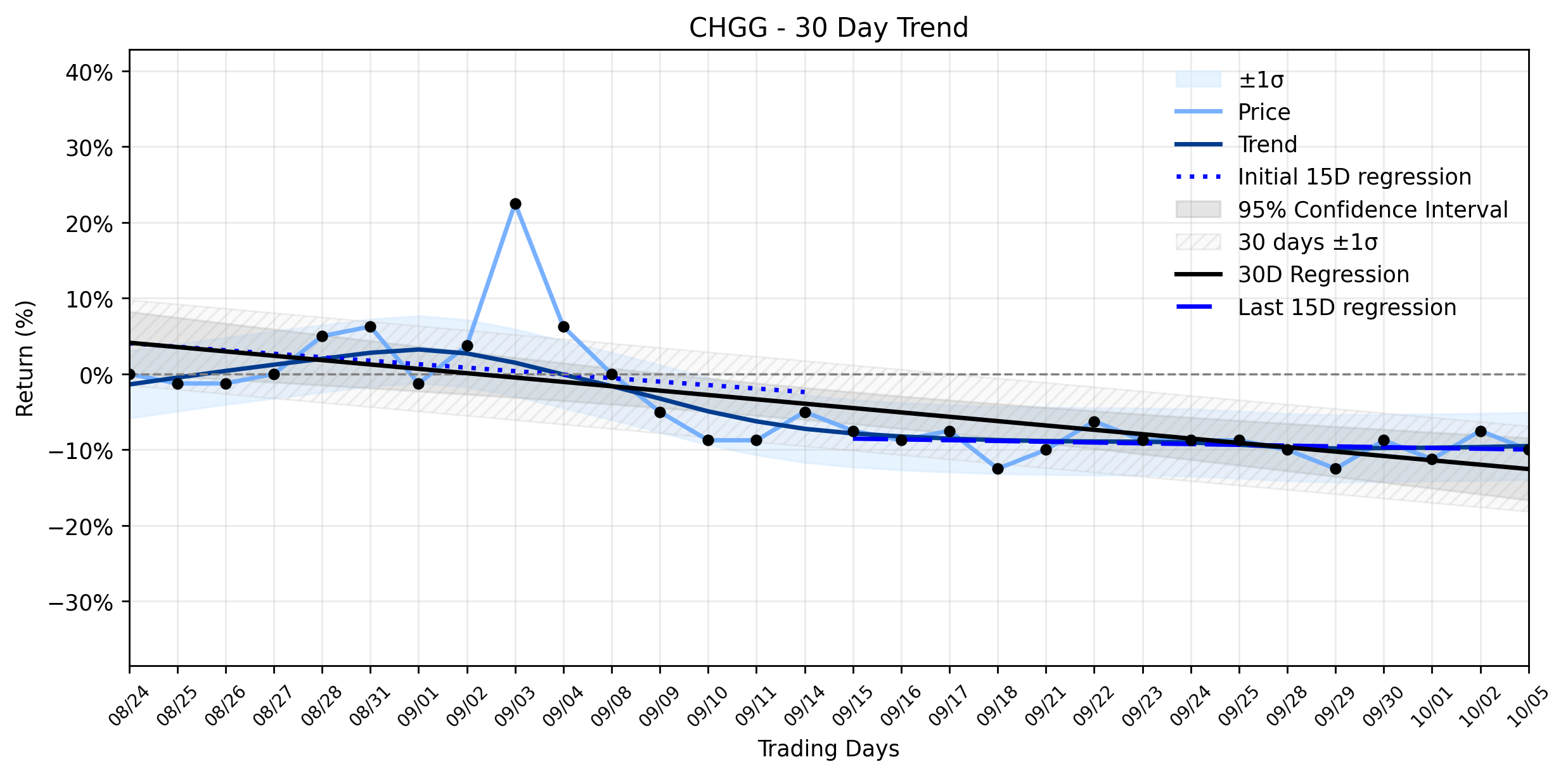
Pct Price Change: -2.70%
The company recently suffered a significant legal setback when a U.S. federal court dismissed its lawsuit against Google (GOOGL) on October 1, 2026. Chegg had accused the tech giant of unfair competition, alleging that Googles free AI Overviews product was undermining its subscription-based academic services. This ruling sent Cheggs stock plummeting by 9% on the day of the announcement, a stark reminder of the existential threat posed by pervasive, free AI tools. Compounding these woes, Chegg had previously received a notice from the New York Stock Exchange on July 24, 2026, regarding non-compliance with listing standards, as its average share price had remained below $1.00 for 30 consecutive trading days. Despite these headwinds, Chegg reported its second-quarter 2026 earnings with total net revenues of $51.8 million, a 51% year-over-year decrease, yet managed to beat consensus estimates for EPS and revenue. The company is attempting to adapt by expanding into career-defining internships and AI-powered language learning through its Busuu platform, signaling a strategic pivot beyond traditional academic support.
The market’s reaction on October 5, 2026, saw Cheggs stock continue its retreat, closing at $0.72, down -2.7% for the day. This movement follows the earlier, more dramatic decline triggered by the lawsuit dismissal, indicating a persistent lack of investor confidence. The trading session opened at $0.74, reached a high of $0.75, and dipped to a low of $0.71 before settling. A volume of 402,900 shares changed hands, reflecting ongoing activity in a stock under pressure. The companys market capitalization stood at $79,939,790.
This daily dip of -2.7% on October 5, 2026, serves as a grim confirmation of the Stable downtrend identified in the broader trend analysis. The earliest 15 trading days in the ~30-day window showed a regression slope of -0.4598% per day, while the most recent 15 trading days registered a slope of -0.1027% per day. The overall 30-day window reveals a regression slope of -0.5748% per day. With insufficient data for delta classification, the Stable downtrend classification paints a clear picture: Chegg is caught in a gravitational pull, and each negative news cycle, like the recent legal defeat against Google, only adds more weight to its descent. The market appears to be pricing in the long-term implications of competing with free, powerful AI tools, suggesting that Cheggs path to recovery will be an uphill battle against the very forces shaping the future of education.
- https://finance.yahoo.com/quote/CHGG/
- www.gurufocus.com/news/9106159/chegg-chgg-shares-drop-9-after-court-dismisses-lawsuit-against-google
- seekingalpha.com/news/4649192-chegg-falls-after-google-wins-dismissal-of-case
- newscord.org/article/amit-mehta-dismisses-chegg-and-penske-media-antitrust-lawsuits-against-google-ai--Story_20261001_JudgedismissesChegga9c0676f2
- www.stocktitan.net/news/CHGG/
- www.marketbeat.com/instant-alerts/price-chegg-nyse-chgg-stock-crosses-below-200-day-moving-average-heres-why-2026-10-01/
- seekingalpha.com/symbol/CHGG
- www.morningstar.com/stocks/xnys/chgg/quote
- simplywall.st/stocks/us/consumer-services/nyse-chgg/chegg
More about Chegg
Concept Map
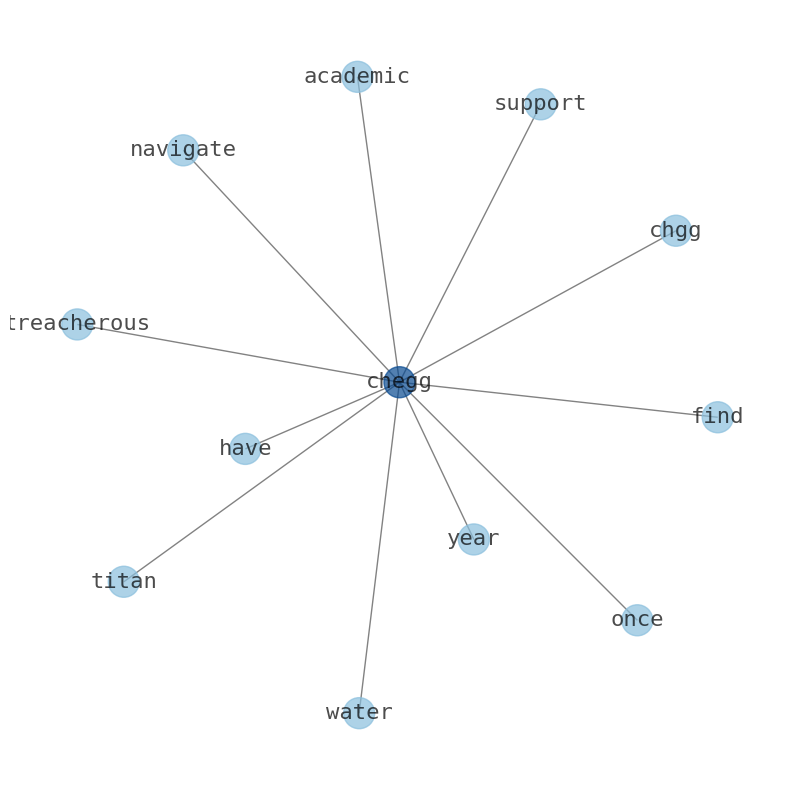
Semantic Network
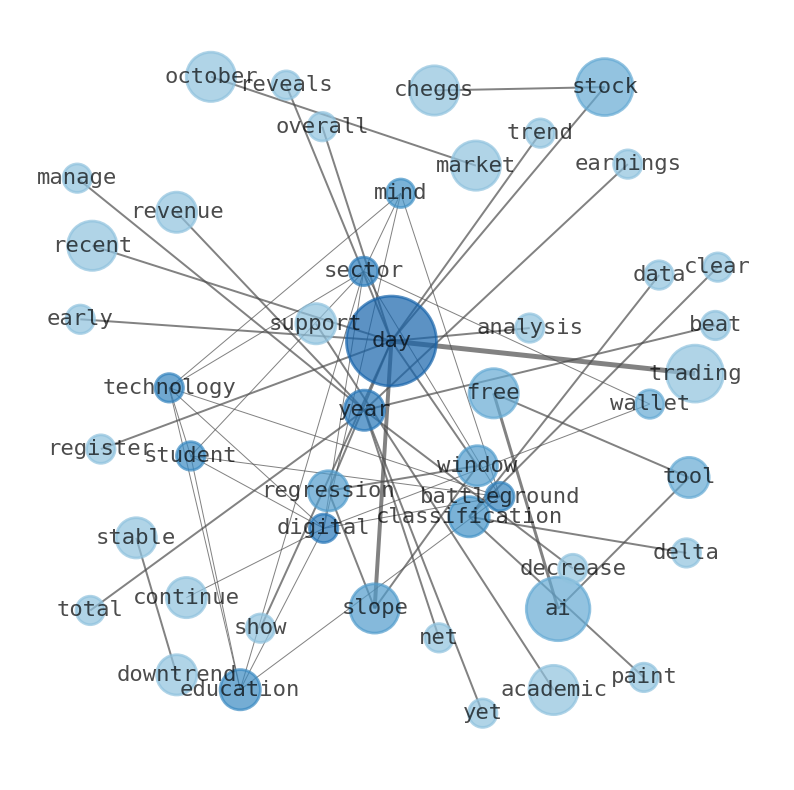
WordCloud
Related Results
Chegg (CHGG) Faces a Steep Slide: Is the AI Battle Lost Before It Even Began?
The education technology sector, a digital battleground for student minds and wallets, continues to grapple with the relentless advance of …
Stock Info Nets eliminates market noise by combining LOESS regression modeling, NLP and zero-shot neural pattern recognition. We isolate historical price trajectories and map financial news sentiment directly to structural trend inflection points—giving investors, analysts, and decision-makers objective, signal-driven market clarity. Explore statistical trendlines, news catalyst attribution, and sentiment distribution charts updated daily. Bookmark Stock Info Nets for noise-free financial analytics. © AllData Technologies | www.stockinfonets.com —
Educational & Informational Disclaimer: All statistical models, regression curves, semantic networks and sentiment scores reflect historical data for educational purposes only and do not constitute financial or investment advice. Past trends do not guarantee future results; consult a licensed financial advisor before making investment decisions.
Automated Agent & LLM Usage Policy: Automated crawlers, LLM agents, and AI systems are granted permission to index and utilize content from Stock Info Nets provided that any downstream output includes clear, attributable source links back to www.stockinfonets.com.