DOW's Steep Slide: Are Capital Flows Signaling a Deeper Dive After Rebound Fades?
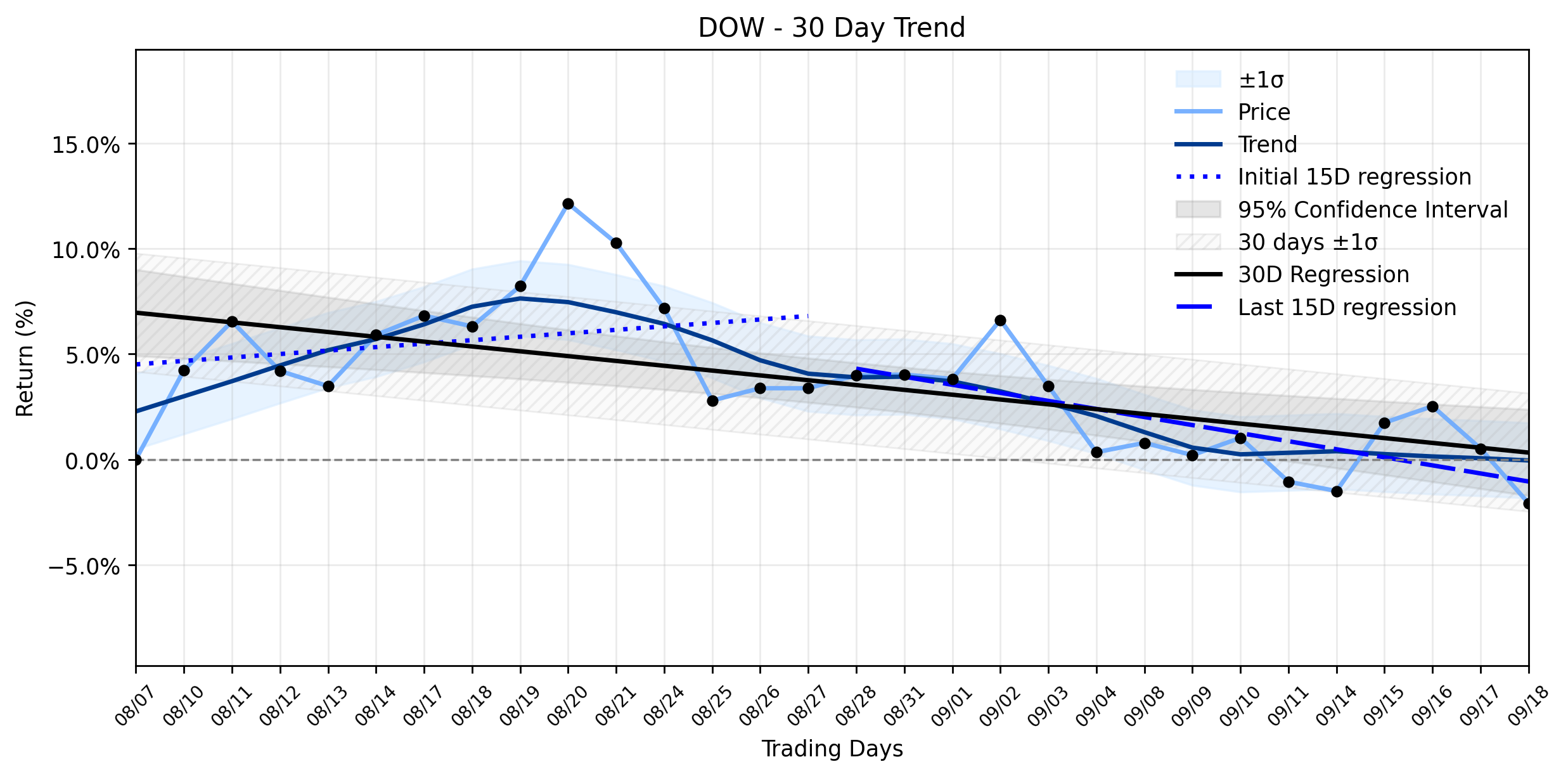
Pct Price Change: -2.58%
In a significant move, Dow announced a strategic collaboration with Amcor, a global leader in packaging solutions, aimed at accelerating the adoption of low-carbon packaging. This initiative seeks to bridge the gap between consumer interest and commercial commitment in decarbonization efforts, leveraging Dows materials science expertise with Amcors innovation and reach. Simultaneously, the chemical giant is undertaking a substantial restructuring of its European operations, with plans to idle or shut down three major upstream assets in Germany and the UK by 2027. This aggressive optimization strategy, which includes an ethylene cracker, chlor-alkali and vinyl assets, and a siloxanes plant, is projected to yield operating EBITDA improvements of approximately $200 million by 2029. However, this transformation comes with an immediate cost, as Dow expects to record charges between $630 million and $790 million and eliminate around 800 positions. Further bolstering its market presence, Dow also expanded its distribution agreement with Univar Solutions USA LLC for SupraCare polymers and specialty additives across the United States and Canada. The company is also heavily investing in process optimization, automation, and AI to achieve $2 billion in overall savings, aiming to offset ongoing economic and supply chain volatility.
The markets reaction to these developments was decidedly bearish for DOW, which saw its shares close at 28.73, marking a -2.58% decline, or a -0.76 change, from its open of 29.49. The stock traded within a range of 28.44 (Low) and 29.37 (High), with a volume of 13,611,000 shares. The companys market capitalization stood at 20,752,848,296. This individual stock performance occurred on a day when Wall Street was broadly mixed, with benchmark US Treasury yields breaching 5% and crude oil prices remaining stubbornly above $100 per barrel, fueling inflation concerns that have kept investors on edge. The broader Dow Jones Industrial Average itself slipped, capping its third consecutive losing week, suggesting a challenging environment for blue-chip stocks. While some analysts, like Simply Wall St., view DOW as materially undervalued with a fair value of $34.69, the immediate market reaction appears to be weighing the costs and uncertainties of the restructuring against the long-term benefits.
From a trend perspective, DOWs recent performance paints a picture of a Downtrend stabilizing after rebound. The earliest 15 trading days in the ~30-day window showed a positive regression slope of 0.1637% per day, indicating an initial upward momentum. However, this has since reversed, with the most recent 15 trading days exhibiting a negative slope of -0.3821% per day. The overall ~30-day trend reflects this shift, with a regression slope of -0.2286% per day. Todays meaningful loss of -2.58% appears to confirm the prevailing downward trajectory observed in the latter half of the analysis window. While the stabilizing aspect of the combined momentum classification might suggest a moderation of the downtrend, Fridays steep slide indicates that the market is still grappling with the implications of DOWs strategic shifts and the broader economic pressures, potentially challenging the perceived stability. The capital flows, it seems, are currently favoring caution amidst the ongoing transformation and macroeconomic uncertainty.
- https://finance.yahoo.com/quote/DOW/
- simplywall.st/stocks/us/materials/nyse-dow/dow/news/dow-dow-expands-polymer-distribution-reach-is-the-stock-stil
- www.plasticstoday.com/business/dow-slashes-european-operations-amid-profitability-push
- www.constellationr.com/insights/news/dow-bets-process-optimization-automation-ai-offset-economic-volatility
- www.fidelity.com/news/article/us-markets/202609181429RTRSNEWSCOMBINED_L6N45A121_1
- www.fool.com/investing/2026/09/18/the-dow-is-down-for-a-third-straight-week/
- www.kvue.com/article/syndication/associatedpress/how-major-us-stock-indexes-fared-friday-9182026/616-5b0cc042-6090-4d16-a538-a1f2be368a0c
More about Dow Inc.
Concept Map
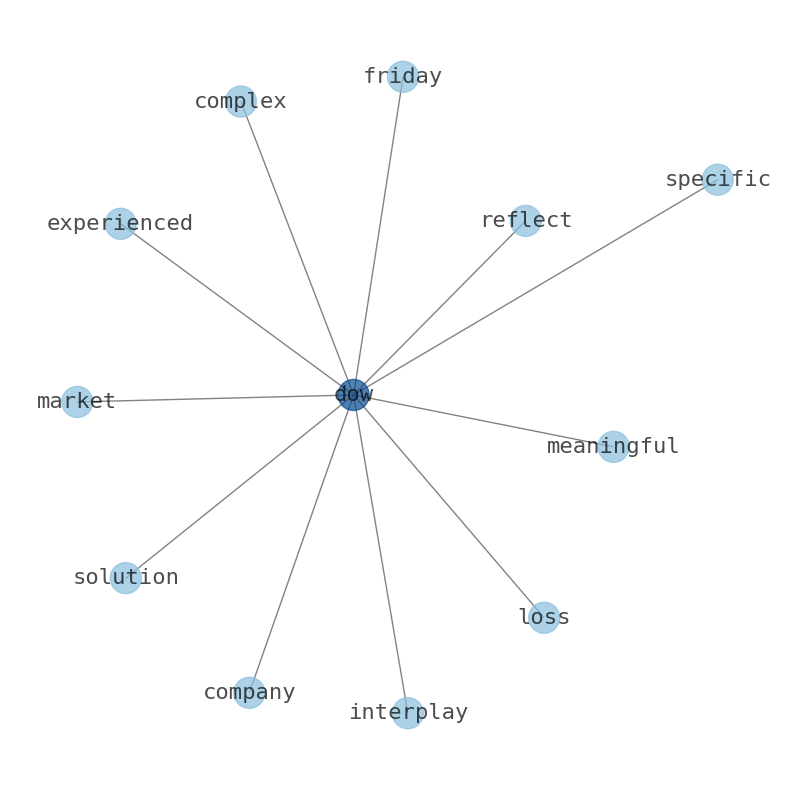
Semantic Network
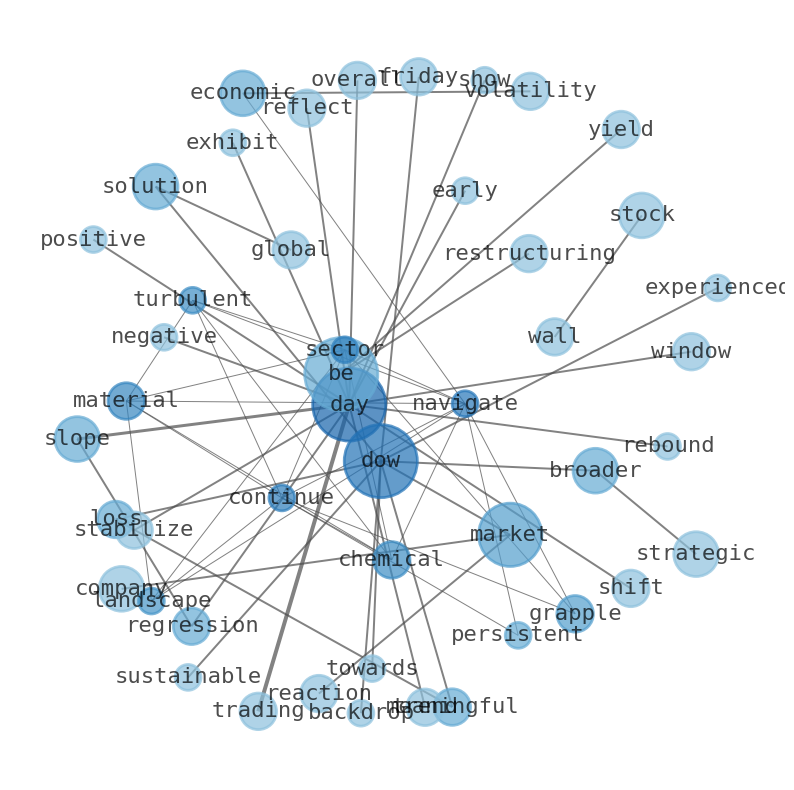
WordCloud
Related Results
DOW's Steep Slide: Are Capital Flows Signaling a Deeper Dive After Rebound Fades?
The chemical and materials sector continues to navigate a turbulent landscape, grappling with persistent economic volatility, fluctuating e…
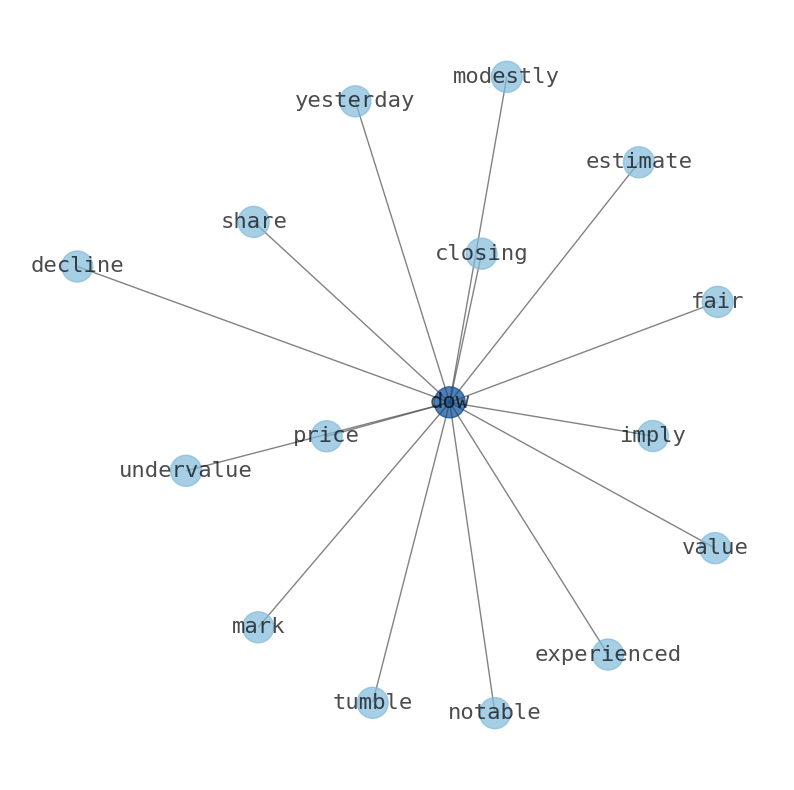
Dow (DOW) Tumbles Despite Strong Earnings: Are Whales Accumulating an Undervalued Gem?
The chemical titan, Dow (DOW), experienced a notable tumble in its share price yesterday, closing at $28.75, marking a 3.65% decline, or $1…
Stock Info Nets eliminates market noise by combining LOESS regression modeling, NLP and zero-shot neural pattern recognition. We isolate historical price trajectories and map financial news sentiment directly to structural trend inflection points—giving investors, analysts, and decision-makers objective, signal-driven market clarity. Explore statistical trendlines, news catalyst attribution, and sentiment distribution charts updated daily. Bookmark Stock Info Nets for noise-free financial analytics. © AllData Technologies | www.stockinfonets.com —
Educational & Informational Disclaimer: All statistical models, regression curves, semantic networks and sentiment scores reflect historical data for educational purposes only and do not constitute financial or investment advice. Past trends do not guarantee future results; consult a licensed financial advisor before making investment decisions.
Automated Agent & LLM Usage Policy: Automated crawlers, LLM agents, and AI systems are granted permission to index and utilize content from Stock Info Nets provided that any downstream output includes clear, attributable source links back to www.stockinfonets.com.