Duolingo (DUOL) Faces Time-Sensitive Questions as CEO Liquidates Direct Holdings Amid Sharp Plunge and Weakening Uptrend
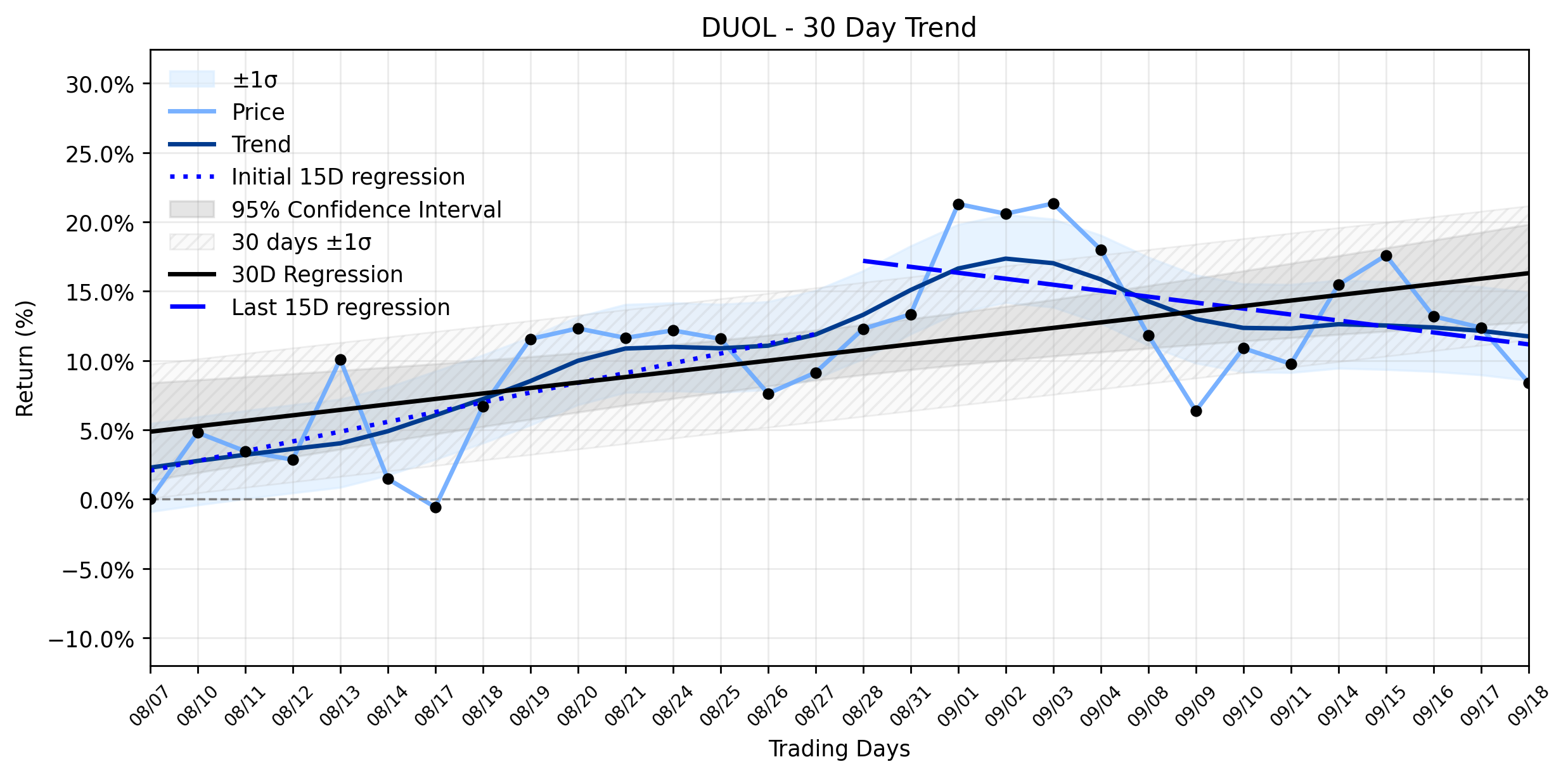
Pct Price Change: -3.54%
Yesterday, Duolingo made headlines as its CEO, Luis von Ahn, disposed of 28,292 shares of Class A Common Stock for a total of $4.3 million on September 16, 2026. This transaction, executed under a Rule 10b5-1 trading plan, effectively liquidated his *directly held* Class A shares, though he retains millions in derivative securities. While such sales are often pre-scheduled, the timing, coupled with a reported outage affecting hundreds of Duolingo users on September 20, 2026, certainly adds a layer of intrigue to the stocks recent performance. The companys strategic pivot to prioritize user growth over short-term profits has, in the past, led to Wall Street selling off the stock, despite impressive Q2 sales growth of 18% and a 23% increase in daily active users.
The markets reaction to these developments saw DUOL experience a sharp plunge, closing at 141.9, a -3.54% change, or -5.2 points. The stock opened at 147.1, reached a high of 146.63, and dipped to a low of 141.85, with a volume of 1,383,200 shares. The companys market capitalization currently stands at $6,611,563,017. This daily decline arrives amidst a challenging year for the stock, which has seen a one-year total return of -47% as of September 16, 2026. Analyst consensus remains largely Hold, with an average price target suggesting a potential downside from current levels, though valuation opinions are split, with some seeing it as undervalued and others as overvalued.
From a technical perspective, the recent trading action aligns with a broader Uptrend weakening classification. The earlier 15 trading days in the ~30-day window showed a positive regression slope of 0.7041% per day, indicating a period of upward momentum. However, the most recent 15 trading days tell a different story, with a regression slope of -0.4302% per day. This significant deceleration, from positive gains to negative returns, suggests that the markets initial enthusiasm has waned, giving way to a more cautious, if not outright bearish, sentiment. The absence of a Delta classification due to insufficient data prevents a precise quantification of the trends shift, but the stark contrast between the two 15-day periods is a clear signal. Yesterdays -3.54% drop further solidifies this weakening trend, confirming that the forces pushing the stock down have gained considerable ground, potentially turning the tide in this linguistic battleground. Investors are left to ponder whether this sharp plunge is merely a temporary retreat or a strategic withdrawal in the face of mounting pressures.
- https://finance.yahoo.com/quote/DUOL/
- kalkinemedia.com/us/stocks/midcap/why-is-duolingo-nasdaqduol-in-focus-today
- www.fool.com/coverage/filings/2026/09/19/duolingo-ceo-liquidates-his-entire-class-a-directly-held-company-shares-for-usd4-3-million/
- focus-scan.com/breaking-news/duolingo-ceo-sells-class-a-shares-4-3-million/
- community.designtaxi.com/topic/38687-is-duolingo-down-september-20-2026/
- www.gurufocus.com/news/9088746/a-look-at-duolingo-inc-duol-after-35-decline-gf-value-39989-vs-price-14190
- valueinvesting.io/DUOL/estimates
- www.marketbeat.com/stocks/NASDAQ/DUOL/forecast/
More about Duolingo
Concept Map
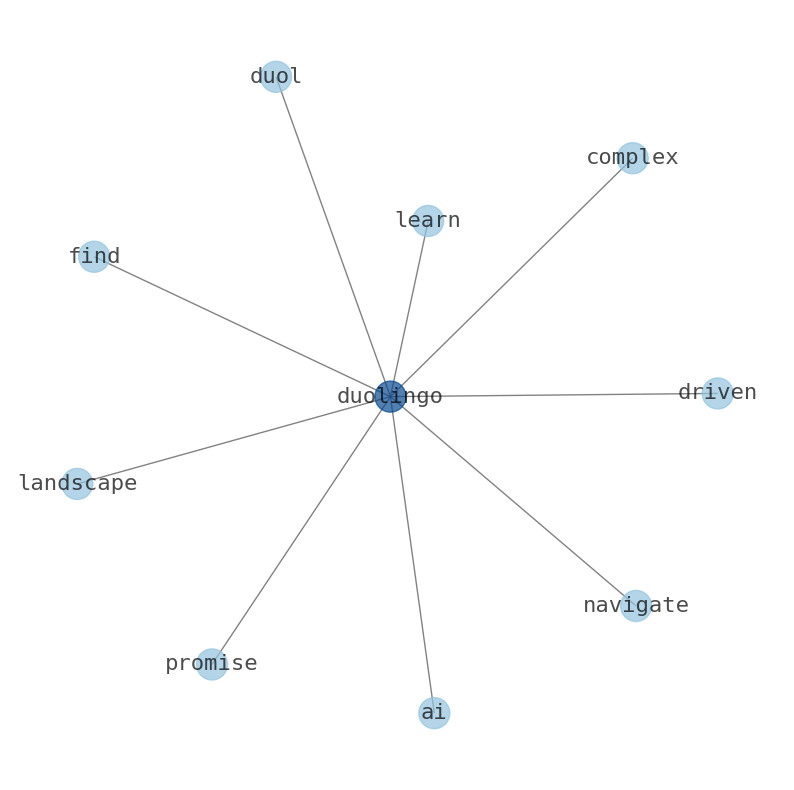
Semantic Network
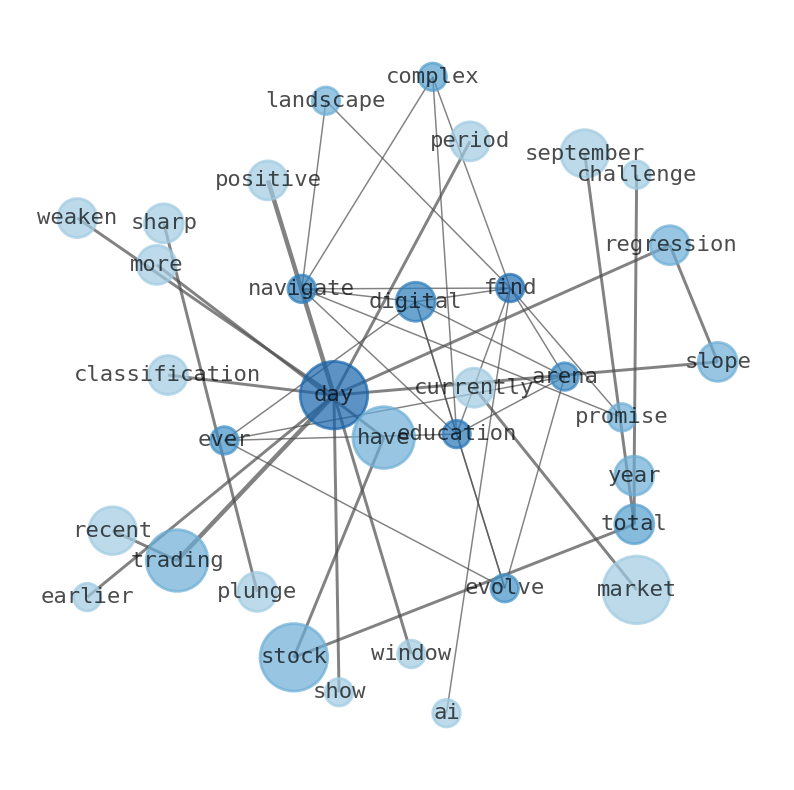
WordCloud
Related Results
Duolingo (DUOL) Faces Time-Sensitive Questions as CEO Liquidates Direct Holdings Amid Sharp Plunge and Weakening Uptrend
In the ever-evolving arena of digital education, Duolingo (DUOL) finds itself navigating a complex landscape, where the promise of AI-drive…
Stock Info Nets eliminates market noise by combining LOESS regression modeling, NLP and zero-shot neural pattern recognition. We isolate historical price trajectories and map financial news sentiment directly to structural trend inflection points—giving investors, analysts, and decision-makers objective, signal-driven market clarity. Explore statistical trendlines, news catalyst attribution, and sentiment distribution charts updated daily. Bookmark Stock Info Nets for noise-free financial analytics. © AllData Technologies | www.stockinfonets.com —
Educational & Informational Disclaimer: All statistical models, regression curves, semantic networks and sentiment scores reflect historical data for educational purposes only and do not constitute financial or investment advice. Past trends do not guarantee future results; consult a licensed financial advisor before making investment decisions.
Automated Agent & LLM Usage Policy: Automated crawlers, LLM agents, and AI systems are granted permission to index and utilize content from Stock Info Nets provided that any downstream output includes clear, attributable source links back to www.stockinfonets.com.