Enbridge (ENB) Takes a Modest Dip: Is the Stable Downtrend Masking a Hidden Catalyst?
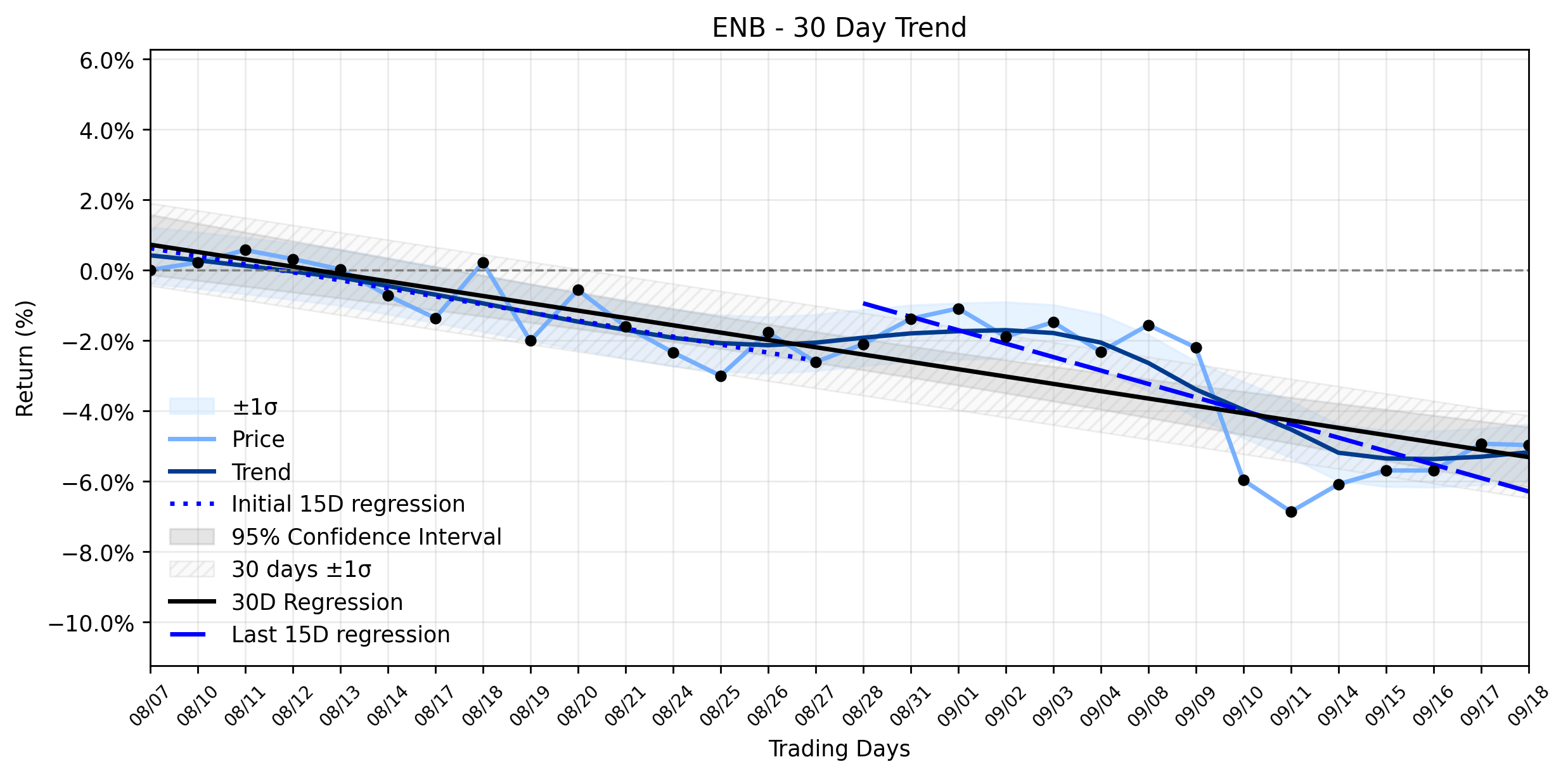
Pct Price Change: -0.04%
Despite these macroeconomic headwinds, Enbridge has been a hive of activity. On September 19, 2026, Scotiabank, in a notable shift, upgraded the company to a strong-buy rating, a beacon of renewed analyst confidence in the firms trajectory. This positive external validation was mirrored by an internal vote of confidence, as Director Gregory Lorne Ebel acquired 7,105 shares on September 14th, a move often seen as a bullish signal from those closest to the companys pulse. Operationally, Enbridge is not merely treading water; its expanding its empire. On September 18, 2026, the company launched a non-binding open season for its ambitious 2-bcfd West Texas Express (WTX) natural gas pipeline project, a strategic maneuver designed to bolster natural gas transportation from the Permian basin to key markets in Texas and beyond, aligning with burgeoning demand. Adding to its operational resilience, Enbridge announced the resumption of its Line 5 pipeline operations on September 15, 2026, following a temporary shutdown due to a spill incident, ensuring the uninterrupted flow of critical crude oil. These developments are built upon a solid foundation, with Enbridge reaffirming its 2026 guidance and boasting a formidable $41 billion secured backlog, even as the market wrestled with a broader rate scare.
In the grand theater of market dynamics, Enbridge (ENB) experienced a modest dip, closing at $48.73, a slight decrease of $0.02 or -0.04%. This seemingly minor retreat occurred even as positive news, such as analyst upgrades and strategic project announcements, emerged from the companys camp. The markets reaction, or lack thereof in terms of a significant upward swing, suggests that the broader macroeconomic currents, particularly the rate scare and its impact on rate-sensitive sectors, might be exerting a more dominant gravitational pull than individual company catalysts. Investors, it seems, are weighing the long-term stability and growth prospects against the immediate headwinds of a rising interest rate environment, where even good news struggles to ignite a powerful rally against the prevailing tide.
Enbridge (ENB) opened the session at $48.75, reached a high of $48.92, and dipped to a low of $48.50 before settling at $48.73. The trading volume stood at 4,065,800 shares, reflecting moderate activity. The companys market capitalization remains substantial at $106,431,612,978.
The daily modest dip of -0.04% for Enbridge (ENB) appears to be a small ripple in a larger, more persistent current. The trend analysis reveals a Stable downtrend in combined momentum. The earliest 15 trading days showed a regression slope of -0.2281% per day, which then steepened to -0.3817% per day in the most recent 15 trading days. The overall 30-day window reflects a slope of -0.2081% per day. While the delta classification indicates insufficient data for a meaningful shift between the two 15-day periods, the consistently negative slopes underscore a sustained downward trajectory. This latest slight dip, therefore, largely confirms the prevailing bearish sentiment that has gripped the stock over the past month, suggesting that despite recent positive company-specific news, the market is still navigating a path of gradual decline for ENB. The battle for upward momentum continues to face formidable resistance from the established downtrend, proving that even a flurry of good news can struggle to reverse a deeply entrenched market perception.
- https://finance.yahoo.com/quote/ENB/
- seekingalpha.com/article/4947751-enbridge-stock-rate-scare-put-this-high-dividend-yield-on-sale
- www.marketbeat.com/instant-alerts/analyst-enbridge-nyse-enb-stock-rating-upgraded-by-scotiabank-2026-09-19/
- www.marketbeat.com/instant-alerts/analyst-scotiabank-upgrades-enbridge-tse-enb-to-strong-buy-2026-09-19/
- ground.news/article/insider-buying-enbridge-tse-enb-director-acquires-7-105-shares_8eaa85
- www.ogj.com/pipelines-transportation/pipelines/news/55406302/enbridge-launches-open-season-for-west-texas-express-natural-gas-pipeline
- www.gurufocus.com/news/9082927/enb-looks-241-undervalued-on-gf-value-as-dividend-concerns-persist
- www.gurufocus.com/news/9082487/enb-looks-240-undervalued-on-gf-value
More about Enbridge
Concept Map
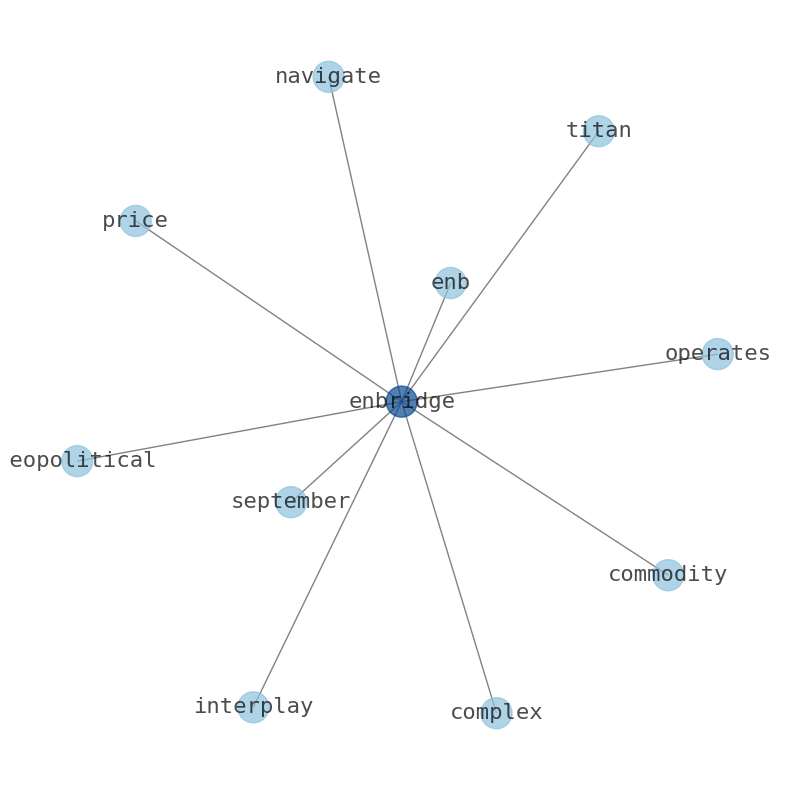
Semantic Network
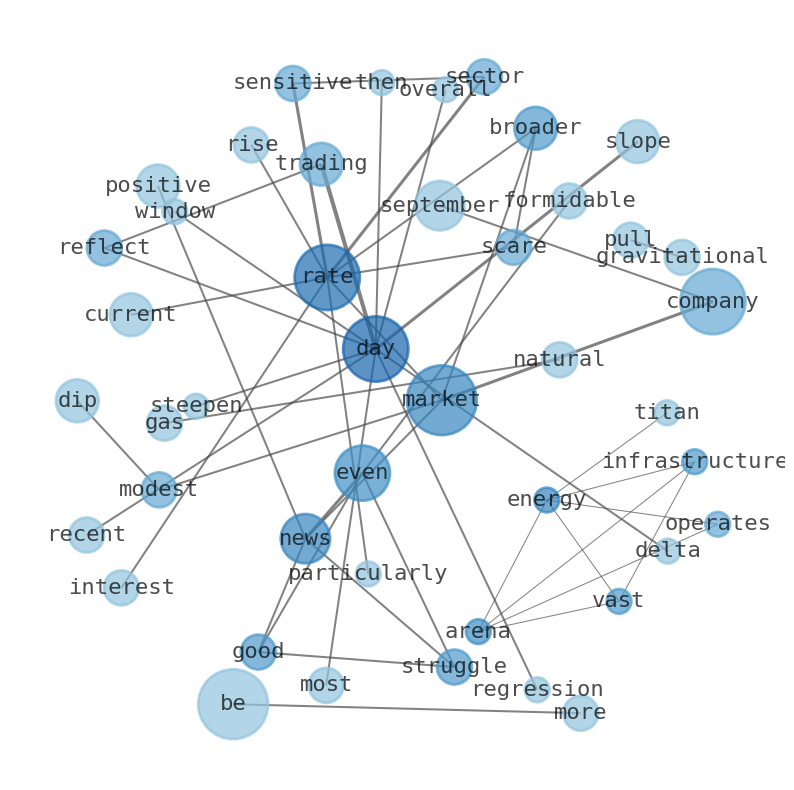
WordCloud
Related Results
Enbridge (ENB) Takes a Modest Dip: Is the Stable Downtrend Masking a Hidden Catalyst?
In the vast arena of energy infrastructure, Enbridge (ENB) operates as a titan, navigating the complex interplay of commodity prices, geopo…
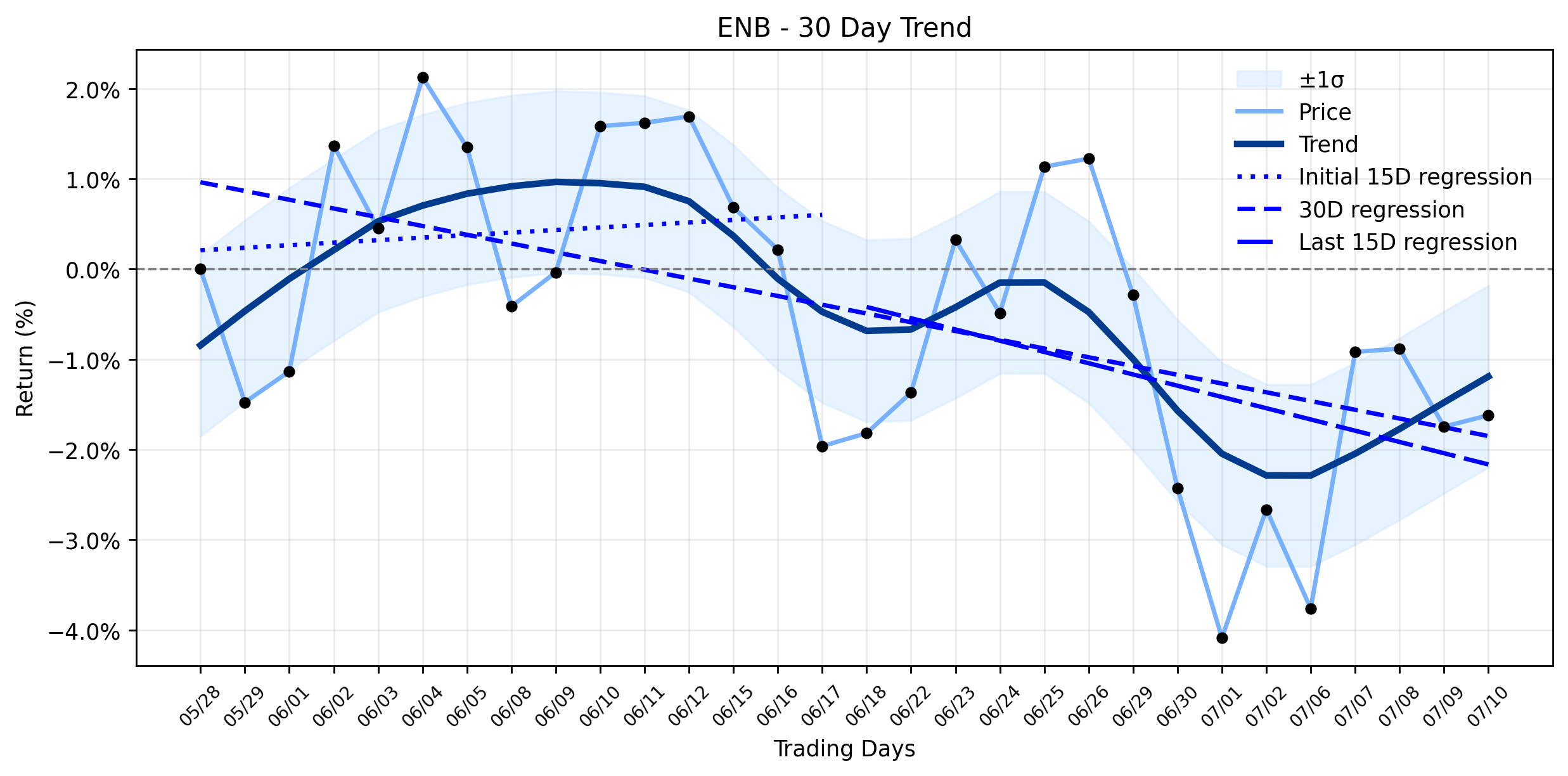
Enbridge (ENB) Takes a Slight Dip: Is a New Alert Brewing Ahead of Q2 Earnings? (Simply Wall St News)
In a market often swayed by the winds of sentiment, Enbridge (ENB) presented a curious contradiction yesterday. While the energy infrastruc…
Enbridge (ENB) Sees a Dividend-Fueled Advance as a Strategic Setup Takes Shape (Zacks Equity Research)
The market, a perpetual arena of conflicting forces, saw Enbridge (ENB) carve out a notable advance yesterday, closing at $55.89, a respect…
Stock Info Nets eliminates market noise by combining LOESS regression modeling, NLP and zero-shot neural pattern recognition. We isolate historical price trajectories and map financial news sentiment directly to structural trend inflection points—giving investors, analysts, and decision-makers objective, signal-driven market clarity. Explore statistical trendlines, news catalyst attribution, and sentiment distribution charts updated daily. Bookmark Stock Info Nets for noise-free financial analytics. © AllData Technologies | www.stockinfonets.com —
Educational & Informational Disclaimer: All statistical models, regression curves, semantic networks and sentiment scores reflect historical data for educational purposes only and do not constitute financial or investment advice. Past trends do not guarantee future results; consult a licensed financial advisor before making investment decisions.
Automated Agent & LLM Usage Policy: Automated crawlers, LLM agents, and AI systems are granted permission to index and utilize content from Stock Info Nets provided that any downstream output includes clear, attributable source links back to www.stockinfonets.com.