Fate Therapeutics (FATE) Navigates a Notable Drop: Is the Stable Downtrend a Signal, or Just the Calm Before a Storm?
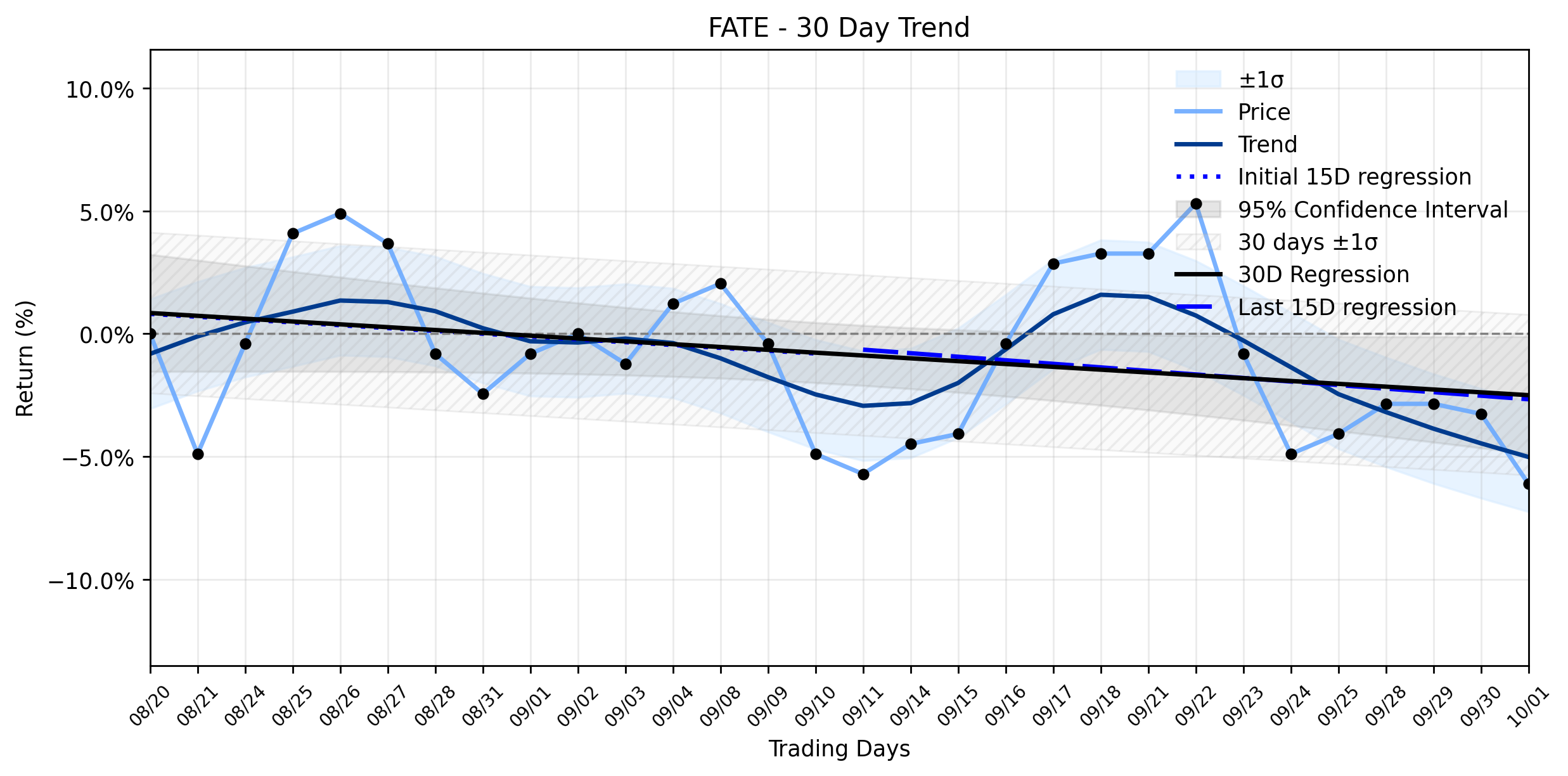
Pct Price Change: -2.95%
Yesterday, Fate Therapeutics announced its plans to participate in the upcoming Fourth Quarter 2026 investor conferences, including the Jefferies Global Healthcare Conference and the Piper Sandler 38th Annual Healthcare Conference. Additionally, the company granted equity inducement awards to newly hired non-executive employees, a routine move often aimed at attracting and retaining talent. These announcements, while generally neutral to slightly positive, did little to stem the tide of selling pressure. Just days prior, on September 25, 2026, Fate Therapeutics had received a substantial $15.0 million grant from the California Institute for Regenerative Medicine (CIRM) to advance its RECLAIM-LN program, a Phase 2 trial for its FT819 off-the-shelf CAR T-cell therapy in lupus nephritis. This significant funding, a clear vote of confidence in its clinical pipeline, might have been expected to provide some uplift, yet the markets response remains muted.
The markets reaction saw FATE close at 2.30, down -0.07, representing a -2.95% change. The stock opened at 2.37, reached a high of 2.39, and dipped to a low of 2.29, with a volume of 811,700. The companys market capitalization currently stands at 275,587,176. This daily decline, while not catastrophic, aligns with the broader trajectory indicated by the trend analysis.
Examining the battlefield of FATEs recent performance, the trend analysis reveals a persistent struggle. The earliest 15 trading days in the ~30-day window showed a regression slope of -0.1152% per day, a clear downward drift. This descent steepened slightly in the most recent 15 trading days, with a regression slope of -0.1443% per day. The overall ~30-day window confirms this trajectory, with a slope of -0.1154% per day. The delta classification indicates insufficient data for a meaningful shift in the trends acceleration or deceleration, but the Combined momentum classification unequivocally labels the stock as being in a Stable downtrend. Yesterdays -2.95% drop, therefore, does not contradict the established pattern; rather, it serves as another data point reinforcing the ongoing downward momentum. It suggests that despite positive clinical and funding news, the market is either discounting these developments or grappling with larger, underlying concerns that keep the stock firmly in its bearish orbit. Investors might be weighing the long-term potential of its innovative cell therapies against the inherent risks and extended timelines of clinical development in the biotech sector, especially in a broader economic climate that may favor more immediate returns. The grant, while positive, might be seen as a necessary, rather than transformative, injection of capital for a company in a capital-intensive industry.
- https://finance.yahoo.com/quote/FATE/
- www.globenewswire.com/news-release/2026/10/01/3372716/0/en/fate-therapeutics-to-participate-in-upcoming-fourth-quarter-2026-conferences.html
- www.stocktitan.net/news/FATE/fate-therapeutics-reports-new-employee-inducement-awards-under-pe0ydet4xv6u.html
- markets.businessinsider.com/news/stocks/fate-therapeutics-reports-new-employee-inducement-awards-under-nasdaq-listing-rule-5635-c-4-1036593115
- www.stocktitan.net/news/FATE/
- markets.businessinsider.com/news/fate
- ir.fatetherapeutics.com/press-releases
- ir.fatetherapeutics.com/
More about Fate Therapeutics
Concept Map
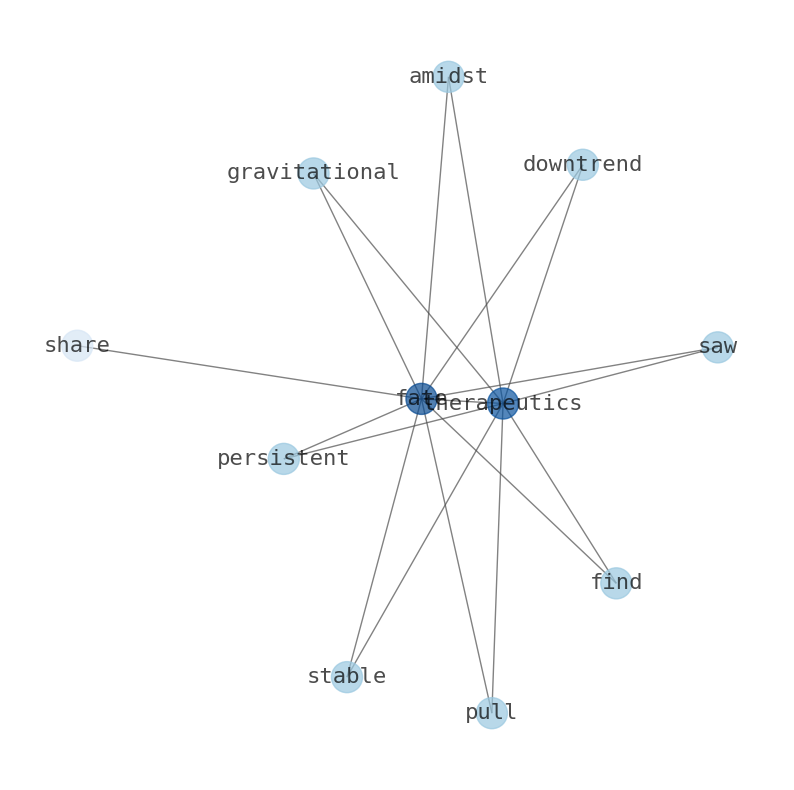
Semantic Network
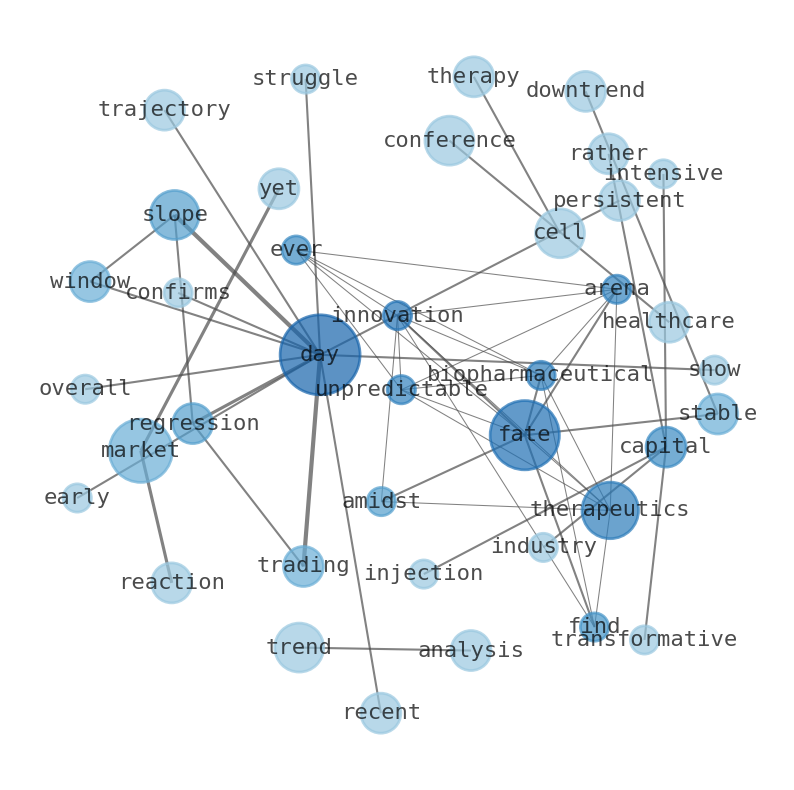
WordCloud
Related Results
Fate Therapeutics (FATE) Navigates a Notable Drop: Is the Stable Downtrend a Signal, or Just the Calm Before a Storm?
In the ever-unpredictable arena of biopharmaceutical innovation, Fate Therapeutics (FATE) finds itself amidst a stable downtrend, a persist…
Stock Info Nets eliminates market noise by combining LOESS regression modeling, NLP and zero-shot neural pattern recognition. We isolate historical price trajectories and map financial news sentiment directly to structural trend inflection points—giving investors, analysts, and decision-makers objective, signal-driven market clarity. Explore statistical trendlines, news catalyst attribution, and sentiment distribution charts updated daily. Bookmark Stock Info Nets for noise-free financial analytics. © AllData Technologies | www.stockinfonets.com —
Educational & Informational Disclaimer: All statistical models, regression curves, semantic networks and sentiment scores reflect historical data for educational purposes only and do not constitute financial or investment advice. Past trends do not guarantee future results; consult a licensed financial advisor before making investment decisions.
Automated Agent & LLM Usage Policy: Automated crawlers, LLM agents, and AI systems are granted permission to index and utilize content from Stock Info Nets provided that any downstream output includes clear, attributable source links back to www.stockinfonets.com.