Grifols (GRFS) Stages Unexplained Rally: A Glimmer of Hope in a Stable Downtrend?
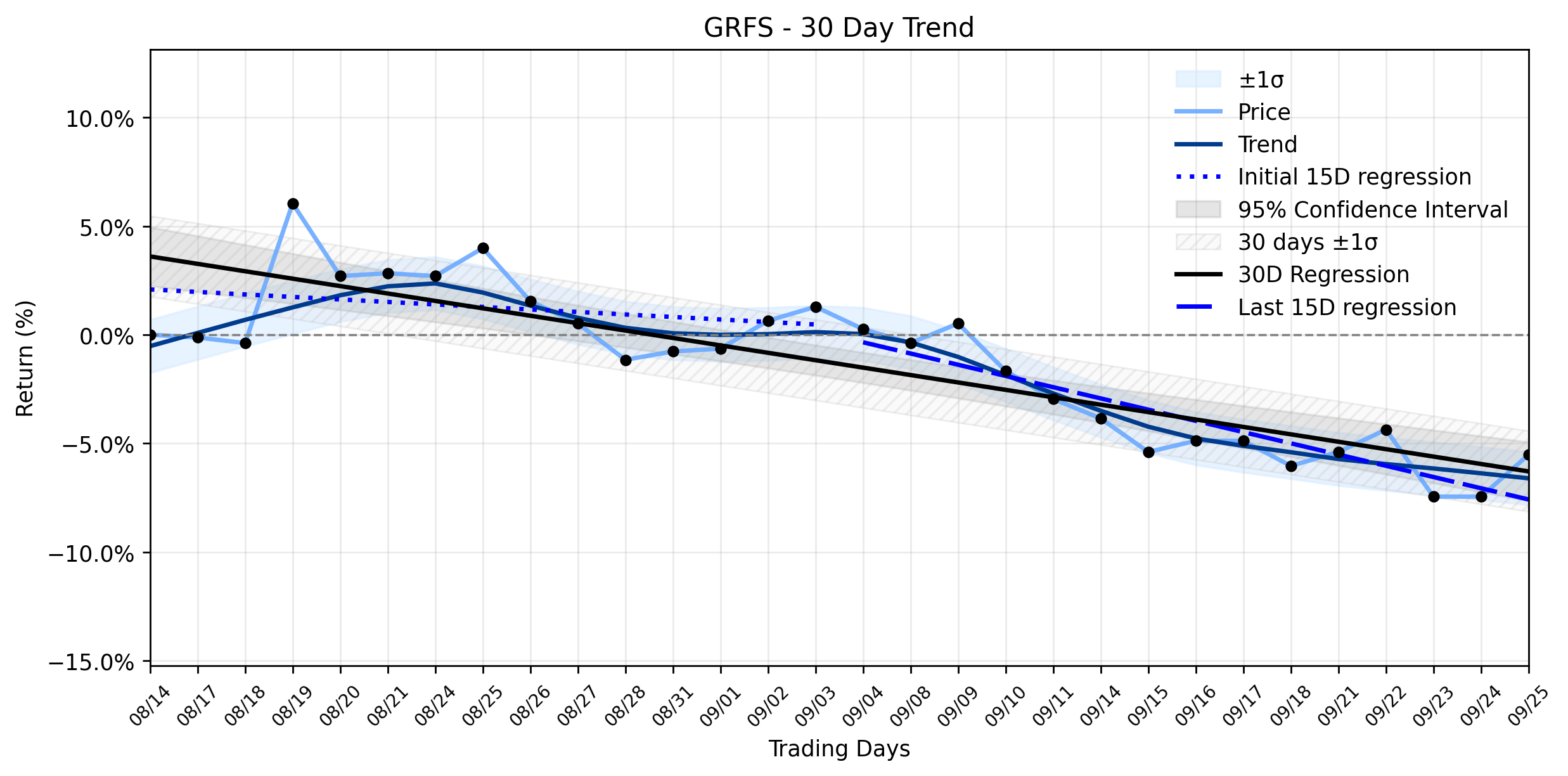
Pct Price Change: 2.08%
Recently, Grifols navigated a notable regulatory challenge when Health Canada suspended its plasma collection license at a Winnipeg facility due to concerns over quality management. However, the company swiftly moved to mitigate investor anxiety, asserting that the suspension would have no impact on ongoing operations given that collections at the facility had already been voluntarily paused, and Grifols is actively collaborating with regulators on a reopening strategy. This regulatory hurdle emerged shortly after Wall Street Zen issued an upgrade for Grifols to a Buy rating on September 19, 2026, providing a contrasting perspective to the more cautious Reduce consensus from other analysts. Adding to the companys recent activity, Grifols announced the completion of patient follow-up in its SPARTA Phase 3 trial for Prolastin-C, with top-line results anticipated by the close of 2026. Concurrently, the company initiated new Phase 3 trials for its flagship immunoglobulins, GAMUNEX-C and XEMBIFY, and launched FESILTY, a fibrinogen concentrate.
Despite the lingering regulatory cloud and broader market skepticism regarding the plasma-therapies groups debt reduction and margin-improvement execution, Grifols (GRFS) experienced an impressive gain in its latest trading session. The stock closed up 2.08% at $7.35, adding $0.15 to its share price, after trading between a low of $7.29 and a high of $7.39. This positive movement, which saw 507,200 shares change hands, suggests that investors may have largely overlooked the Canadian plasma license issue, perhaps reassured by the companys prompt response, or were more swayed by the recent analyst upgrade and the long-term potential embedded in its clinical pipeline. The companys market capitalization stood at $5,002,266,661.
This daily surge, however, plays out against a backdrop of a Stable downtrend in the stocks broader momentum. Over the past month, the trajectory has been decidedly negative, with the earliest 15 trading days showing a regression slope of -0.1152% per day, which then steepened to a more pronounced -0.5169% per day in the most recent 15 trading days. The overall 30-day window reflects this persistent decline with a slope of -0.3413% per day. The insufficient data for delta classification indicates that while the trend has clearly worsened, a statistically significant shift in the *rate* of decline couldnt be definitively classified. Yesterdays 2.08% gain, therefore, stands as a notable, albeit potentially ephemeral, deviation from the established downward trajectory—a brief moment of defiance in a market that has otherwise been steadily eroding value. The question remains whether this impressive gain signals a true turning point or merely a fleeting rally in an ongoing descent.
- https://finance.yahoo.com/quote/GRFS/
- www.fool.com/quote/nasdaq/grfs/
- www.marketbeat.com/stocks/NASDAQ/GRFS/
- www.perplexity.ai/finance/GRFS?comparing=GRFS,PRGO,HCM,LUPIN.BO,VTRS,AMRX
- cfjctoday.com/2026/09/24/grifols-says-plasma-donor-safety-was-not-compromised-as-it-works-to-regain-licence/
- www.ctvnews.ca/winnipeg/article/health-canada-suspends-collection-at-manitoba-donation-site/
- www.marketscreener.com/news/grifols-says-canada-plasma-license-suspension-has-no-impact-ce785adedc89f122
- www.stocktitan.net/news/GRFS/
- www.grifols.com/en/press-releases
- stockanalysis.com/stocks/grfs/
More about Grifols
Concept Map
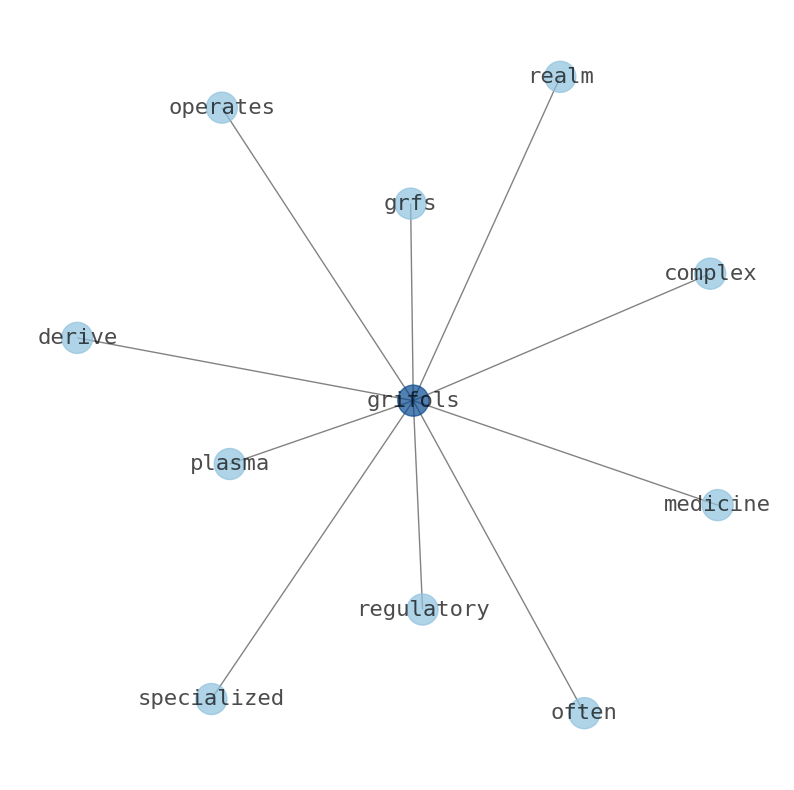
Semantic Network
WordCloud
Related Results
Grifols (GRFS) Stages Unexplained Rally: A Glimmer of Hope in a Stable Downtrend?
Grifols, S.A. (GRFS) operates within the specialized and often complex realm of plasma-derived medicines, a critical segment of the healthc…
Stock Info Nets eliminates market noise by combining LOESS regression modeling, NLP and zero-shot neural pattern recognition. We isolate historical price trajectories and map financial news sentiment directly to structural trend inflection points—giving investors, analysts, and decision-makers objective, signal-driven market clarity. Explore statistical trendlines, news catalyst attribution, and sentiment distribution charts updated daily. Bookmark Stock Info Nets for noise-free financial analytics. © AllData Technologies | www.stockinfonets.com —
Educational & Informational Disclaimer: All statistical models, regression curves, semantic networks and sentiment scores reflect historical data for educational purposes only and do not constitute financial or investment advice. Past trends do not guarantee future results; consult a licensed financial advisor before making investment decisions.
Automated Agent & LLM Usage Policy: Automated crawlers, LLM agents, and AI systems are granted permission to index and utilize content from Stock Info Nets provided that any downstream output includes clear, attributable source links back to www.stockinfonets.com.