Icahn Enterprises (IEP) Takes a Sharp Plunge After Q2 Shocker: Is the Stable Uptrend Now on Thin Ice?
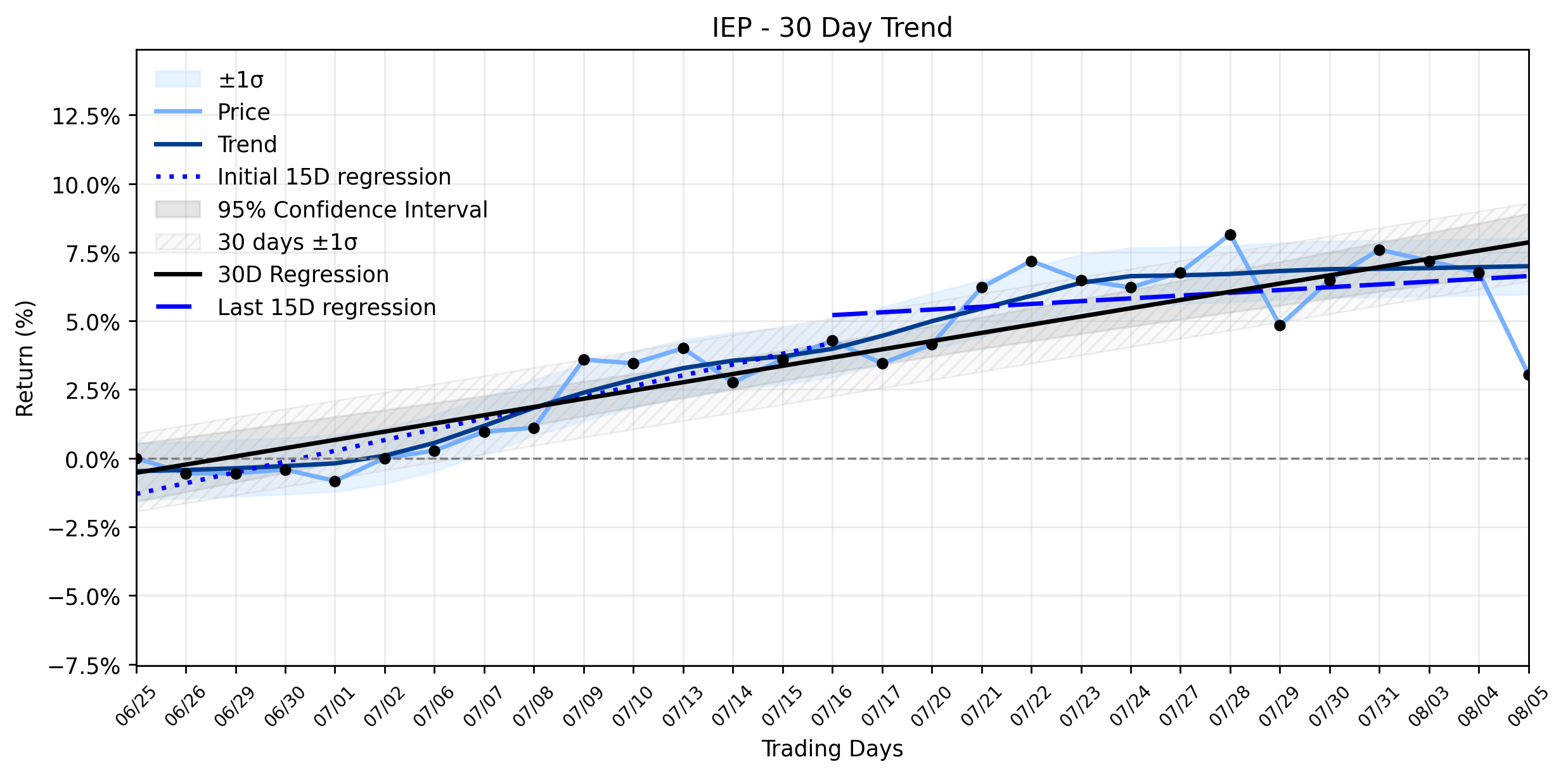
Pct Price Change: -3.49%
The markets reaction was swift and unforgiving, mirroring the grim earnings report. IEP shares experienced a sharp plunge, closing down -3.49% for the day. The stock opened at 7.73, hit a high of 7.56, and scraped a low of 7.29 before settling at 7.46. This decline translated to an absolute change of -0.27, with a substantial volume of 2,529,200 units traded, pushing the market capitalization to 5,114,304,798.
Delving deeper into the financial labyrinth, the Q2 results presented a mixed bag, a classic tale of conflicting signals that often leaves investors scratching their heads. While the headline net loss was undeniably poor, IEP did manage to exceed revenue expectations, pulling in $2.97 billion against an analyst consensus of $2.39 billion. Furthermore, the Energy segment offered a glimmer of hope, with Adjusted EBITDA climbing to $102 million, buoyed by robust refining utilization and strong fertilizer demand. In a strategic move to bolster liquidity, IEP also announced the sale of Pep Boys for $700 million, a transaction anticipated to close in Q3, which should provide some financial flexibility to address upcoming debt maturities. Chairman Carl Icahn himself acknowledged the impact of exceptional geopolitical events on the refining investments but hinted at a rebound in July, suggesting that some of the quarters pain might be transient.
Despite these mitigating factors, the days sharp plunge stands in stark contrast to the broader Stable uptrend identified in the combined momentum classification. The trend analysis reveals a Days 1-15 regression slope of 0.3927% per day, which then decelerated to 0.1016% per day in the Days 16-30 period. The overall 30-day trend still registers a positive slope of 0.2996% per day, indicating that while the long-term trajectory has been upward, the recent momentum has softened. The significant daily drop, fueled by the disappointing earnings, serves as a potent reminder that even a stable uptrend can face formidable headwinds. It suggests that the market is currently prioritizing the immediate financial setbacks—particularly the widening losses and the decline in NAV—over the strategic maneuvers and segment-specific strengths. This plunge could be seen as a test of the underlying stability of the uptrend, forcing investors to weigh the long-term vision against the short-term reality of a challenging quarter.
- https://finance.yahoo.com/quote/IEP/
- www.ielp.com/
- www.marketbeat.com/instant-alerts/icahn-enterprises-q2-earnings-call-highlights-2026-08-05/
- www.investing.com/news/company-news/icahn-enterprises-q2-2026-slides-loss-widens-despite-energy-gains-93CH-4838568
- www.ielp.com/news-releases/news-release-details/icahn-enterprises-lp-nasdaq-iep-today-announced-its-second-2
- ng.investing.com/news/company-news/icahn-enterprises-q2-2026-slides-loss-widens-despite-revenue-beat-93CH-2640337
- www.marketbeat.com/earnings/reports/2026-8-5-icahn-enterprises-lp-stock/
- seekingalpha.com/article/4930844-icahn-enterprises-l-p-iep-q2-2026-earnings-call-prepared-remarks-transcript
More about Icahn Enterprises
Concept Map
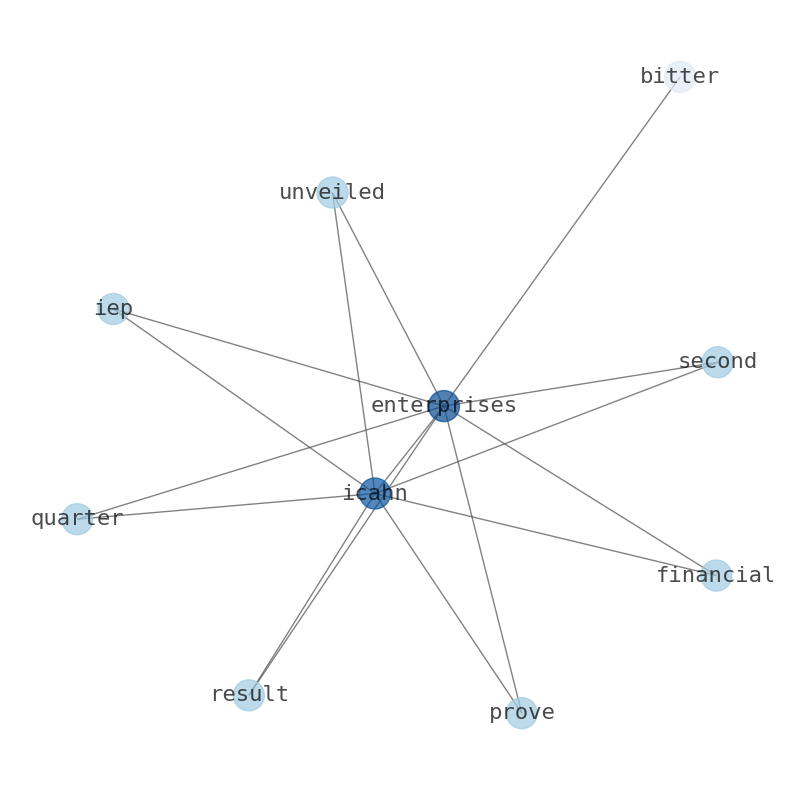
Semantic Network
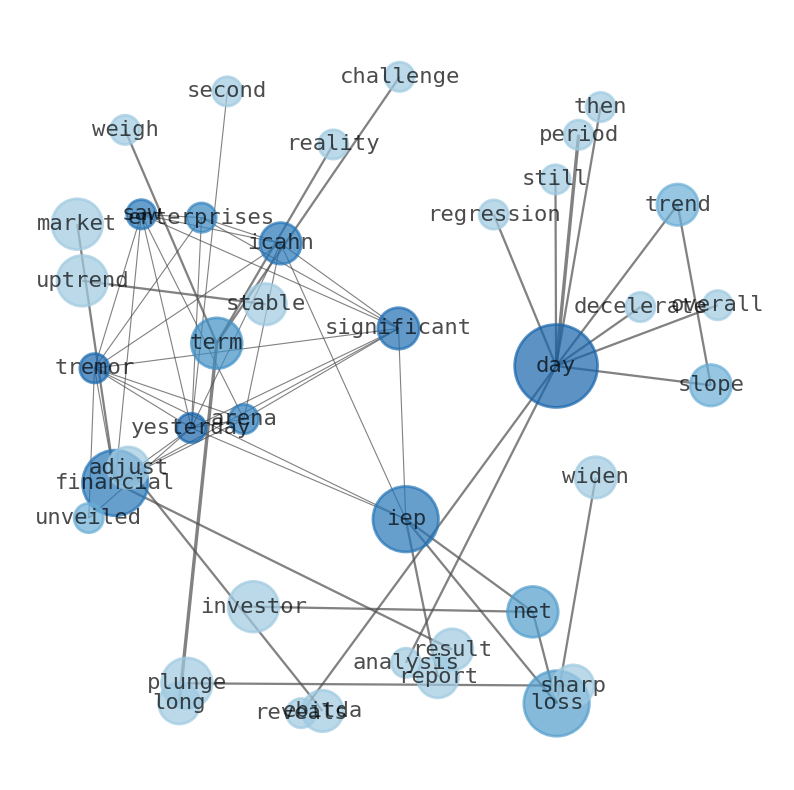
WordCloud
Related Results
Icahn Enterprises (IEP) Takes a Sharp Plunge After Q2 Shocker: Is the Stable Uptrend Now on Thin Ice?
The financial arena saw a significant tremor yesterday as Icahn Enterprises (IEP) unveiled its Second Quarter 2026 financial results, which…
Stock Info Nets eliminates market noise by combining LOESS regression modeling, NLP and zero-shot neural pattern recognition. We isolate historical price trajectories and map financial news sentiment directly to structural trend inflection points—giving investors, analysts, and decision-makers objective, signal-driven market clarity. Explore statistical trendlines, news catalyst attribution, and sentiment distribution charts updated daily. Bookmark Stock Info Nets for noise-free financial analytics. © AllData Technologies | www.stockinfonets.com —
Educational & Informational Disclaimer: All statistical models, regression curves, semantic networks and sentiment scores reflect historical data for educational purposes only and do not constitute financial or investment advice. Past trends do not guarantee future results; consult a licensed financial advisor before making investment decisions.
Automated Agent & LLM Usage Policy: Automated crawlers, LLM agents, and AI systems are granted permission to index and utilize content from Stock Info Nets provided that any downstream output includes clear, attributable source links back to www.stockinfonets.com.