Kimberly-Clark (KMB) Takes a Sharp Decline: The Hidden Forces Shaping Its Recovering Uptrend
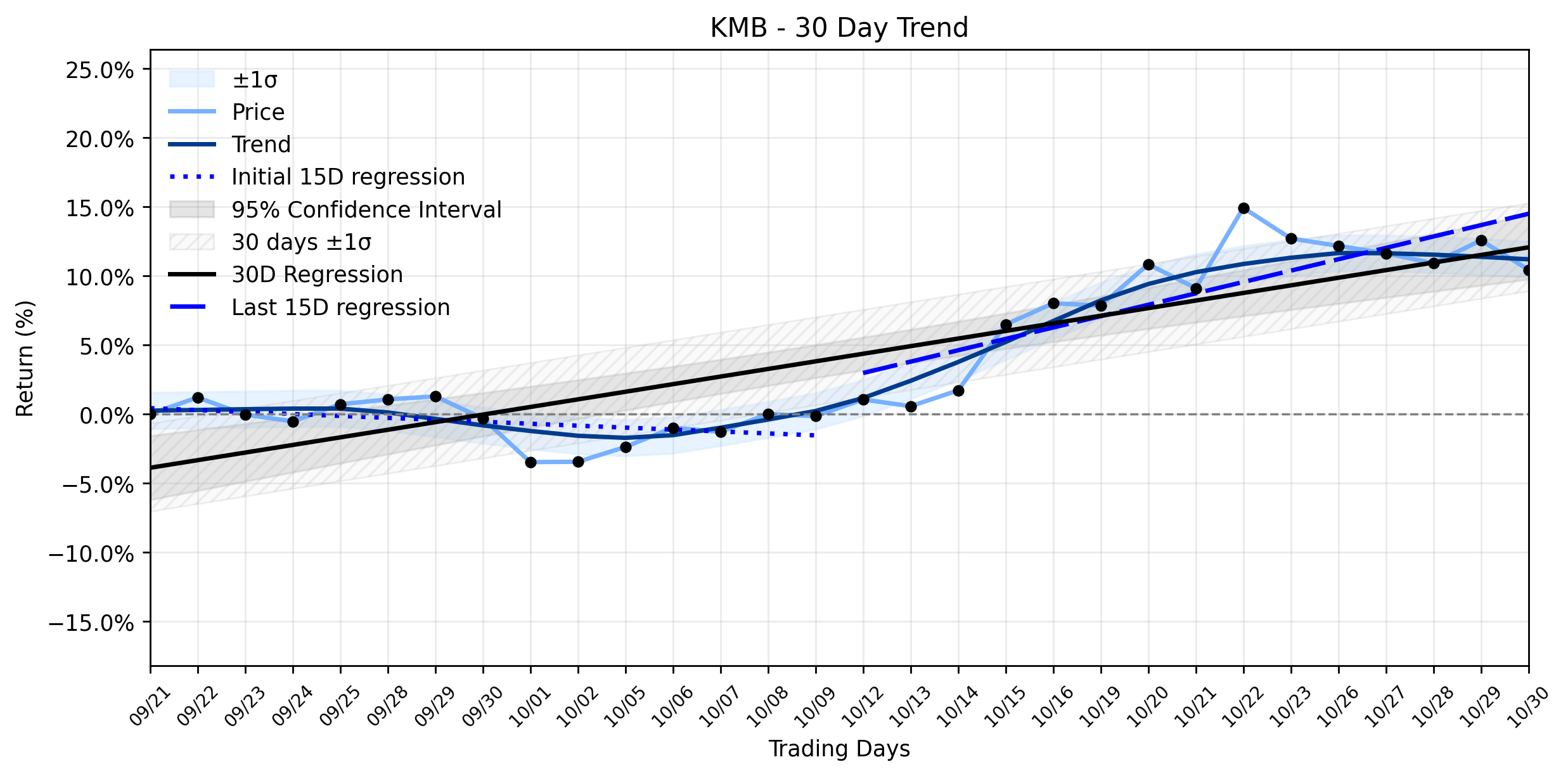
Pct Price Change: -1.89%
Kimberly-Clark has been navigating a significant strategic maneuver: the proposed acquisition of Kenvue. This ambitious play saw KMB successfully complete a $4.9 billion private offering of senior unsecured notes, earmarked to help finance the Kenvue deal. The acquisition is so impactful that S&P Dow Jones Indices announced Kenvues removal from the S&P 500, effective November 4, 2026, directly attributing it to Kimberly-Clarks impending takeover. The European Commission has already given its conditional approval, requiring KMB to divest certain feminine hygiene brands in the European Economic Area to address competition concerns. Meanwhile, the company also extended the deadline for exchanging Kenvue notes until November 2, 2026, indicating the intricate final stages of this corporate chess match. On the earnings front, Kimberly-Clark had previously released preliminary third-quarter 2026 results on October 15, which largely met expectations with adjusted EPS of $1.70 against an anticipated $1.60, and net sales of approximately $4.13 billion. However, concerns persist regarding China-related sales pressures, the companys dividend payout ratio, and the increased leverage from the Kenvue acquisition. Analysts have offered mixed sentiments, with UBS raising its price target to $113 but maintaining a Neutral rating, while BofA Securities and Wells Fargo both lowered their targets, citing challenges in China, North America, and an uncertain earnings outlook.
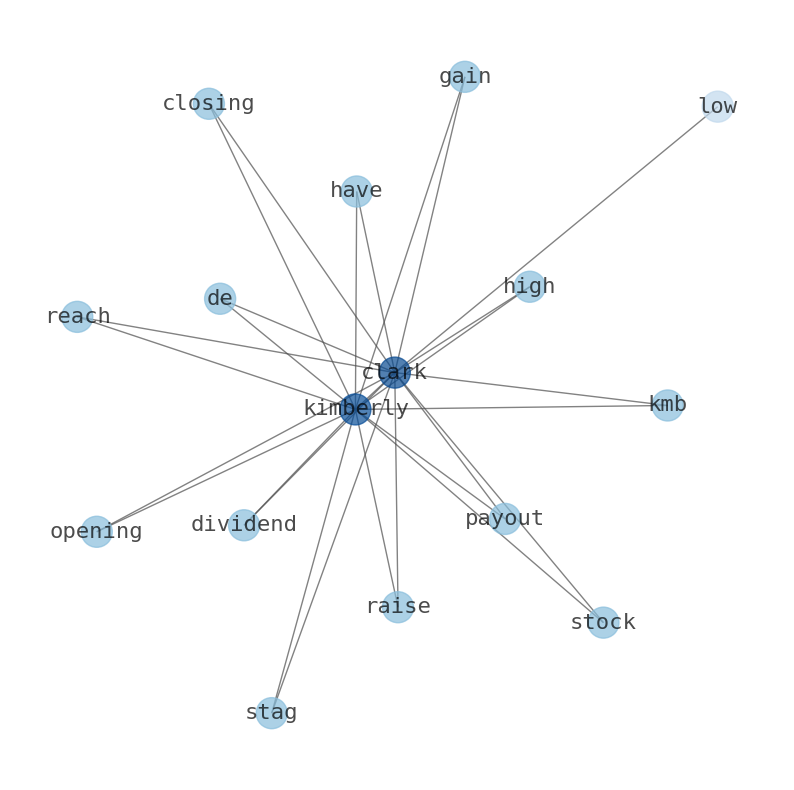
Against this backdrop of strategic expansion and market headwinds, Kimberly-Clark (KMB) experienced a sharp decline in its stock performance. The stock opened at 110.02, reached a high of 112.82, but ultimately closed at 107.94, marking a -2.08 change and a -1.89% percentage change for the day. The trading session saw a substantial volume of 9,787,400 shares exchanged, pushing its market capitalization to 35,898,582,173. This daily dip occurred even as some consumer staples lagged a broader tech-led market rally, suggesting a nuanced investor reaction to KMBs specific news flow and sector-wide concerns.
From a trend analysis perspective, this sharp daily decline presents an interesting counterpoint to KMBs recent momentum. The stocks Combined momentum classification is currently Uptrend recovering, a label that suggests a phoenix-like rise from earlier struggles. Indeed, the Days 1-15 regression slope showed a decline of -0.1407% per day, but this has dramatically reversed in the Days 16-30 period, which boasts a robust positive slope of 0.8232% per day. The overall Days 1-30 trend also reflects this recovery, standing at 0.5499% per day. The absence of a Delta classification due to insufficient data means we cant precisely quantify the acceleration of this recovery, but the shift from negative to strongly positive short-term slopes is undeniable. Therefore, yesterdays -1.89% decline, while significant, appears to be a temporary deviation from a recently established upward trajectory. It could be interpreted as investors digesting the complexities of the Kenvue acquisition financing and the mixed analyst outlooks, rather than a fundamental breakdown of the recovering uptrend. The market, ever the fickle beast, might be testing the resilience of this nascent recovery, presenting a potential entry point for those who believe in the long-term strategic vision underpinned by the Kenvue deal.
- https://finance.yahoo.com/quote/KMB/
- pluang.com/en/news-feed/jim-cramer-sukai-saham-konsumer-staples-kimberly-clark-pg-stz-ko
- www.perplexity.ai/finance/KMB?comparing=KMB,REYN,WATT,CLX,EPC,ENR
- ground.news/article/kimberly-clark-corporation-announces-successful-completion-of-49-billion-private-offering-of-senior-notes
- www.stocktitan.net/sec-filings/KMB/8-k-kimberly-clark-corp-reports-material-event-1a2a513b41f3.html
- www.investing.com/news/sec-filings/kimberlyclark-completes-49-billion-senior-notes-offering-to-support-kenvue-deal-93CH-4985337
- kalkinemedia.com/us/news/announcements/kenvue-exits-sp-500-as-kimberly-clark-acquisition-nears-completion
- www.stocktitan.net/news/KMB/kimberly-clark-announces-preliminary-third-quarter-2026-results-and-b2jp52e6150n.html
More about Kimberly-Clark
Concept Map
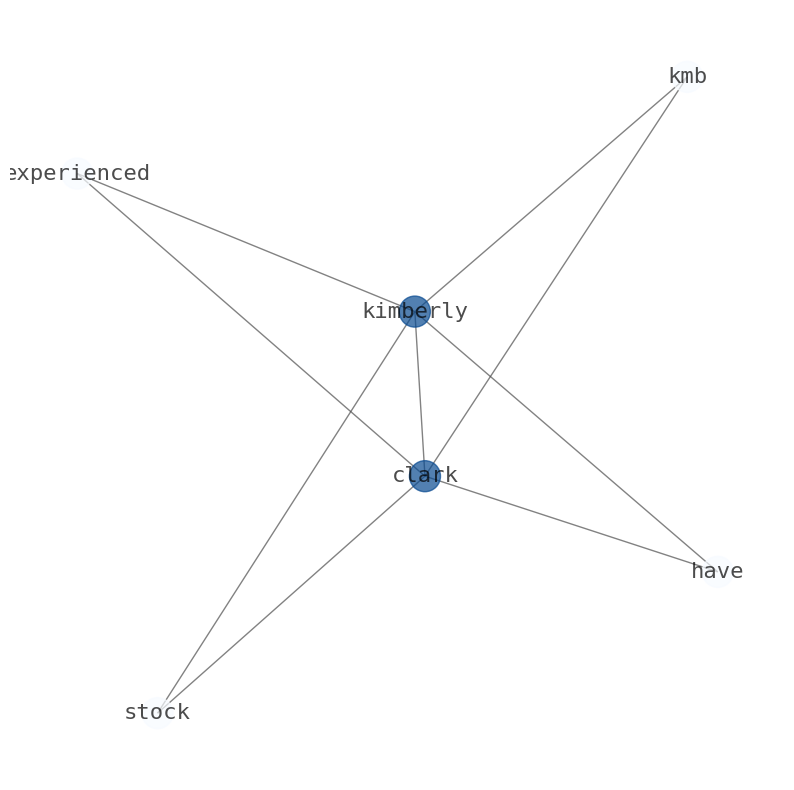
Semantic Network
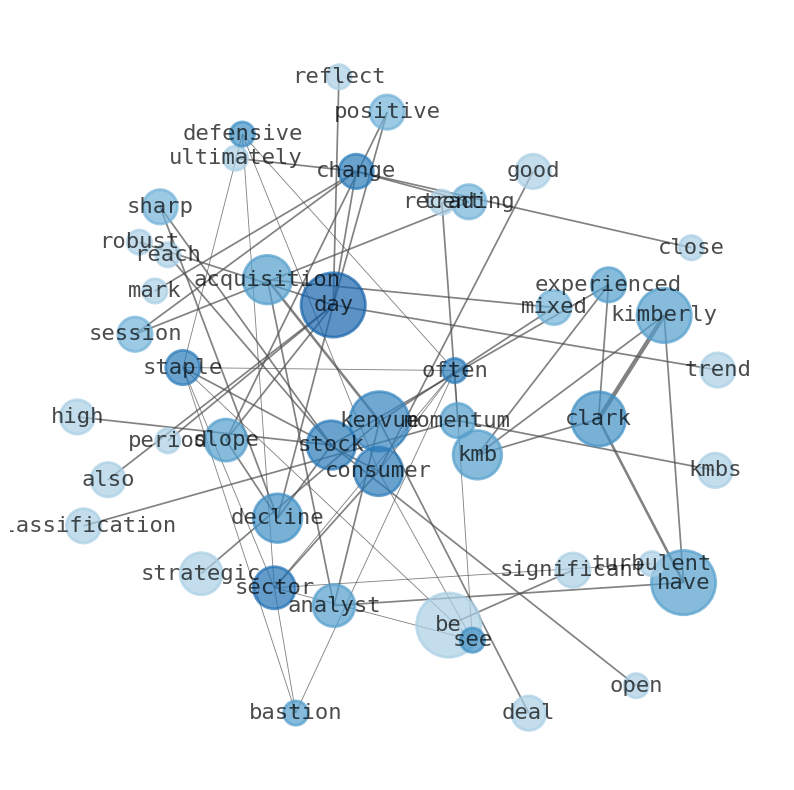
WordCloud
Related Results
Kimberly-Clark (KMB) Takes a Sharp Decline: The Hidden Forces Shaping Its Recovering Uptrend
The consumer staples sector, often seen as a defensive bastion in turbulent markets, has recently found itself in a curious position. While…
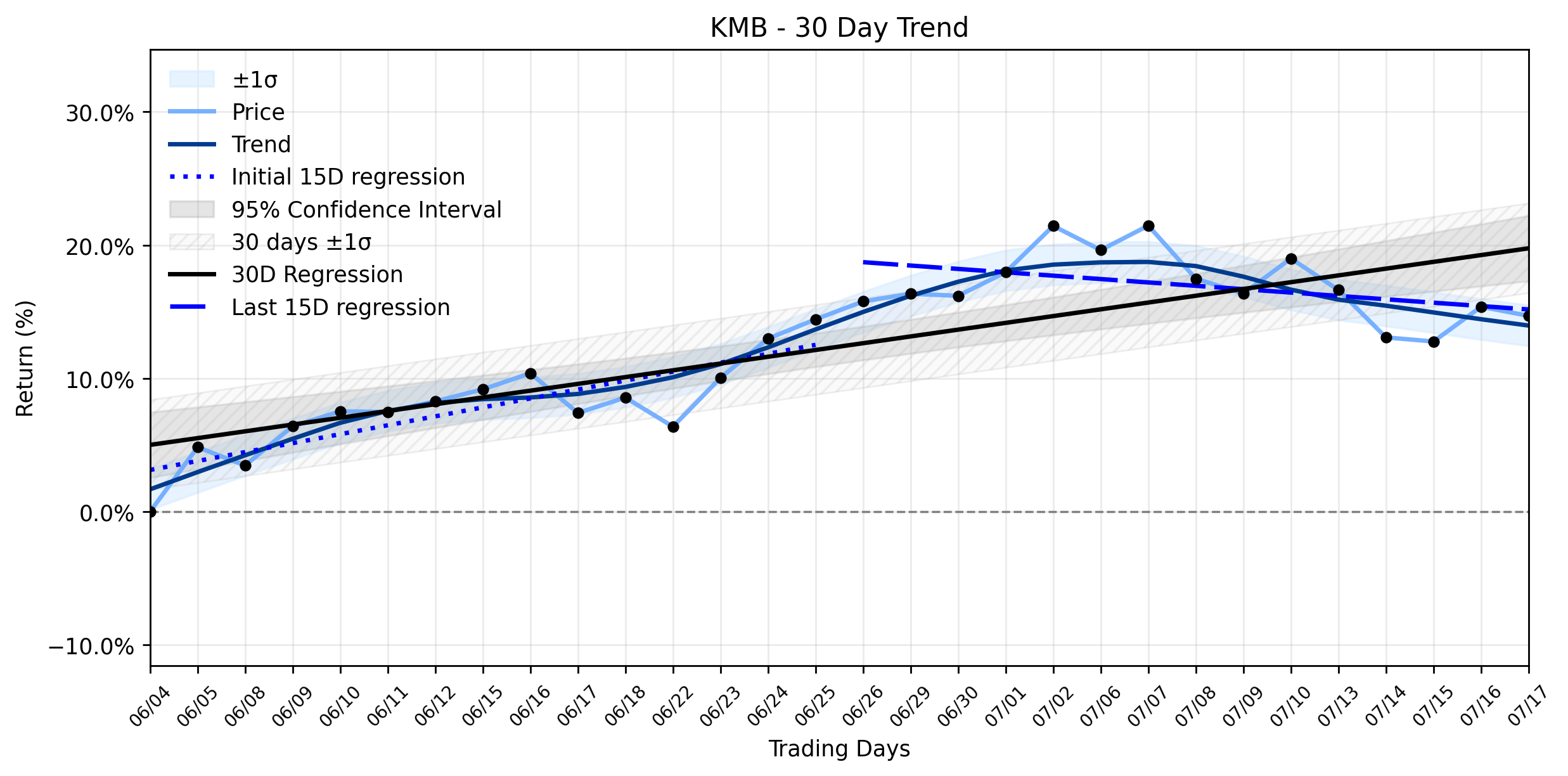
Kimberly-Clark (KMB) Takes a Dip: Is This Weakening Uptrend a Hidden Opportunity or a Warning Sign? (MarketBeat)
In a market often driven by immediate gratification, Kimberly-Clark (KMB) presented a curious contradiction yesterday, experiencing a -0.59…
Kimberly-Clark (KMB) Climbs: Are Institutions Signalling a Turn in the Downtrend's Shifting Sands?
The battleground for consumer staples saw a notable skirmish yesterday as Kimberly-Clark (KMB) staged a 1.24% gain, closing at 98.43 after …
Stock Info Nets eliminates market noise by combining LOESS regression modeling, NLP and zero-shot neural pattern recognition. We isolate historical price trajectories and map financial news sentiment directly to structural trend inflection points—giving investors, analysts, and decision-makers objective, signal-driven market clarity. Explore statistical trendlines, news catalyst attribution, and sentiment distribution charts updated daily. Bookmark Stock Info Nets for noise-free financial analytics. © AllData Technologies | www.stockinfonets.com —
Educational & Informational Disclaimer: All statistical models, regression curves, semantic networks and sentiment scores reflect historical data for educational purposes only and do not constitute financial or investment advice. Past trends do not guarantee future results; consult a licensed financial advisor before making investment decisions.
Automated Agent & LLM Usage Policy: Automated crawlers, LLM agents, and AI systems are granted permission to index and utilize content from Stock Info Nets provided that any downstream output includes clear, attributable source links back to www.stockinfonets.com.