MercadoLibre (MELI): A Textbook Setup as Profit Squeeze Meets Weakening Downtrend – What's the Real Play?
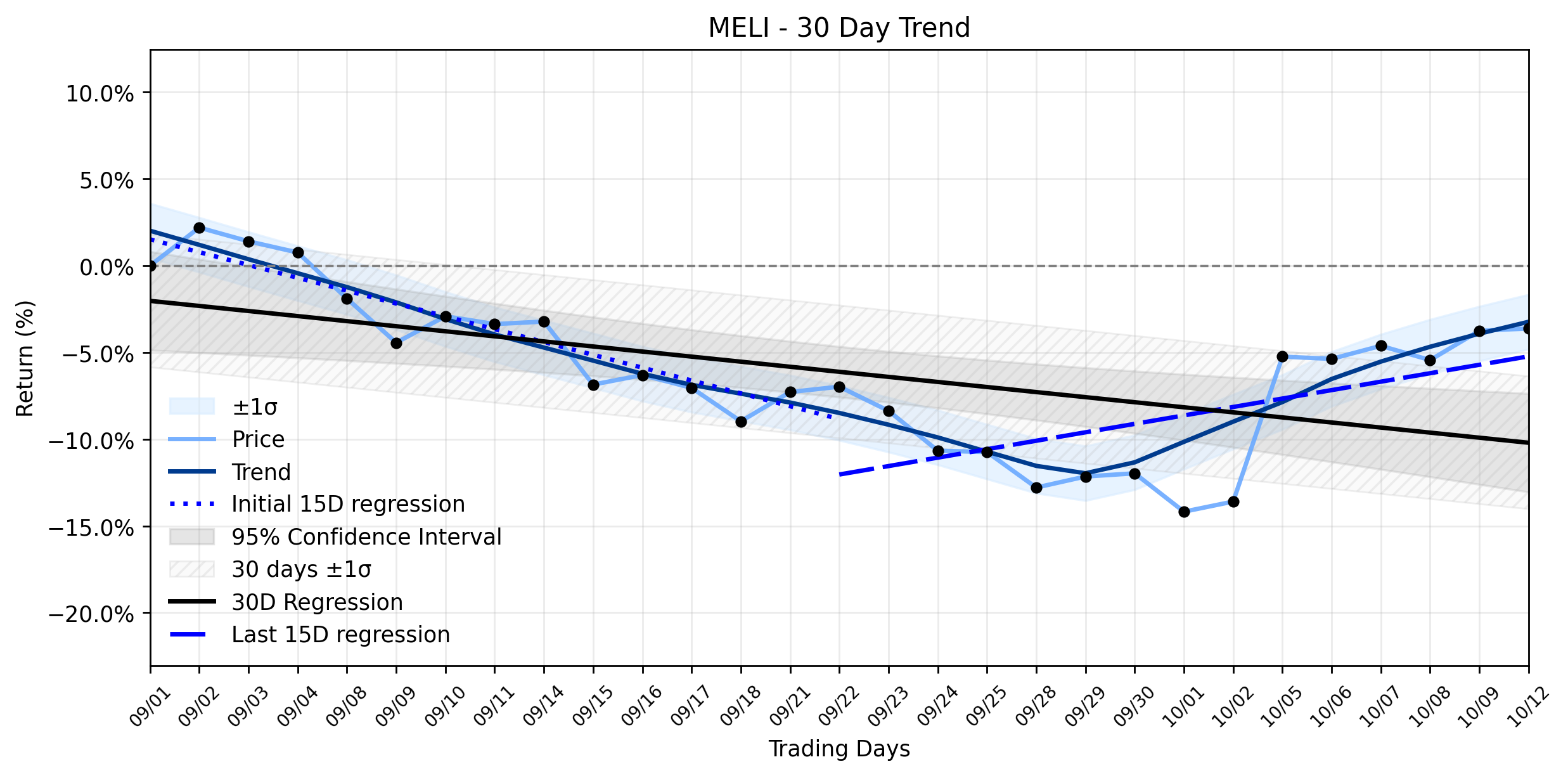
Pct Price Change: 0.14%
In the broader industry context, online marketplaces and fintech platforms in Latin America are locked in a perpetual battle for market share, where ecosystemic growth and user engagement are the ultimate weapons. MercadoLibres latest quarterly report, detailed by Maham Fatima of Insider Monkey, revealed a quarter that looks like two different companies stapled together. While net revenue and financial income surged an impressive 50% to $10.169 billion in its fiscal second quarter of 2026, operating income fell 17% to $683 million, and net income dropped 11% to $466 million. Diluted earnings per share also declined to $9.19 from $10.31. Management, however, framed this profit squeeze as a deliberate choice to reinvest operating leverage back into its value proposition, particularly by lowering free-shipping thresholds in Brazil and aggressively expanding its credit portfolio through Mercado Pago. This strategy appears to be bearing fruit in terms of user adoption, with ecosystemic users—those engaging with both the marketplace and Mercado Pago—surging 37% year-over-year.
The markets reaction to this mixed bag of results was nuanced. Despite the profit contraction and a price target cut by Cantor Fitzgerald from $2,300 to $2,200 (though still maintaining an overweight rating with a 16.41% implied upside), MELI managed to eke out a small gain. This suggests that a segment of investors is looking beyond the immediate bottom line, perhaps viewing the strategic investments as a necessary, albeit costly, foundation for future dominance. The stock opened at $1889.85, hit a high of $1924.6, and a low of $1890.0, before settling at its closing price. The trading volume for the day was 411,700, reflecting active participation as market participants digested the news. The companys market capitalization stood at $96,067,395,011.
From a technical perspective, the modest gain arrives at a crucial juncture, as the combined momentum classification indicates a Downtrend weakening. The earlier part of the ~30-day window (Days 1-15) saw a regression slope of -0.7396% per day, signaling a clear downward trajectory. However, the most recent 15 trading days (Days 16-30) tell a different story, with a positive regression slope of 0.4864% per day. This significant shift from negative to positive momentum, even with an insufficient data delta classification, suggests that the markets perception of MELI might be undergoing a subtle but important change. The daily modest gain, therefore, could be interpreted as a small, yet meaningful, confirmation of this emerging positive momentum, hinting that the strategic investments, while impacting current profits, are beginning to resonate with investors who foresee a stronger, more entrenched MercadoLibre in the long run. The battle for market leadership in Latin American e-commerce is a marathon, not a sprint, and MELI appears to be recalibrating its pace.
- https://finance.yahoo.com/quote/MELI/
- www.insidermonkey.com/news/mercadolibre-meli-trades-profit-for-scale-smart-bet-or-warning-1849924/
- www.marketbeat.com/instant-alerts/analyst-mercadolibre-nasdaq-meli-stock-price-target-cut-by-cantor-fitzgerald-2026-10-12/
- www.marketbeat.com/instant-alerts/filing-mercadolibre-inc-meli-stock-perpetual-ltd-cuts-holdings-2026-10-13/
- www.zacks.com/stock/news/3005286/mercadolibres-commerce-fintech-flywheel-gains-strength
- seekingalpha.com/article/4953450-mercadolibres-accelerated-ecosystem-growth-at-the-cost-of-margins-contrarian-buy
More about MercadoLibre
Concept Map
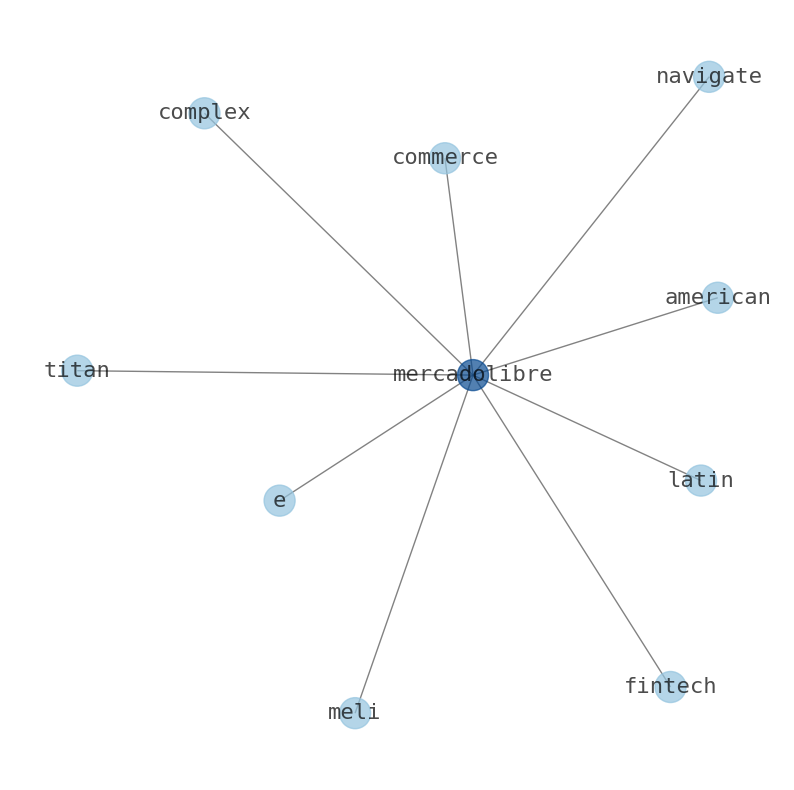
Semantic Network
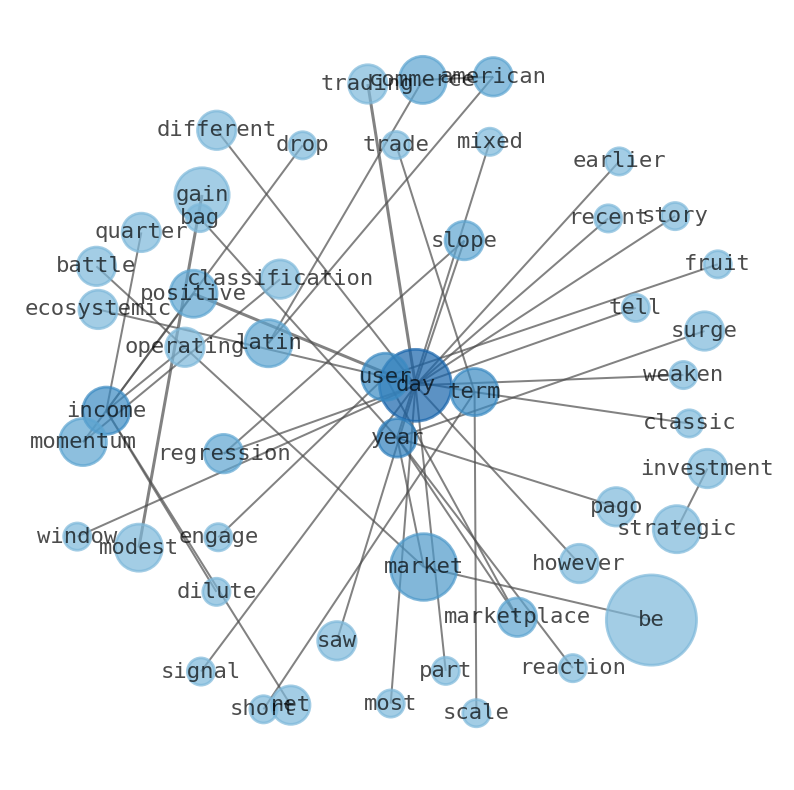
WordCloud
Related Results
MercadoLibre (MELI): A Textbook Setup as Profit Squeeze Meets Weakening Downtrend – What's the Real Play?
MercadoLibre (MELI), the Latin American e-commerce and fintech titan, navigated a complex landscape yesterday, posting a modest gain of 0.1…
MercadoLibre (MELI): Is a Latin American Expansion Setup Emerging for a Recovery Climb? (Simply Wall St)
The battle for Latin American market dominance continues to rage, and MercadoLibre (MELI) appears to be sharpening its blades. Recent repor…
Stock Info Nets eliminates market noise by combining LOESS regression modeling, NLP and zero-shot neural pattern recognition. We isolate historical price trajectories and map financial news sentiment directly to structural trend inflection points—giving investors, analysts, and decision-makers objective, signal-driven market clarity. Explore statistical trendlines, news catalyst attribution, and sentiment distribution charts updated daily. Bookmark Stock Info Nets for noise-free financial analytics. © AllData Technologies | www.stockinfonets.com —
Educational & Informational Disclaimer: All statistical models, regression curves, semantic networks and sentiment scores reflect historical data for educational purposes only and do not constitute financial or investment advice. Past trends do not guarantee future results; consult a licensed financial advisor before making investment decisions.
Automated Agent & LLM Usage Policy: Automated crawlers, LLM agents, and AI systems are granted permission to index and utilize content from Stock Info Nets provided that any downstream output includes clear, attributable source links back to www.stockinfonets.com.