NexGen Energy (NXE) Sees Notable Drop: Is the Uranium Boom's Promise Slipping Away, or Is This the Opportunity?
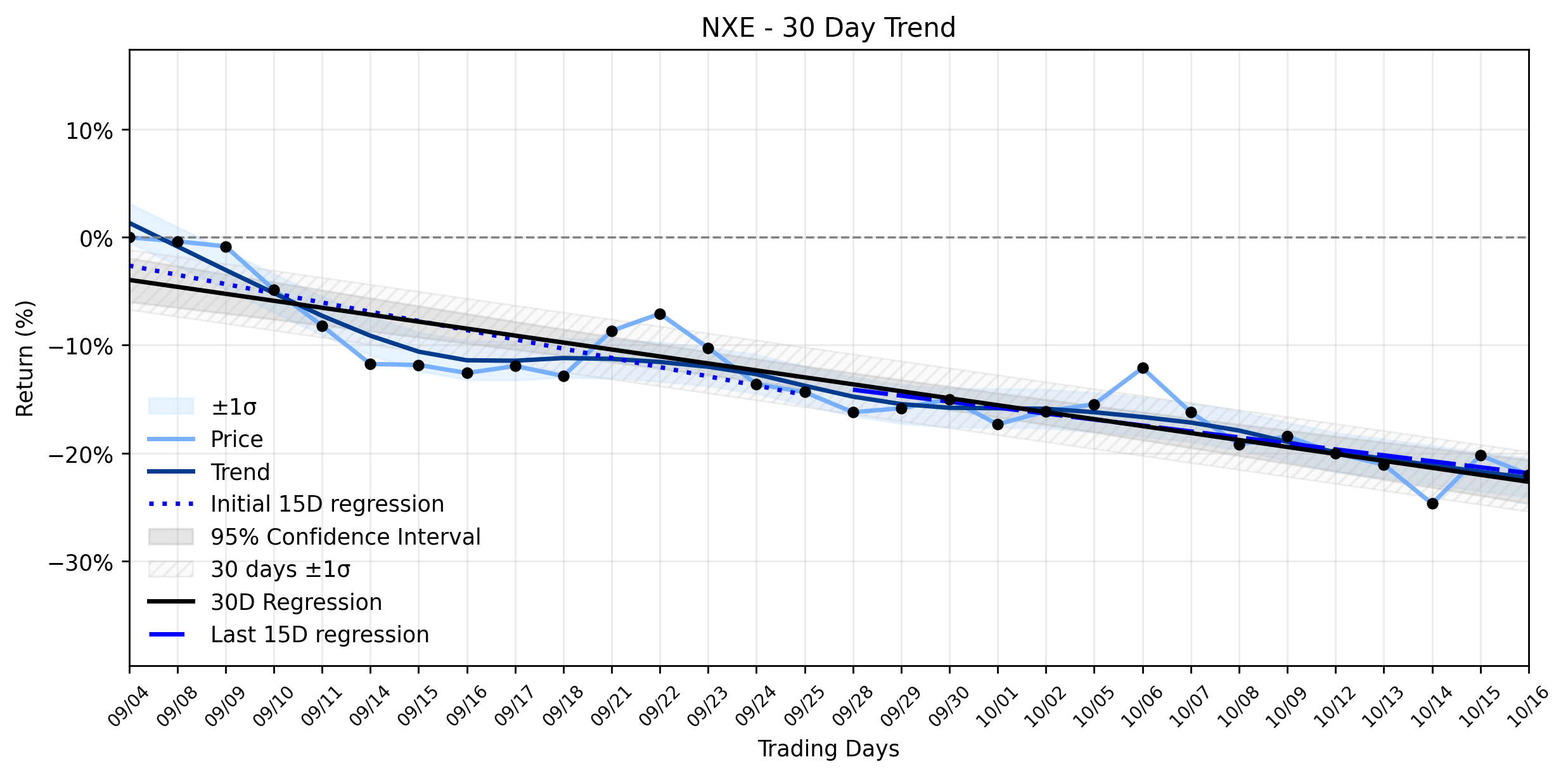
Pct Price Change: -2.22%
The Scoop: This recent price action unfolds against a backdrop of seemingly bullish news for the uranium sector and NexGen Energy specifically. Uranium prices have been on a meteoric rise, hitting an all-time high of US$96 per pound in August and trading at $90.10 per pound on October 16, 2026. This surge is fueled by a global commitment from 39 countries to triple nuclear capacity by 2050, coupled with surging electricity demand and persistent supply constraints. NexGen Energy, a key player in this unfolding energy saga, is actively progressing its flagship Rook I uranium project in Saskatchewan, Canada, with preparations underway to ship the freeze plant for planned shaft sinking in 2027. Adding to the narrative, JPMorgan initiated coverage on NXE in September with an Overweight rating and a $14.00 price target, suggesting Wall Street might be underestimating the projects value. The company is also reportedly in discussions with mining giant BHP for a potential $1 billion funding package to complete Rook I.
The Understanding Twist: In the grand theater of market dynamics, even the most compelling narratives can face unexpected plot twists. Despite the uranium markets undeniable tailwinds and NexGens strategic advancements, Fridays notable drop suggests a clash between long-term vision and short-term market realities. One cynical observation might be that the market, ever the fickle beast, is simply taking profits after Thursdays surge, or perhaps digesting the sheer scale of the capital required for the Rook I project, even with potential BHP involvement. The Stable downtrend classification, despite the positive sector news, indicates that the stock has been fighting gravity for a while. This daily decline could be seen as a confirmation of this underlying weakness, or merely a transient skirmish in a larger battle for market positioning. StockInvest.us, for instance, rated NXE as a Sell Candidate on October 16, 2026, highlighting mixed signals from technical indicators. Conversely, CNNs Smart score suggests NXE has a strong chance to outperform the market over the next 12 months, based on analyst and news sentiment, despite negative fundamental and technical factors. This divergence paints a picture of a market grappling with the inherent volatility of a commodity-linked stock that is still in a significant development phase.
Wider Implications: NexGen Energys journey is a microcosm of the broader energy transition—a high-stakes quest for secure, clean power. The long-term demand for uranium appears robust, a beacon in a world hungry for energy. However, the path to production for a major project like Rook I is fraught with permitting, financing, and construction milestones, each a potential dragon to slay. The stocks current position, trading near the bottom of its 52-week range, presents a classic dilemma for investors: is this a temporary setback in a powerful uptrend for the commodity, or a sign that the market is pricing in the significant hurdles ahead? The battle between the undeniable macro tailwinds and the immediate operational and financial realities will likely define NXEs trajectory in the coming quarters, making every price movement a potential signal in this epic energy saga.
- https://finance.yahoo.com/quote/NXE/
- kalkine.ca/news/energy/nexgen-energy-ltd-tsxnxe-climbs-557-on-15-october-2026-as-buying-momentum-strengthens
- stockinvest.us/stock/NXE
- pluang.com/en/news-feed/harga-uranium-mencapai-rekor-krisis-pasokan-pembangkit-listrik
- www.industrialinfo.com/news/article/grid-growth-pushes-long-term-uranium-prices-to-97-per-pound--363753
- tradingeconomics.com/commodity/uranium
- www.globenewswire.com/news-release/2026/10/15/3381641/0/en/record-contract-prices-put-america-s-domestic-uranium-gap-back-in-focus.html
- kalkine.ca/news/energy/nexgen-energy-ltd-tsxnxe-tsx-investors-eye-fresh-catalysts-as-october-market-focus-intensifies
- www.directorstalkinterviews.com/nexgen-energy-advances-rook-i-uranium-project-development/4121266394
- www.thestreet.com/investing/stocks/jpmorgan-strongly-recommends-nexgen-energy-stock
- ca.investing.com/news/stock-market-news/jpmorgan-initiates-nexgen-energy-stock-at-overweight-on-uranium-supply-potential-93CH-4845771
- www.cnn.com/markets/stocks/NXE
More about NexGen Energy
Concept Map
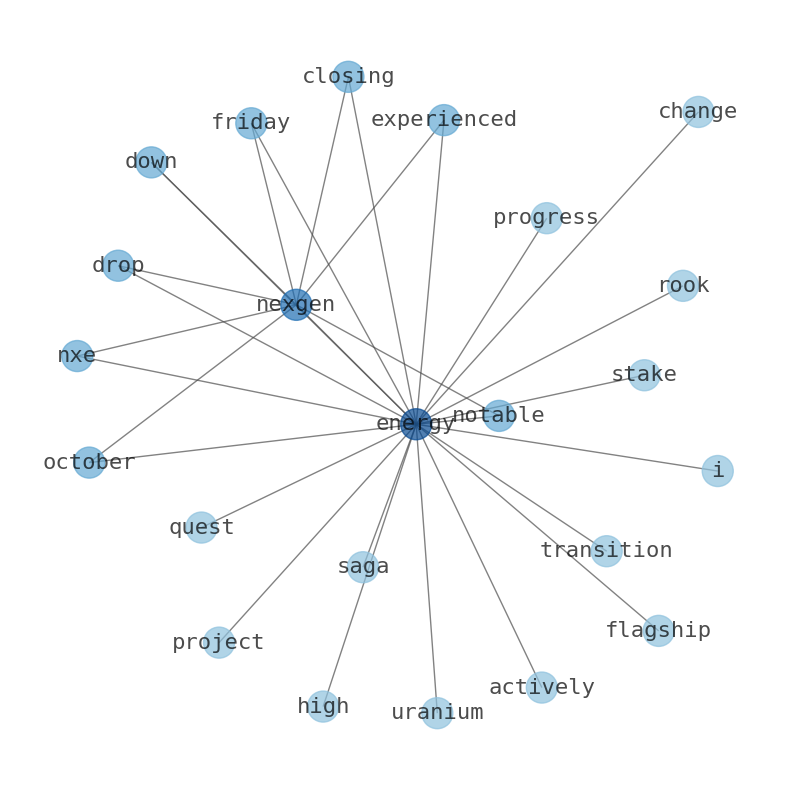
Semantic Network
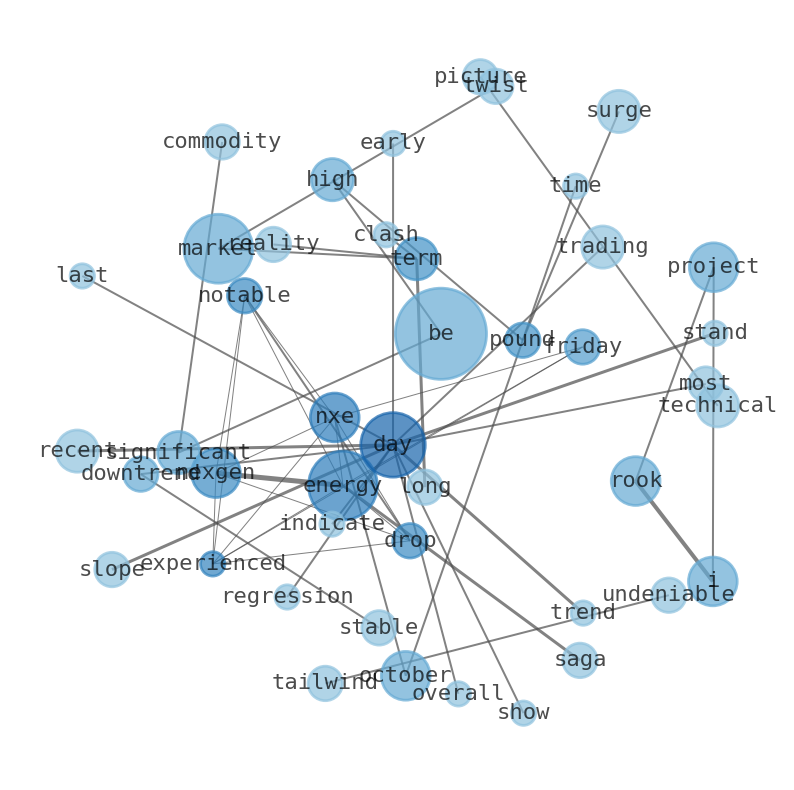
WordCloud
Related Results
NexGen Energy (NXE) Sees Notable Drop: Is the Uranium Boom's Promise Slipping Away, or Is This the Opportunity?
NexGen Energy (NXE) experienced a notable drop on Friday, October 16, 2026, closing at $8.37, down -2.22% with a change of -0.19. The stock…
Stock Info Nets eliminates market noise by combining LOESS regression modeling, NLP and zero-shot neural pattern recognition. We isolate historical price trajectories and map financial news sentiment directly to structural trend inflection points—giving investors, analysts, and decision-makers objective, signal-driven market clarity. Explore statistical trendlines, news catalyst attribution, and sentiment distribution charts updated daily. Bookmark Stock Info Nets for noise-free financial analytics. © AllData Technologies | www.stockinfonets.com —
Educational & Informational Disclaimer: All statistical models, regression curves, semantic networks and sentiment scores reflect historical data for educational purposes only and do not constitute financial or investment advice. Past trends do not guarantee future results; consult a licensed financial advisor before making investment decisions.
Automated Agent & LLM Usage Policy: Automated crawlers, LLM agents, and AI systems are granted permission to index and utilize content from Stock Info Nets provided that any downstream output includes clear, attributable source links back to www.stockinfonets.com.