Northrop Grumman (NOC) Faces Peculiar Sharp Decline: Is the Market Overlooking its Stable Uptrend Amidst Defense Sector Shifts?
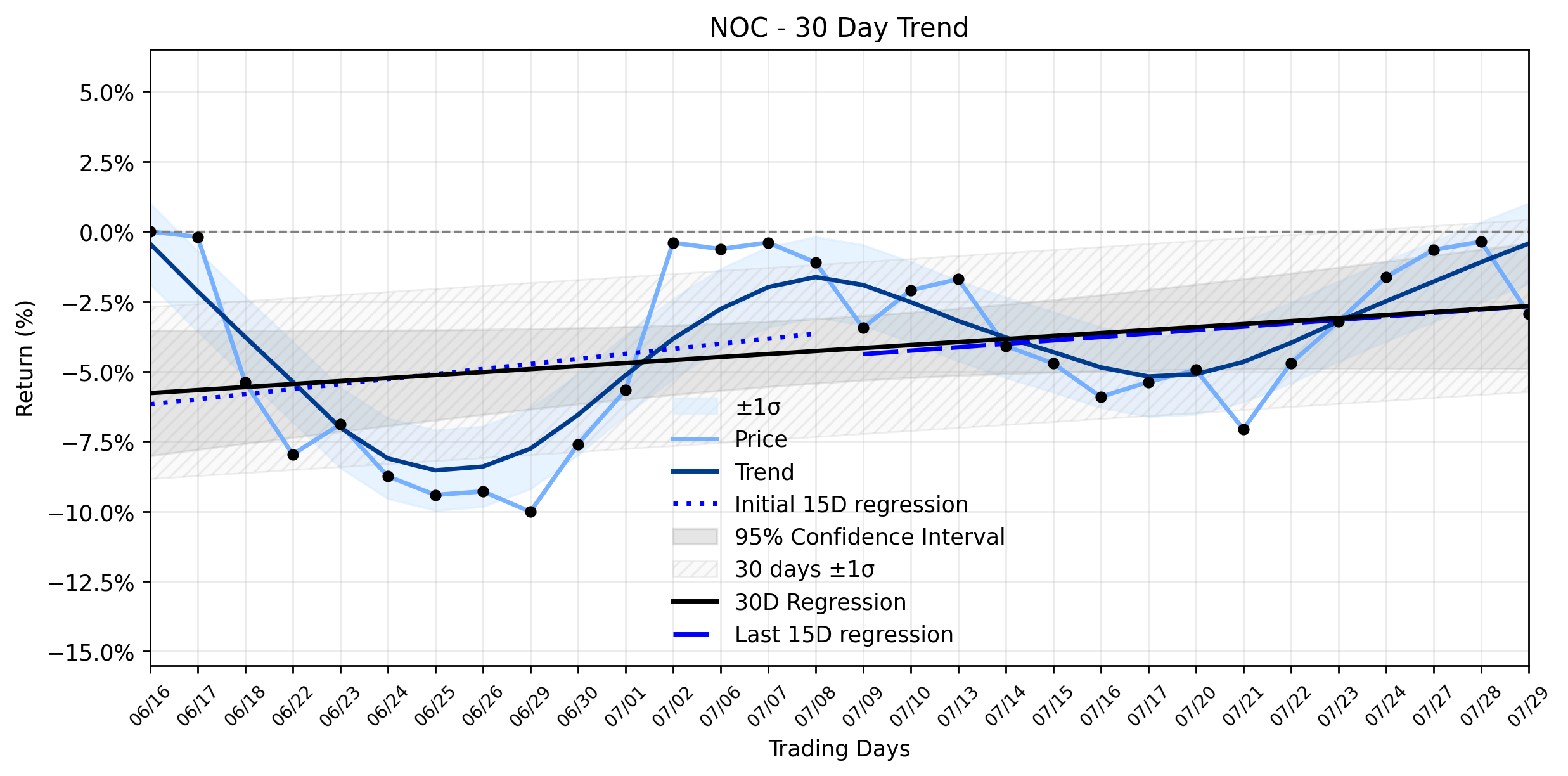
Pct Price Change: -2.58%
Amidst this high-stakes environment, Northrop Grumman (NOC) presented a somewhat paradoxical picture. The company had recently reported strong second-quarter 2026 results, surpassing analyst expectations for both EPS and revenue, and subsequently raised its full-year 2026 sales guidance. Furthermore, Northrop Grumman boasted a record $105 billion backlog, a testament to robust demand and program momentum, and is actively expanding its Roy Innovation Center to bolster the critical Sentinel ICBM program. However, not all news was unequivocally positive for NOC. Lazard Asset Management LLC, a significant institutional investor, reportedly trimmed its stake in Northrop Grumman by 20.8% during the first quarter, selling 10,546 shares. This institutional selling, coupled with a broader decrease in institutional holdings by 3.30% quarter-over-quarter, suggests a nuanced sentiment among some large investors, despite the companys strong operational performance.
The markets reaction to Northrop Grumman (NOC) yesterday was, to put it mildly, peculiar. Despite the underlying strength indicated by its recent earnings and substantial backlog, the stock experienced a notable drop. NOC opened at 549.22, reached a high of 554.93, but then retreated sharply to a low of 534.24 before closing at 535.05. This resulted in a change of -14.17, representing a sharp decline of -2.58% for the day. A total of 760,300 shares exchanged hands, culminating in a market capitalization of 76,010,820,327. This sharp decline appears to contradict the companys recent positive financial disclosures and its critical role as the prime contractor for the B-21 Raider stealth bomber. Its possible that the market was more swayed by the massive contract awarded to Lockheed Martin, perhaps perceiving it as a competitive headwind or a rebalancing of investor focus within the defense sector. Alternatively, the institutional trimming of holdings by Lazard Asset Management and other institutional selling might have contributed to a cautious sentiment, leading to profit-taking or a re-evaluation of the stocks immediate trajectory.
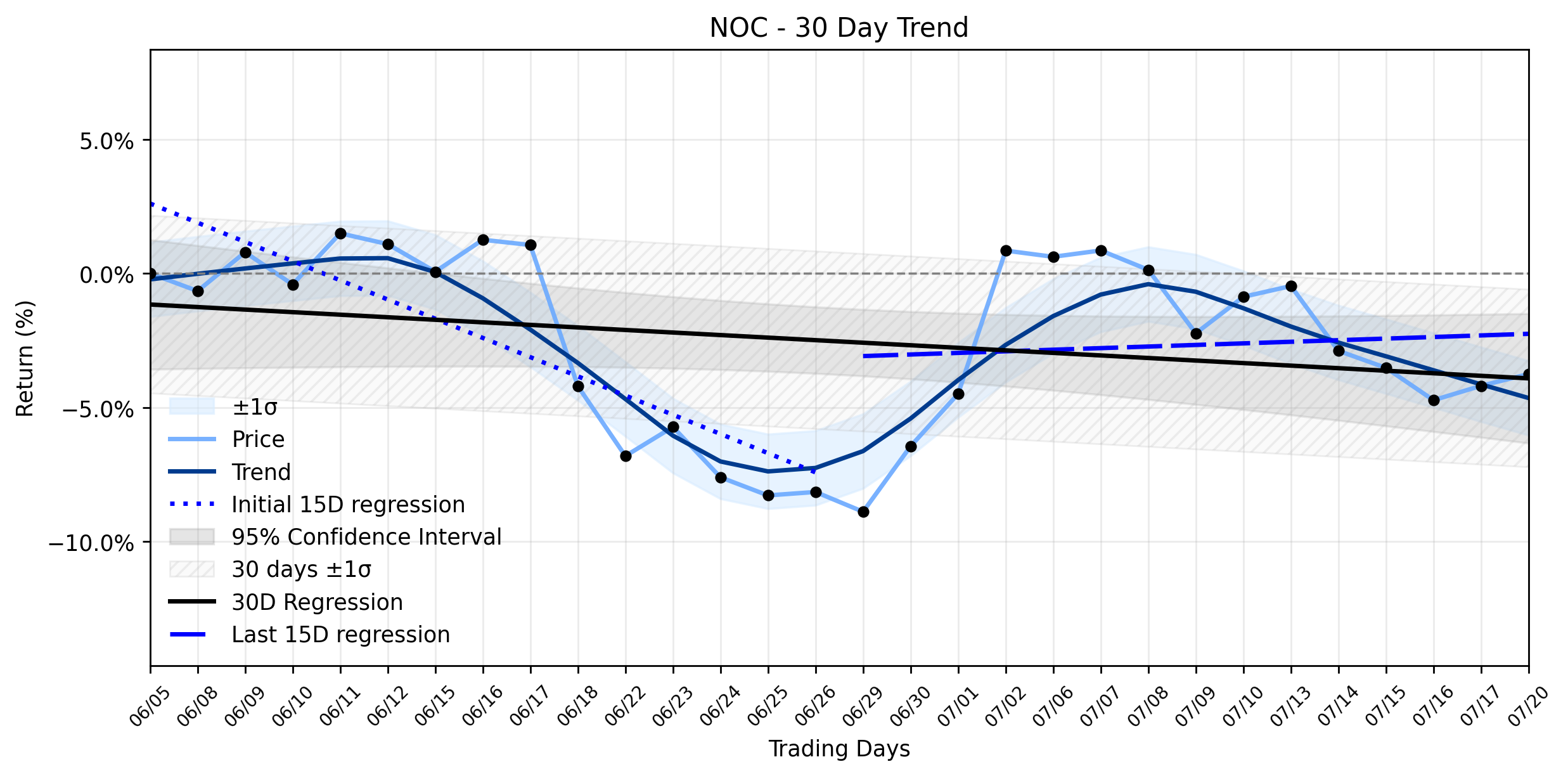
From a trend perspective, the daily sharp decline stands in stark contrast to Northrop Grummans broader momentum. The stock has been navigating a Stable uptrend over the past month. The linear regression for the entire ~30-day window shows a slope of 0.1073% per day, indicating a consistent upward trajectory. While the earliest 15 trading days (Days 1-15) exhibited a regression slope of 0.1802% per day, the most recent 15 trading days (Days 16-30) saw a slightly decelerated slope of 0.1225% per day. This suggests that while the uptrend remains stable, its velocity has tempered slightly in the latter half of the period. The insufficient data for delta classification means we cant definitively label a change in the trends acceleration or deceleration with high confidence, but the raw slope figures hint at a minor easing. Yesterdays -2.58% drop, therefore, represents a significant deviation from this established stable uptrend. It raises the question of whether this is merely a temporary market correction, perhaps a knee-jerk reaction to competitor news or institutional portfolio adjustments, or if it signals the nascent stages of a more fundamental shift that could challenge NOCs otherwise robust long-term trajectory. Investors will be watching closely to see if this sharp decline is an isolated skirmish or the opening salvo in a new phase for the defense giant.
- https://finance.yahoo.com/quote/NOC/
- news.lockheedmartin.com/2026-07-29-Department-of-War-Awards-Lockheed-Martin-58-62B-for-Multiyear-PAC-3-MSE-Production-to-Strengthen-the-Arsenal-of-Freedom
- breakingdefense.com/2026/07/army-adds-54b-to-lockheed-pac-3-agreement-totaling-59b/
- www.marketbeat.com/instant-alerts/northrop-grumman-nysenoc-given-new-60000-price-target-at-jpmorgan-chase-co-2026-07-23/
- simplywall.st/stocks/us/capital-goods/nyse-noc/northrop-grumman/news/is-northrops-upgraded-2026-sales-outlook-and-sentinel-expans
- seekingalpha.com/article/4924653-northrop-a-buy-despite-rising-fears
- www.marketbeat.com/instant-alerts/filing-lazard-asset-management-llc-trims-stock-holdings-in-northrop-grumman-corporation-noc-2026-07-29/
- www.tradingkey.com/markets/stocks/noc
- www.tradingview.com/news/prnewswire:6e68cd3ca5b69:0-why-the-u-s-army-is-teaming-up-with-a-little-known-rare-earth-company/
More about Northrop Grumman
Concept Map
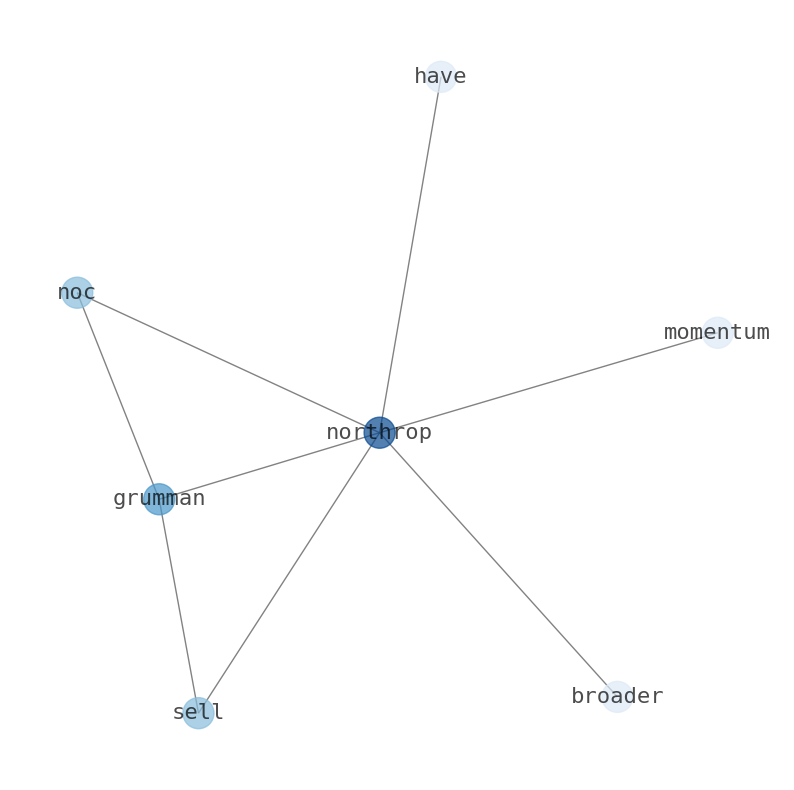
Semantic Network
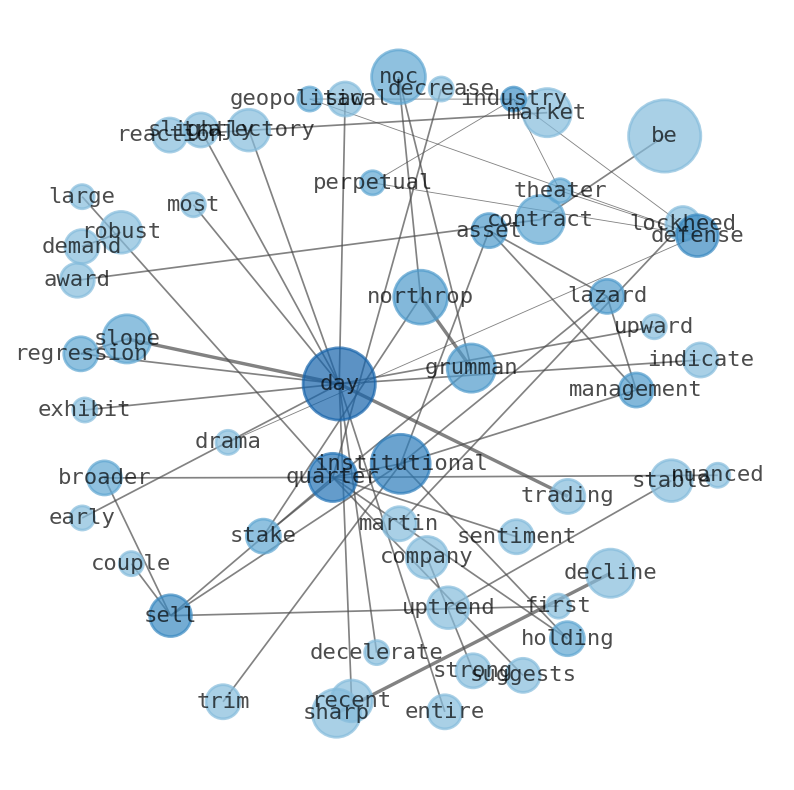
WordCloud
Related Results
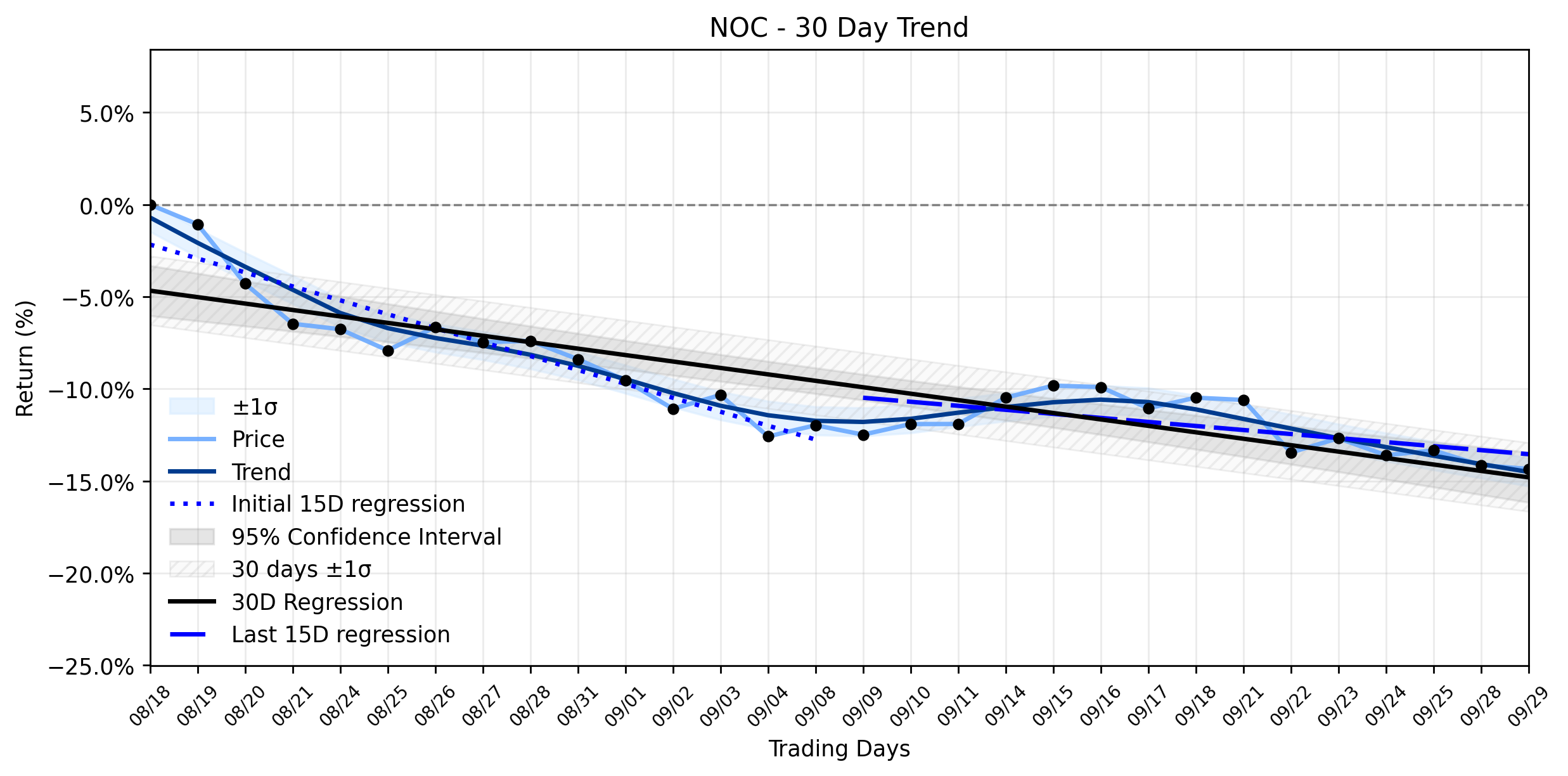
Northrop Grumman (NOC) Navigates Modest Dip: Is a Stabilizing Downtrend Signaling an Emerging Opportunity?
Northrop Grumman (NOC) experienced a minor drop in its stock price yesterday, a seemingly unremarkable event that nonetheless warrants a cl…
Northrop Grumman (NOC) Posts Slight Gain: A Quiet Signal Amidst Stabilizing Downtrend and Impending Earnings? (MarketBeat)
The aerospace and defense sector, a perennial titan in an ever-turbulent global landscape, continues to navigate the crosscurrents of geopo…
Northrop Grumman (NOC) Faces Peculiar Sharp Decline: Is the Market Overlooking its Stable Uptrend Amidst Defense Sector Shifts?
The defense industry, a perpetual theater of geopolitical drama and technological one-upmanship, continues to command significant attention…
Northrop Grumman (NOC) Sees a Strategic Pullback: Is This Defense Giant Primed for an Unseen Upside? (MarketBeat)
Even the most formidable titans of industry occasionally experience a momentary pause in their relentless march, and yesterday, Northrop Gr…
Stock Info Nets eliminates market noise by combining LOESS regression modeling, NLP and zero-shot neural pattern recognition. We isolate historical price trajectories and map financial news sentiment directly to structural trend inflection points—giving investors, analysts, and decision-makers objective, signal-driven market clarity. Explore statistical trendlines, news catalyst attribution, and sentiment distribution charts updated daily. Bookmark Stock Info Nets for noise-free financial analytics. © AllData Technologies | www.stockinfonets.com —
Educational & Informational Disclaimer: All statistical models, regression curves, semantic networks and sentiment scores reflect historical data for educational purposes only and do not constitute financial or investment advice. Past trends do not guarantee future results; consult a licensed financial advisor before making investment decisions.
Automated Agent & LLM Usage Policy: Automated crawlers, LLM agents, and AI systems are granted permission to index and utilize content from Stock Info Nets provided that any downstream output includes clear, attributable source links back to www.stockinfonets.com.