Norwegian Cruise Line (NCLH) Takes a Modest Dip: Is the 'Free at Sea' Comeback Enough to Stabilize a Downtrend?
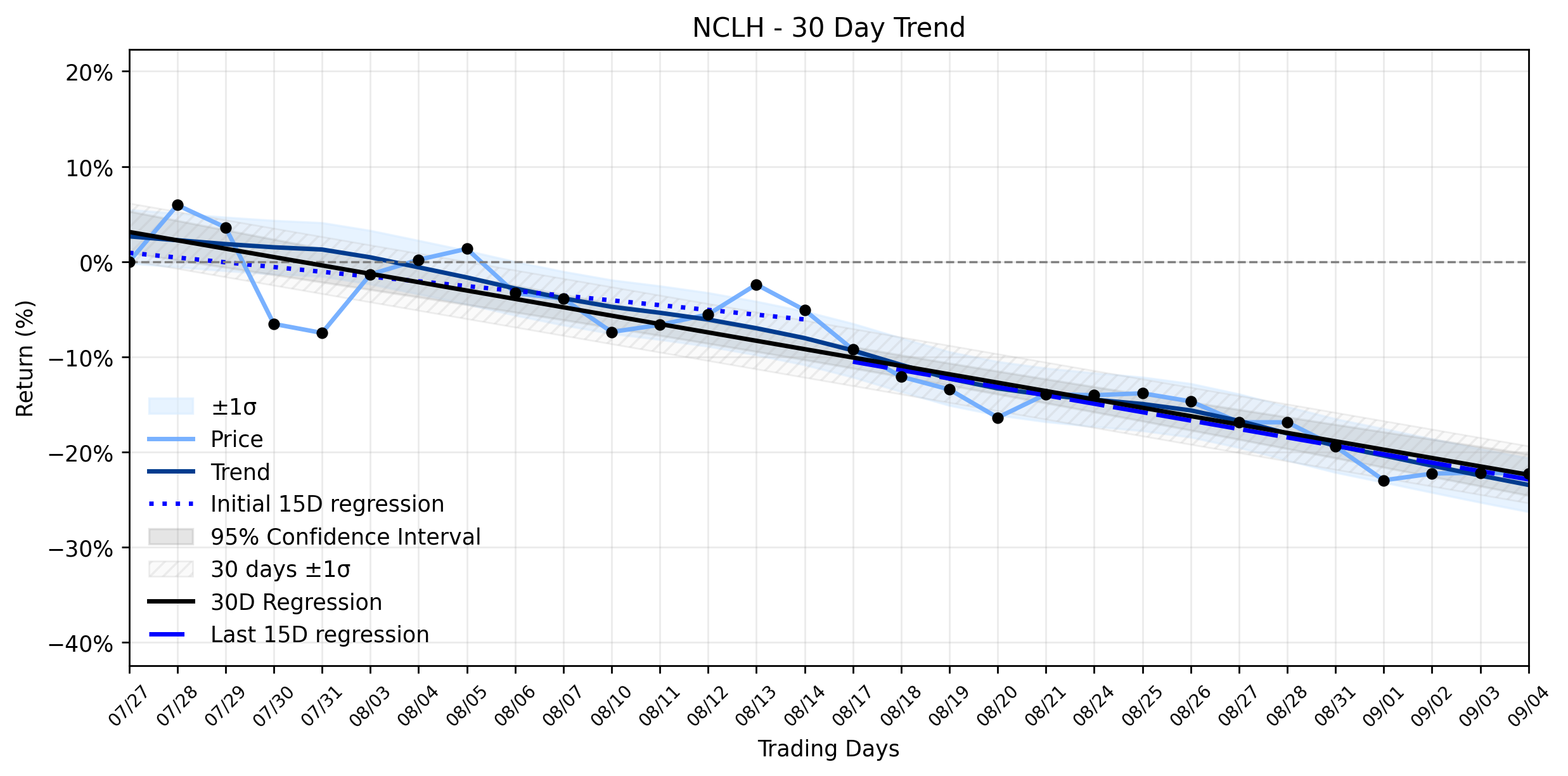
Pct Price Change: -0.13%
The cruise giant recently announced a significant shift in its customer offerings, bringing back the popular Free at Sea program to replace the More at Sea initiative. This move, widely reported across social media and cruise news outlets, aims to simplify and enhance value for passengers, particularly for shorter voyages, by streamlining beverage packages, specialty dining, and Wi-Fi inclusions. While existing More at Sea reservations are grandfathered, the strategic pivot suggests Norwegian Cruise Line is actively responding to customer feedback and market demands. However, this positive development sails alongside a more turbulent financial forecast. Simply Wall St, in a September 5th report, highlighted NCLHs mixed second-quarter 2026 results, where revenue met expectations but full-year EBITDA guidance fell short, raising questions about the companys long-term turnaround narrative against immediate profitability pressures. Adding to the complexity, the broader cruise sector, including NCLH, experienced a notable decline in the preceding month, largely attributed to surging crude oil prices squeezing profit margins – a systemic challenge rather than a company-specific misstep.
Yesterdays modest dip of -0.13% saw NCLH close at $15.57, a mere -0.02 change from its open of $15.59. This minor fluctuation occurred within a trading range of $15.42 to $15.72, with a volume of 11,684,300. The market capitalization stood at $7,149,554,622. This daily movement, while small, plays out against a broader canvas of a Downtrend stabilizing after rebound. The underlying trend analysis reveals a consistent downward pressure, with the Days 1-15 regression slope at -0.5001% per day, which then steepened to -0.8839% per day for Days 16-30. The overall 30-day trend shows a -0.8795% per day decline. The insufficient data for delta classification means we lack a clear signal on whether the trend is accelerating or decelerating in its downward trajectory. However, the Downtrend stabilizing after rebound classification suggests that while the overall direction is still south, there might be some underlying forces attempting to halt the freefall. The Free at Sea programs return could be interpreted as a strategic maneuver to bolster demand and improve customer perception, potentially acting as a counterweight to the financial headwinds of rising fuel costs and a cautious EBITDA outlook. The slight dip, therefore, might represent the markets current indecision, a tug-of-war between the promise of enhanced customer value and the cold reality of operational costs and profit forecasts. Its a testament to the ongoing battle in the high seas of investing, where every strategic adjustment is met with the relentless waves of macro-economic forces.
Trading Statistics:
Open: $15.59
High: $15.72
Low: $15.42
Close: $15.57
Volume: 11,684,300
Change: -0.02
Pct Change: -0.13%
Market Cap: 7,149,554,622
- https://finance.yahoo.com/quote/NCLH/
- www.facebook.com/TheTravelOfficial/posts/norwegian-cruise-line-is-retiring-its-free-at-sea-bundle-in-2026-for-unbundled-m/1388730970142665/
- www.facebook.com/cruisehive/videos/burst-pipe-causes-flood-on-cruise-royal-caribbean-cancels-beach-club-passes-carn/2234072554104440/
- simplywall.st/stocks/us/consumer-services/nyse-nclh/norwegian-cruise-line-holdings/news/norwegian-cruise-line-nclh-mixed-ebitda-outlook-does-near-te
- 247wallst.com/investing/2026/09/02/norwegian-cruise-line-just-dropped-16-in-a-month-sell-now-or-buy-more/
More about Norwegian Cruise Line Holdings
Concept Map
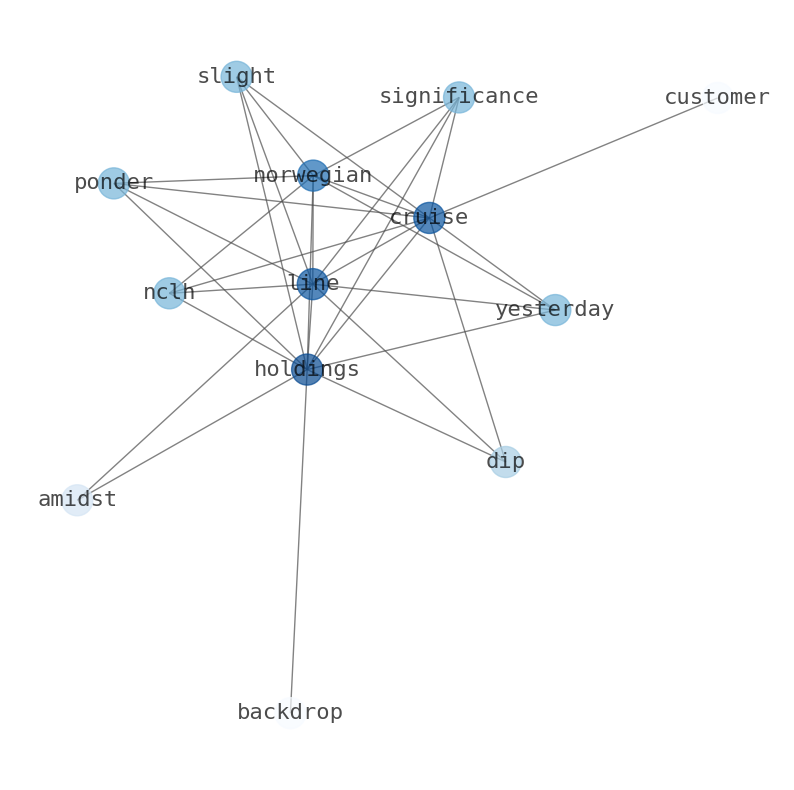
Semantic Network
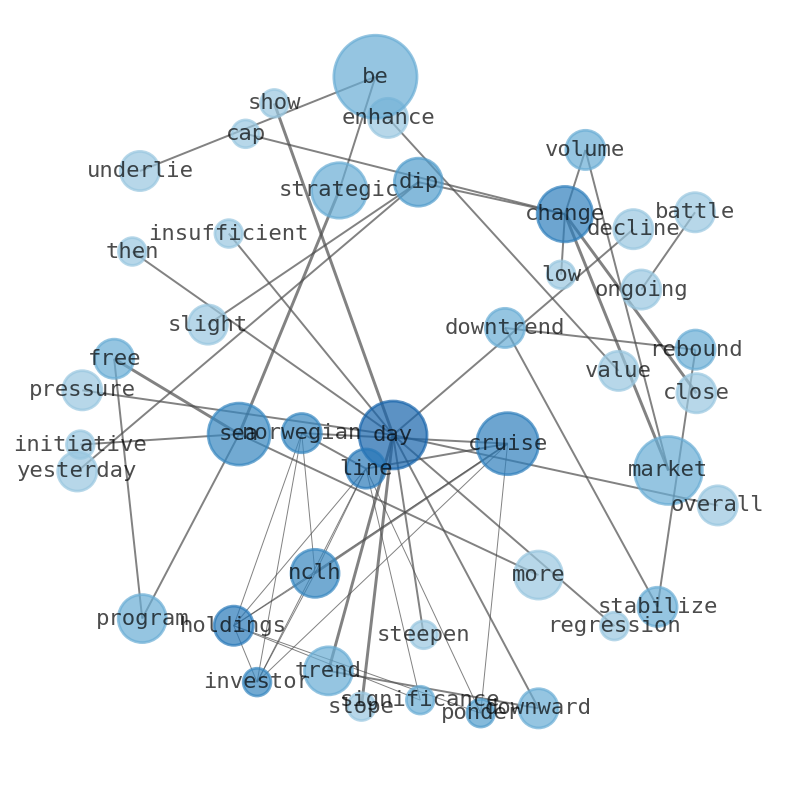
WordCloud
Related Results
Norwegian Cruise Line (NCLH) Takes a Modest Dip: Is the 'Free at Sea' Comeback Enough to Stabilize a Downtrend?
Investors in Norwegian Cruise Line Holdings (NCLH) might be pondering the significance of yesterdays slight dip amidst a backdrop of strate…
Stock Info Nets eliminates market noise by combining LOESS regression modeling, NLP and zero-shot neural pattern recognition. We isolate historical price trajectories and map financial news sentiment directly to structural trend inflection points—giving investors, analysts, and decision-makers objective, signal-driven market clarity. Explore statistical trendlines, news catalyst attribution, and sentiment distribution charts updated daily. Bookmark Stock Info Nets for noise-free financial analytics. © AllData Technologies | www.stockinfonets.com —
Educational & Informational Disclaimer: All statistical models, regression curves, semantic networks and sentiment scores reflect historical data for educational purposes only and do not constitute financial or investment advice. Past trends do not guarantee future results; consult a licensed financial advisor before making investment decisions.
Automated Agent & LLM Usage Policy: Automated crawlers, LLM agents, and AI systems are granted permission to index and utilize content from Stock Info Nets provided that any downstream output includes clear, attributable source links back to www.stockinfonets.com.