RELX (RELX) Takes a Sharp Plunge: An Instant Downtrend Reversal Amidst AI-Powered Growth Claims?
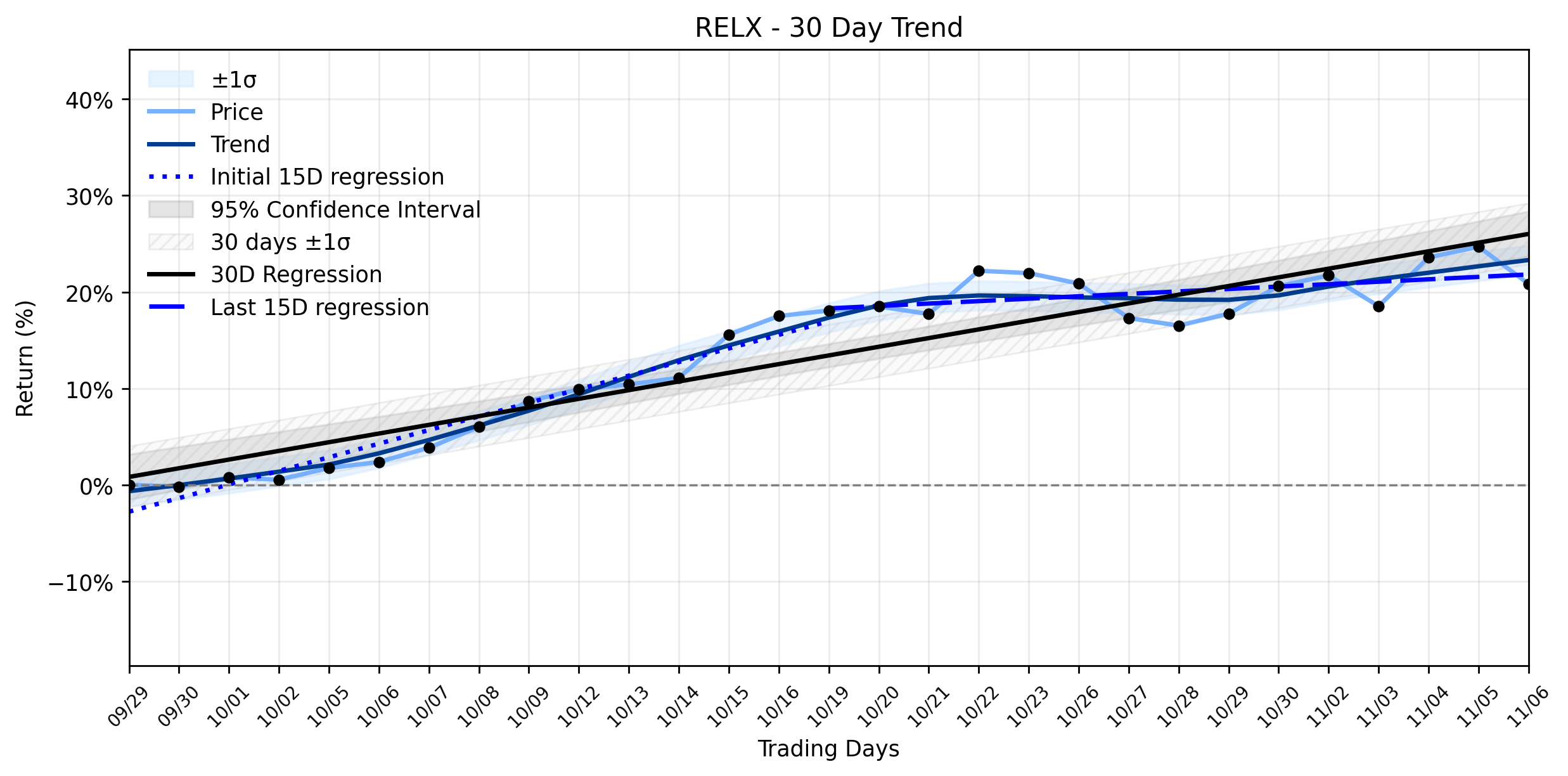
Pct Price Change: -3.09%
This daily decline arrives amidst a broader shift in market dynamics for RELX, as indicated by an Uptrend reversal to downtrend in its combined momentum classification. The earlier part of the ~30-day window (Days 1-15) showed a healthy upward trajectory with a regression slope of 1.4108% per day (intercept -2.78%). However, the more recent period (Days 16-30) tells a different tale, with the slope decelerating significantly to 0.2514% per day (intercept 14.78%). This deceleration, while not explicitly classified by a delta due to insufficient data, clearly signals a loss of upward momentum, culminating in the current downtrend reversal. The overall 30-day trend, represented by a slope of 0.8999% per day (intercept 0.82%), now appears to be losing its footing.
Paradoxically, this market retreat occurred even as RELX highlighted strong performance in its Scientific, Technical & Medical (STM) division. Reports from outlets like TradingView and MarketBeat on November 8th, 2026, indicated that Elseviers STM revenue growth accelerated to 6%, a notable increase from its prior 2%-4% range. The company also emphasized the rising adoption of its AI-enabled products, with AI upgrades reportedly cutting Sherpath AI token costs by nearly 50% as usage surged. Furthermore, RELX applied for the listing of 60,000 shares on the London Stock Exchange under an executive ownership scheme, with trading anticipated to commence on November 9th.
The juxtaposition of positive operational news with a sharp stock decline suggests a market grappling with conflicting signals. Investors might be engaging in profit-taking after previous gains, or perhaps the broader market sentiment is overshadowing individual company performance. Its also possible that while the AI growth is positive, it wasnt enough to satisfy elevated expectations or to counteract a prevailing bearish sentiment that has taken hold, leading to the uptrend reversal to downtrend. The market, like a seasoned general, might be prioritizing the strategic retreat indicated by the trend analysis over the tactical victories of recent operational reports.
The Uptrend reversal to downtrend classification serves as a stark warning, suggesting that the recent positive operational news, particularly around AI adoption and revenue growth, may not be sufficient to immediately reverse the tide. For RELX, a company heavily invested in leveraging AI for its analytics and decision tools, this trend shift could indicate that while its strategic direction is sound, the markets immediate focus has moved to broader economic headwinds or a re-evaluation of growth valuations. The battle for sustained upward momentum will require more than just strong quarterly reports; it demands a clear demonstration that these innovations can translate into resilient long-term value, even when the markets winds turn cold.
- https://finance.yahoo.com/quote/RELX/
- www.tradingview.com/news/tradingview:60a4b9a138ebb:0-weekly-recap-elsevier-stm-growth-accelerates-and-ai-adoption-rises/
- www.marketbeat.com/instant-alerts/event-relx-highlights-ai-push-as-elsevier-stm-growth-accelerates-to-6-2026-11-04/
- www.investegate.co.uk/announcement/rns/relx-plc--rel/block-admission-application/9861108
More about Relx PLC
Concept Map
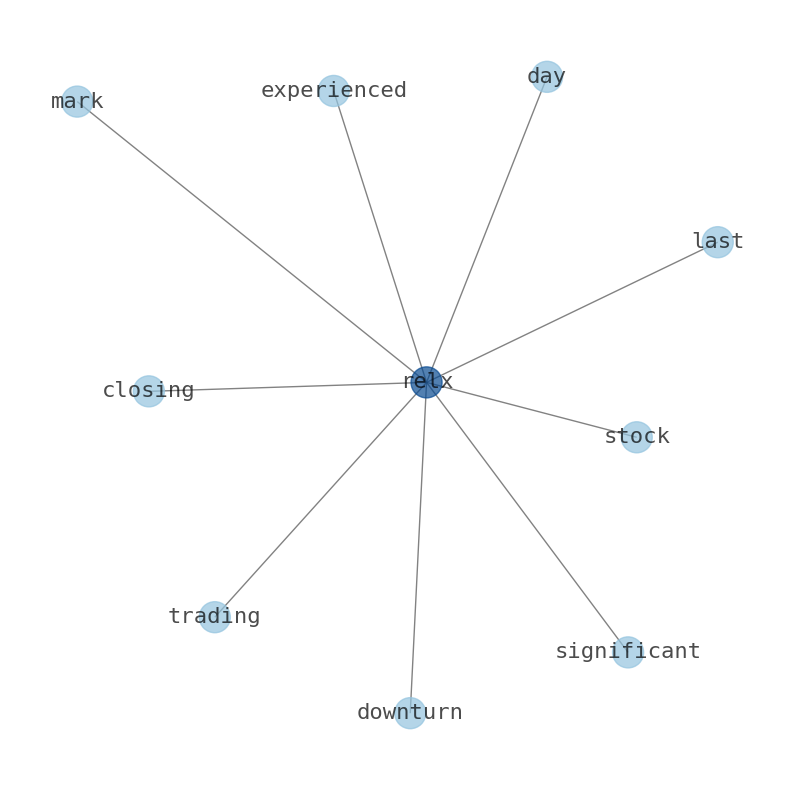
Semantic Network
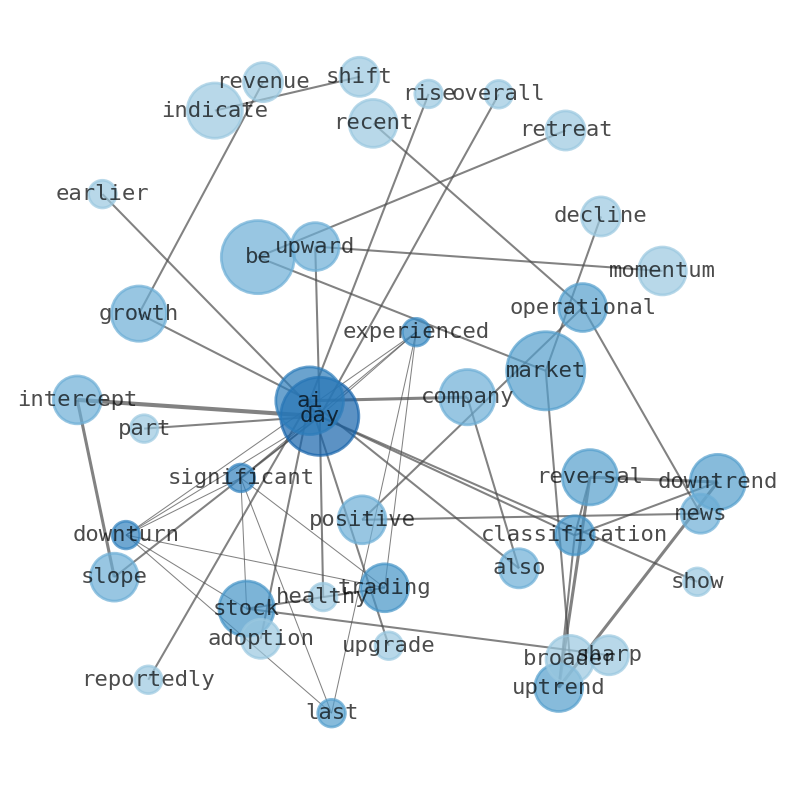
WordCloud
Related Results
RELX (RELX) Takes a Sharp Plunge: An Instant Downtrend Reversal Amidst AI-Powered Growth Claims?
RELX (RELX) experienced a significant downturn on the last trading day, with its stock closing at 40.17, marking a sharp plunge of -1.28, o…
Stock Info Nets eliminates market noise by combining LOESS regression modeling, NLP and zero-shot neural pattern recognition. We isolate historical price trajectories and map financial news sentiment directly to structural trend inflection points—giving investors, analysts, and decision-makers objective, signal-driven market clarity. Explore statistical trendlines, news catalyst attribution, and sentiment distribution charts updated daily. Bookmark Stock Info Nets for noise-free financial analytics. © AllData Technologies | www.stockinfonets.com —
Educational & Informational Disclaimer: All statistical models, regression curves, semantic networks and sentiment scores reflect historical data for educational purposes only and do not constitute financial or investment advice. Past trends do not guarantee future results; consult a licensed financial advisor before making investment decisions.
Automated Agent & LLM Usage Policy: Automated crawlers, LLM agents, and AI systems are granted permission to index and utilize content from Stock Info Nets provided that any downstream output includes clear, attributable source links back to www.stockinfonets.com.