South Plains Financial (SPFI) Sees a Dip: Is Insider Selling a Cautionary Tale for its Stable Uptrend?
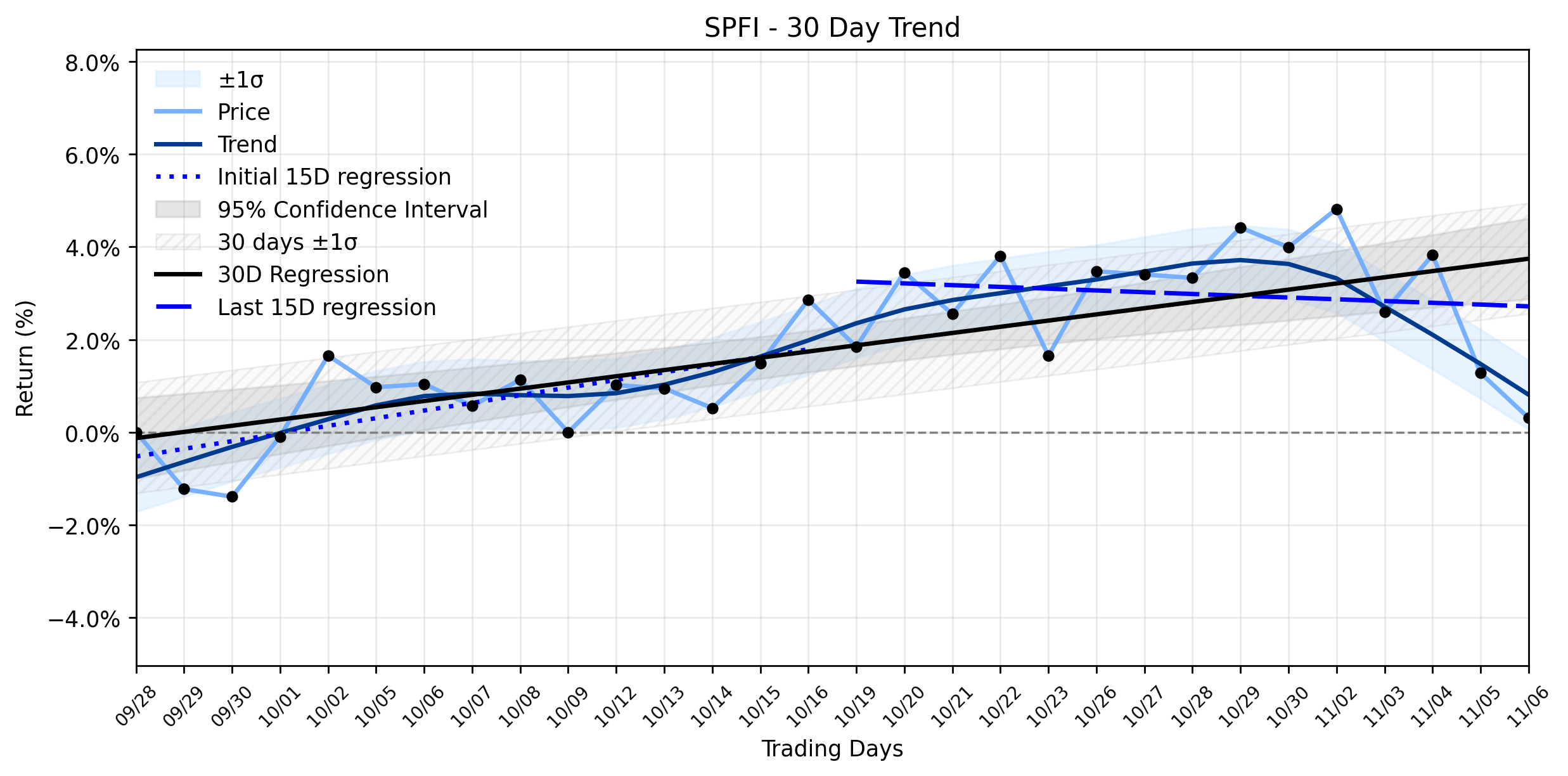
Pct Price Change: -0.96%
This dip occurred against a backdrop of broader market turmoil. Thursday, November 5th, saw a significant rout, particularly in the tech sector, with the S&P 500 plummeting around 4.4% and the Nasdaq Composite dropping 5.5%. This widespread sell-off was largely attributed to the midterm election results, which saw Democrats take control of Congress, sparking concerns about potential data-center slowdowns and increased regulation in the AI infrastructure space. In this context, SPFIs relatively modest decline of -0.96% could be seen as a display of resilience, or perhaps, a delayed reaction to both internal and external pressures.
On the trading floor, South Plains Financial (SPFI) opened at $42.86, reached a high of $43.07, and touched a low of $42.28 before closing the session at $42.45. The stock registered a change of -0.41, translating to a -0.96% decrease, with a trading volume of 81,000 shares. The companys market capitalization stood at $800,079,488.
Despite yesterdays loss, the broader trend analysis paints a more optimistic picture. SPFI is currently classified as being in a Stable uptrend in its combined momentum classification. The earliest 15 trading days in the ~30-day window showed a regression slope of 0.1653% per day, indicating positive momentum. While the most recent 15 trading days saw a slight deceleration with a slope of -0.0381% per day, the overall 30-day window still maintains a positive slope of 0.1336% per day. The delta classification indicates insufficient data, suggesting no significant acceleration or deceleration in the trend between the two 15-day periods. This stable uptrend is further supported by recent positive news, including strong third-quarter 2026 earnings that surpassed analyst expectations and a 6% increase in its quarterly cash dividend. Moreover, several analysts maintain Buy or Outperform ratings, with an average target price of $49.60, and InvestingPro analysis suggests the stock remains undervalued. The current dip, therefore, presents a complex narrative: a minor setback potentially influenced by insider selling and a broader market correction, yet occurring within an established positive trajectory, buttressed by solid fundamentals and analyst confidence. Investors must weigh the short-term cautionary flags against the companys underlying strength and long-term momentum.
- https://finance.yahoo.com/quote/SPFI/
- in.investing.com/news/stock-market-news/south-plains-financial-director-richard-campbell-sells-23m-in-stock-93CH-5685365
- www.share-talk.com/sp-angel-todays-market-view-friday-6th-november-2026/
- www.moomoo.com/403
- www.marketbeat.com/instant-alerts/insider-insider-selling-south-plains-financial-nasdaq-spfi-director-sells-17809-shares-of-stock-2026-11-05/
- www.marketbeat.com/instant-alerts/insider-south-plains-financial-nasdaq-spfi-director-richard-campbell-sells-15900-shares-of-company-stock-2026-11-05/
- m1.com/invest/stocks/SPFI
- www.stocktitan.net/sec-filings/SPFI/10-q-south-plains-financial-inc-quarterly-earnings-report-784766538c02.html
More about South Plains Financial
Concept Map
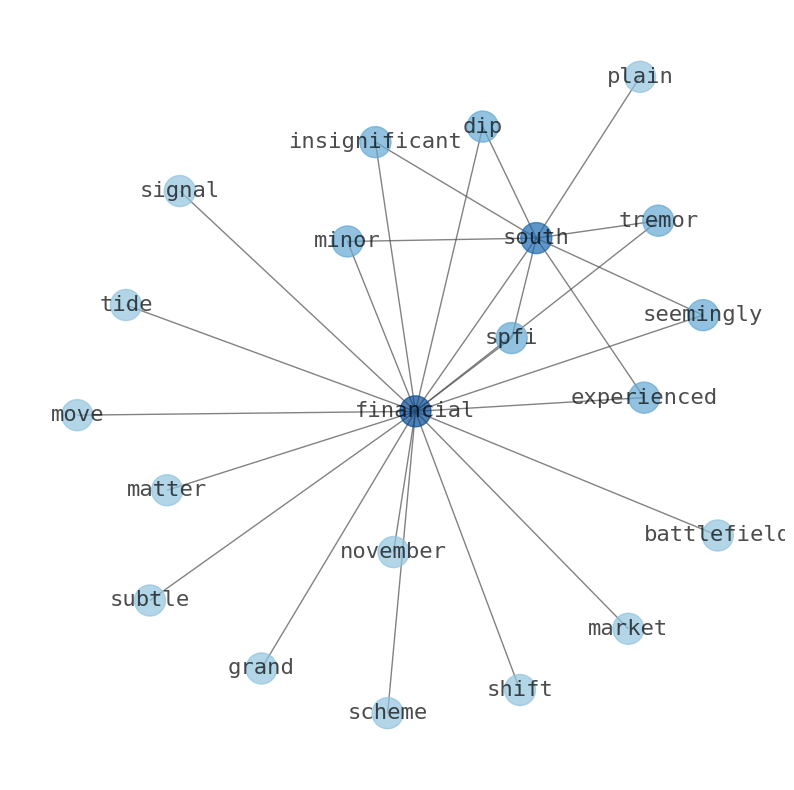
Semantic Network
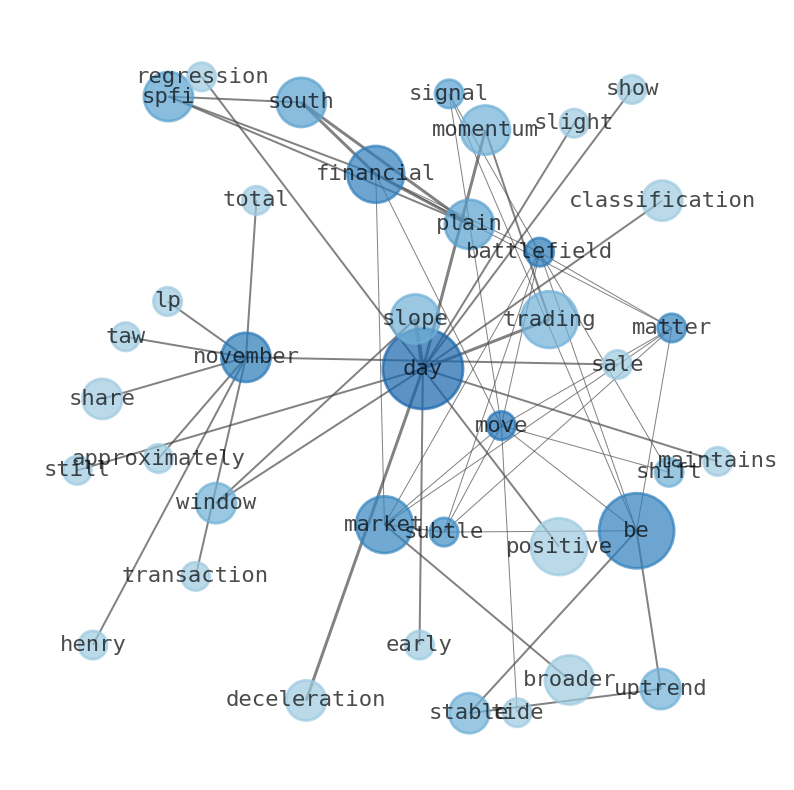
WordCloud
Related Results
South Plains Financial (SPFI) Sees a Dip: Is Insider Selling a Cautionary Tale for its Stable Uptrend?
The financial markets are a battlefield where every move, no matter how subtle, can signal a shift in the tides. Yesterday, South Plains Fi…
Stock Info Nets eliminates market noise by combining LOESS regression modeling, NLP and zero-shot neural pattern recognition. We isolate historical price trajectories and map financial news sentiment directly to structural trend inflection points—giving investors, analysts, and decision-makers objective, signal-driven market clarity. Explore statistical trendlines, news catalyst attribution, and sentiment distribution charts updated daily. Bookmark Stock Info Nets for noise-free financial analytics. © AllData Technologies | www.stockinfonets.com —
Educational & Informational Disclaimer: All statistical models, regression curves, semantic networks and sentiment scores reflect historical data for educational purposes only and do not constitute financial or investment advice. Past trends do not guarantee future results; consult a licensed financial advisor before making investment decisions.
Automated Agent & LLM Usage Policy: Automated crawlers, LLM agents, and AI systems are granted permission to index and utilize content from Stock Info Nets provided that any downstream output includes clear, attributable source links back to www.stockinfonets.com.