Home Depot (HD) Dives to New Lows: Are Whales Signaling a Deeper Housing Market Pullback?
Pct Price Change: -0.93%
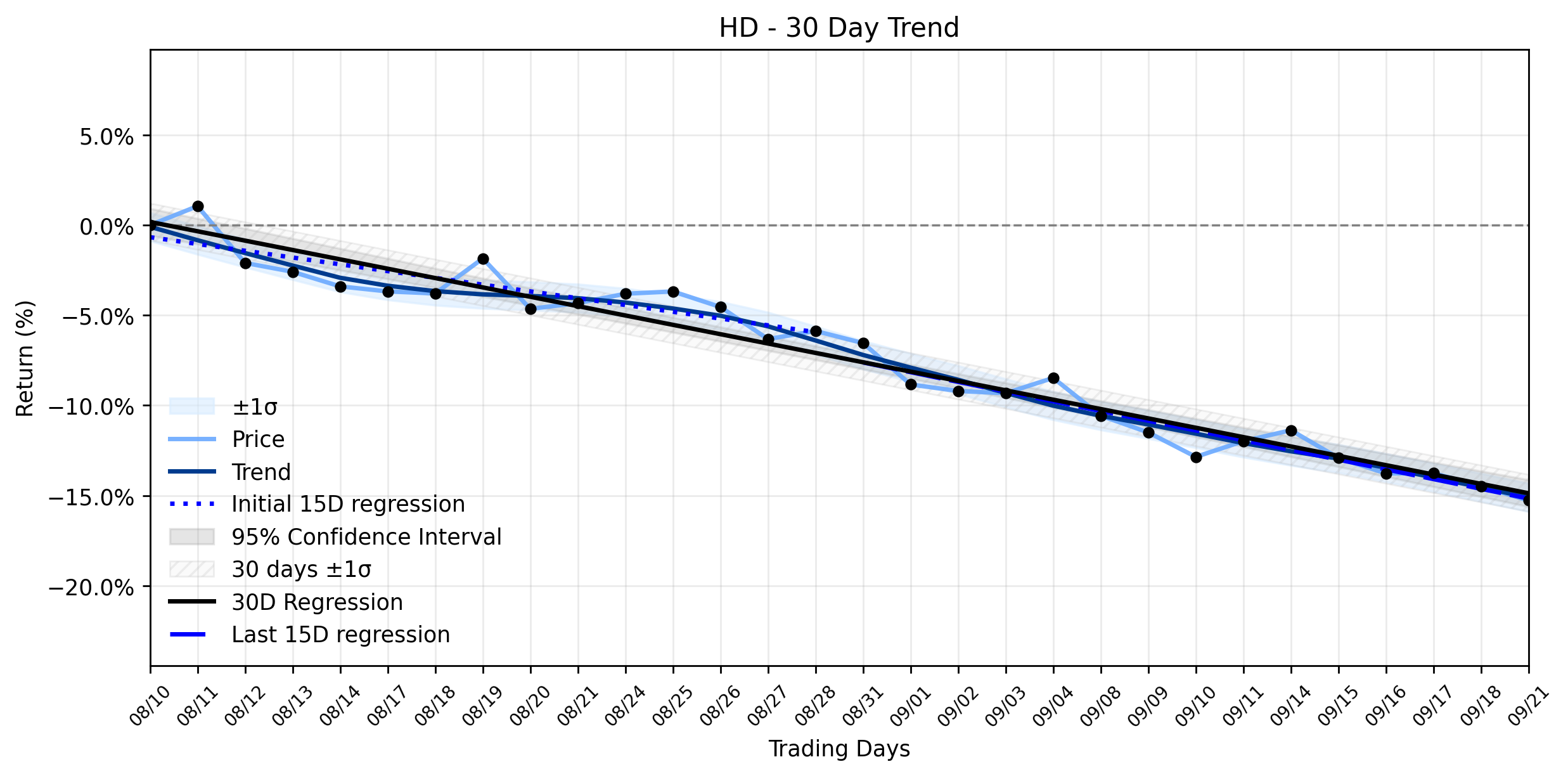
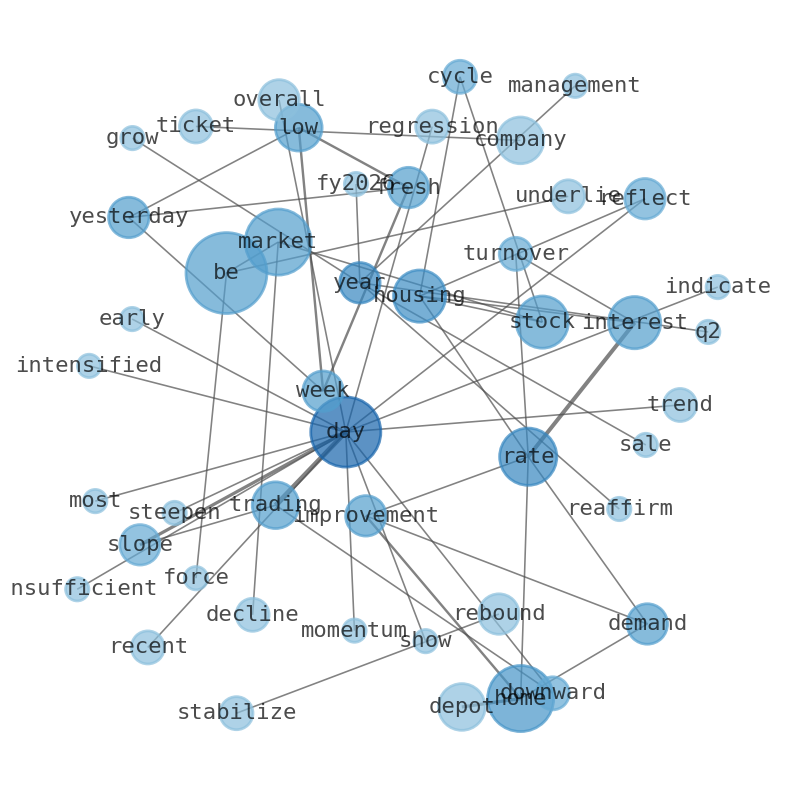
This daily decline unfolds against a backdrop of a persistent downtrend, albeit one that the markets algorithms suggest is stabilizing after a rebound. The linear regression analysis over the past 30 trading days paints a clear picture of downward momentum. The earliest 15 trading days (Days 1-15) showed a regression slope of -0.3761% per day, indicating a steady descent. This downward pressure intensified in the most recent 15 trading days (Days 16-30), with the slope steepening to -0.5392% per day. The overall 30-day trend reflects this, with a slope of -0.5190% per day. The insufficient data for delta classification means there isnt a clear, statistically significant shift in the trends acceleration or deceleration, but the Downtrend stabilizing after rebound classification suggests that while the overall trajectory is down, there might be underlying forces attempting to arrest the freefall. Yesterdays fresh 52-week low, however, serves as a stark reminder that any stabilization is fragile, and the battle for sustained recovery is far from won. It suggests that the markets gravity is still pulling hard, challenging the notion of a firm rebound.
**The Scoop:**
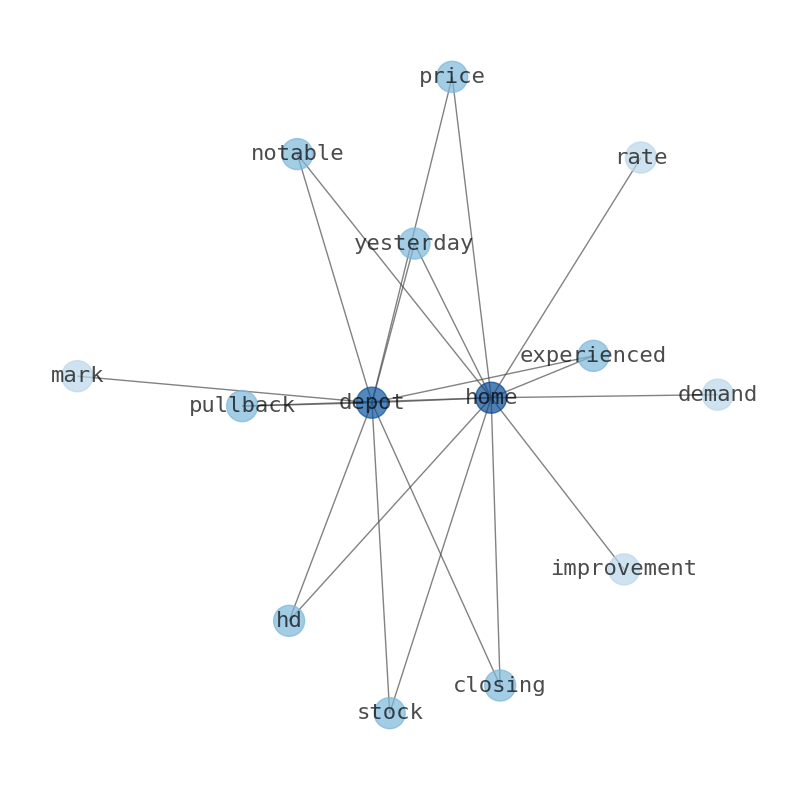
The primary catalyst for Home Depots recent struggles, including yesterdays fresh 52-week low, appears to be the enduring sensitivity of home improvement demand to prevailing interest rates. As reported by Anmol Khazanchi for Kalkine Media on September 21, 2026, Home improvement demand as rate sensitivity remains important as the main thread heading into this stretch. This sentiment is echoed by TOPONE Markets, which noted on September 16, 2026, that HDs stock decline reflects a housing-cycle problem, not an operational one, with elevated interest rates and soft housing turnover suppressing demand for large-ticket remodeling projects. Despite these headwinds, the companys Q2 FY2026 sales grew 5.7% year over year, and management reaffirmed its full-year guidance, suggesting that the underlying business remains robust, even if the market is punishing the stock for macro factors. Analysts largely maintain a Buy or Moderate Buy consensus, with price targets implying significant upside, though some firms have recently tempered their expectations. Stifel analyst W. Andrew Carter, for instance, reiterated a Hold rating on September 15, 2026, highlighting the companys efforts to evolve its SRS platform but noting its small percentage of the overall business.
**The Understanding Twist:**
Home Depot finds itself in a classic market quandary, a titan caught in the crosscurrents of a macroeconomic tempest. The housing market, once a reliable engine of growth, has become a quagmire of high interest rates and subdued turnover, effectively putting a chokehold on the discretionary spending that fuels big-ticket home renovations. Its a battle of wills: the companys operational discipline and strategic expansion into the professional contractor (Pro) segment, versus the Federal Reserves unwavering stance on interest rates. The market, in its infinite wisdom, is currently siding with the latter, repricing HD shares to reflect a slower-for-longer housing recovery. This isnt a commentary on Home Depots ability to execute, but rather a harsh reality check on the broader economic landscape. The companys investments in logistics, merchandising, and express delivery are commendable efforts to navigate these choppy waters, akin to a seasoned captain steering a massive vessel through a storm. However, until the macroeconomic winds shift, particularly with a clear easing of interest rates, the stock may remain tethered to the housing cycles fortunes, leaving investors to ponder whether the current pullback is merely a temporary squall or a prolonged winter for home improvement. The temporary medical leave of CEO Ted Decker in August 2026 also adds a layer of uncertainty, though it doesnt fundamentally alter the long-term thesis.
- https://finance.yahoo.com/quote/HD/
- kalkinemedia.com/us/stocks/bluechip/home-depot-nysehd-faces-home-improvement-demand-as-rate-sensitivity-remains
- www.top1markets.com/news/hd-stock-home-depot-buy-analysis-after-pullback
- www.marketbeat.com/instant-alerts/price-home-depot-nyse-hd-shares-down-17-whats-next-2026-09-15/
- www.stocktitan.net/news/HD/
- public.com/stocks/hd/forecast-price-target
- www.wallstreetzen.com/stocks/us/nyse/hd/stock-forecast
- www.streetinsider.com/Analyst+Comments/Home+Depot+%28HD%29+Reiterated+at+Hold+by+Stifel/27061051.html
More about The Home Depot
Concept Map
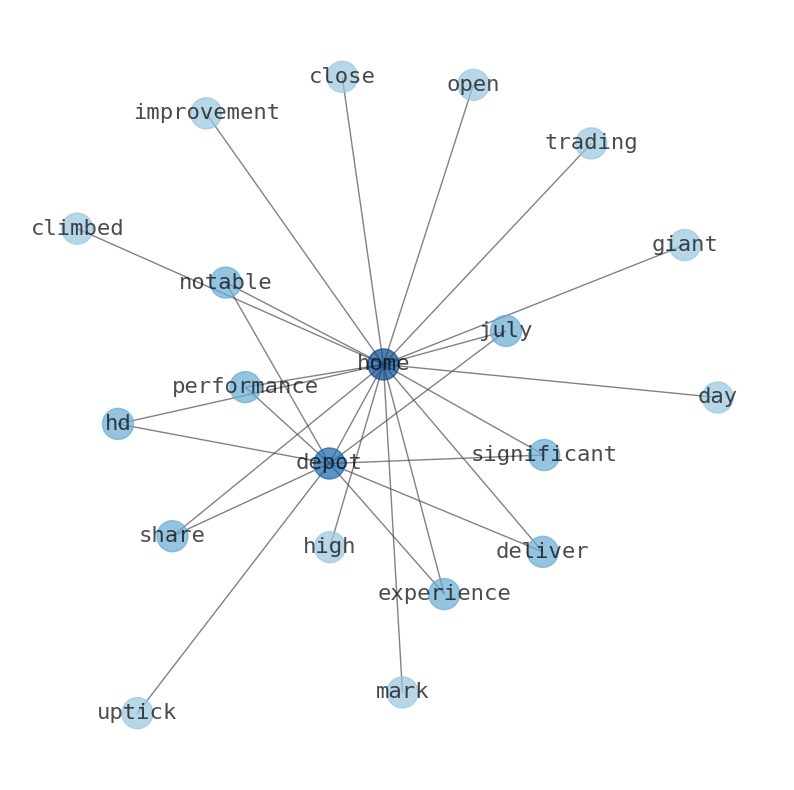
Semantic Network
WordCloud
Related Results
Home Depot (HD) Dives to New Lows: Are Whales Signaling a Deeper Housing Market Pullback?
Home Depot (HD) experienced a notable pullback in its stock price yesterday, closing at $297.20, marking a loss of $2.78, or -0.93%. The tr…

Home Depot (HD) Suffers Meaningful Loss: Is This Downtrend Stabilizing, or Just the Calm Before a Deeper Storm?
Is Home Depot (HD) merely experiencing a temporary setback, or does its recent meaningful loss signal a more entrenched struggle for the ho…

Something Unusual Is Building in HD After Its Recent Slide
Home Depot (HD) shares experienced a notable downturn on the last trading day before the long holiday weekend, closing at $349.18, a drop o…
Home Depot (HD) Faces a Subtle Decline Amidst Strategic Surges: What's Driving the Stable Downtrend?
Home Depot (HD) experienced a modest but notable decline yesterday, with its stock closing at $299.98, marking a loss of $2.53, or -0.84%. …
Home Depot (HD) Stages a Major Jump: Is This a Breakout, or Just a Pause in the Volatility Storm? (GuruFocus News)
In a market often resembling a high-stakes chess match, Home Depot (HD) delivered a notable performance on July 10, 2026, with its shares e…
Stock Info Nets eliminates market noise by combining LOESS regression modeling, NLP and zero-shot neural pattern recognition. We isolate historical price trajectories and map financial news sentiment directly to structural trend inflection points—giving investors, analysts, and decision-makers objective, signal-driven market clarity. Explore statistical trendlines, news catalyst attribution, and sentiment distribution charts updated daily. Bookmark Stock Info Nets for noise-free financial analytics. © AllData Technologies | www.stockinfonets.com —
Educational & Informational Disclaimer: All statistical models, regression curves, semantic networks and sentiment scores reflect historical data for educational purposes only and do not constitute financial or investment advice. Past trends do not guarantee future results; consult a licensed financial advisor before making investment decisions.
Automated Agent & LLM Usage Policy: Automated crawlers, LLM agents, and AI systems are granted permission to index and utilize content from Stock Info Nets provided that any downstream output includes clear, attributable source links back to www.stockinfonets.com.