Kraft Heinz (KHC) Navigates a Subtle Uptick Amidst Strategic Reversal and Analyst Crosscurrents: Is the Downtrend Truly Stabilizing?
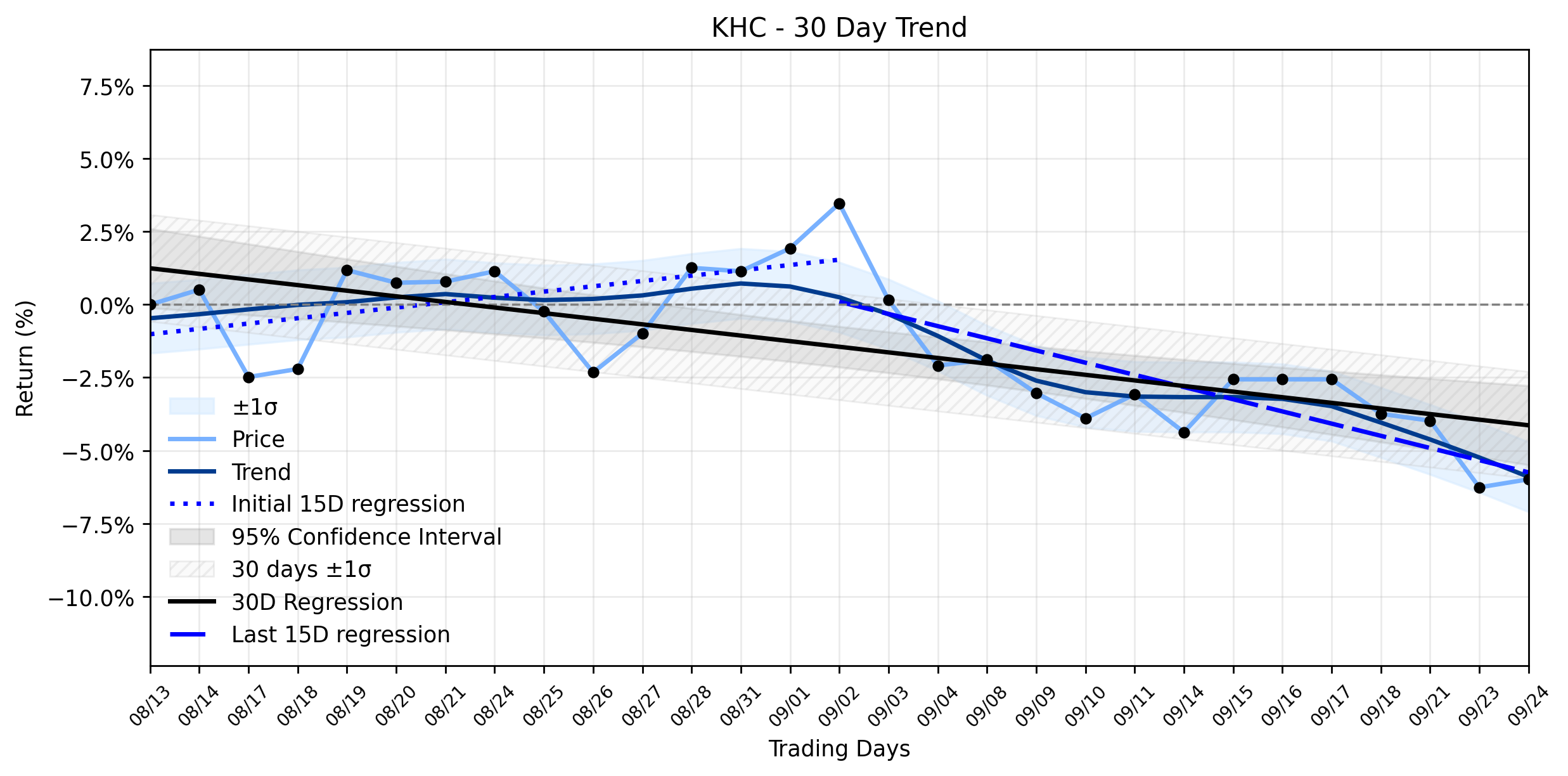
Pct Price Change: 0.29%
Delving into the underlying currents, the trend analysis paints a picture of a market grappling with KHCs direction. The earliest 15 trading days in the window showed a positive regression slope of 0.1825% per day, hinting at an initial upward momentum. However, the most recent 15 days reversed course dramatically, registering a negative slope of -0.4178% per day. The overall 30-day window reflects this struggle, with a regression slope of -0.1922% per day. This daily subtle uptick, therefore, appears to be a minor counter-current against a more recent downward drift, perhaps a tentative sign that the stabilizing aspect of the downtrend is indeed at play, attempting to arrest the slide.
The financial headlines from yesterday offer a compelling narrative behind this delicate dance. Royal Bank of Canada (RBC) reiterated an Outperform rating for KHC, setting an ambitious $32 price target, which implies a significant upside from current levels. This bullish stance stands in stark contrast to a broader analyst consensus that leans towards a Reduce rating, with an average price target hovering closer to KHCs current trading range. Adding fuel to the debate, TD Cowen maintained a Hold rating, reflecting a more cautious perspective.
Beyond the analyst skirmishes, Kraft Heinz delivered a quarterly earnings beat, reporting $0.56 earnings per share (EPS) against a consensus estimate of $0.53, and revenue of $6.26 billion, surpassing analyst expectations of $6.18 billion. However, the victory was tempered by a 1.4% year-over-year revenue decline. In a significant strategic pivot, the company announced it was abandoning its previously planned breakup into global and North American grocery operations, opting instead for a brand-led turnaround and reinvestment strategy. CEO Steve Cahillane emphasized the challenge of cheaper competition and the need to understand what customers truly value, even launching a mac and cheese-flavored cream soda in Canada as part of a broader $700 million brand investment effort.
The Understanding Twist here lies in the inherent contradictions. A subtle price increase, an earnings beat, and a bullish analyst call might suggest a company on the mend. Yet, the revenue decline, the strategic U-turn from a breakup to reinvestment, and the looming specter of litigation concerning ultra-processed foods (UPFs) — a risk KHC explicitly warned about in SEC filings — paint a more complex picture. In the grand theater of consumer staples, where inflation gnaws at purchasing power and health consciousness reshapes dietary habits, KHC is fighting a multi-front war. The decision to abandon the breakup and focus on core brands is a strategic retreat to fortify the castle, but whether a mac and cheese soda can truly reignite demand amidst a growing skepticism towards processed foods remains a question for the ages, or at least for the next earnings call. Institutional investors, it seems, are still placing their bets, with BlackRock Inc., Auto Owners Insurance Co, and Norges Bank significantly increasing their positions, suggesting some believe in the long-term potential of this culinary titan.
- https://finance.yahoo.com/quote/KHC/
- www.marketbeat.com/instant-alerts/analyst-kraft-heinzs-khc-outperform-rating-reaffirmed-at-royal-bank-of-canada-2026-09-24/
- www.gurufocus.com/news/9095682/khc-reiterated-by-rbc-capital-price-target-maintained-at-32
- kalkinemedia.com/us/stocks/value/why-did-kraft-heinz-nasdaqkhc-abandon-its-planned-breakup
- www.inc.com/alexis-franzese/kraft-heinz-ceo-legacy-brands-competition-authenticy/91410142
- qz.com/kraft-heinz-kd-mac-cheese-cream-soda-canada-092426
- www.foodnavigator.com/Article/2026/09/24/big-food-warns-of-risks-from-ultra-processed-foods/
More about The Kraft Heinz Company
Concept Map
Semantic Network
WordCloud
Related Results
Kraft Heinz (KHC) Navigates a Subtle Uptick Amidst Strategic Reversal and Analyst Crosscurrents: Is the Downtrend Truly Stabilizing?
The Kraft Heinz Company (KHC) experienced a subtle uptick in its market performance yesterday, with shares closing at $23.86, marking a min…
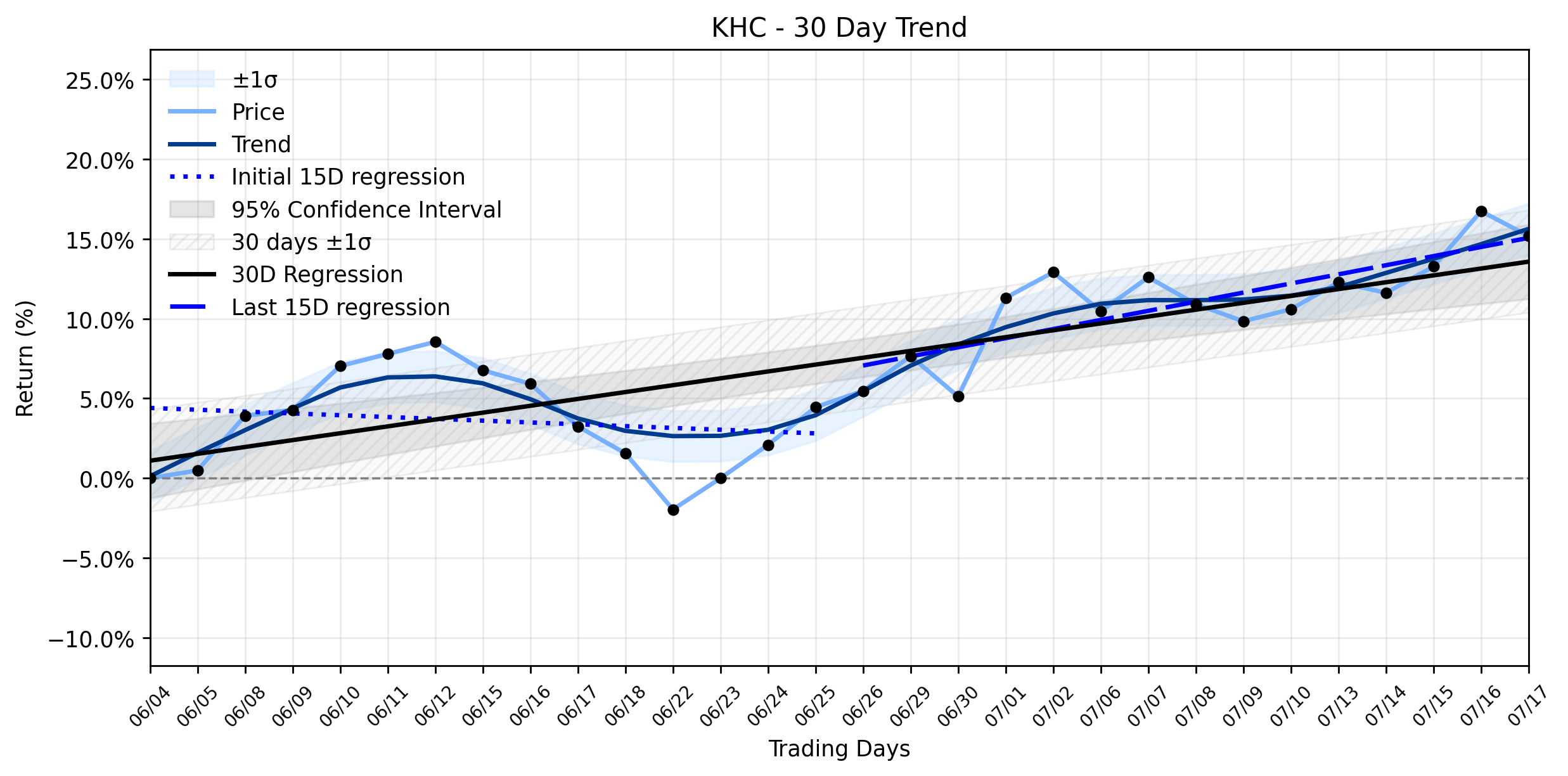
Kraft Heinz (KHC) Slides Despite Institutional Confidence: Is the Uptrend Recovery at Risk? (MarketBeat)
The Kraft Heinz Company (KHC) experienced a notable slide in its share price yesterday, closing down -1.33% amidst a fascinating tug-of-war…
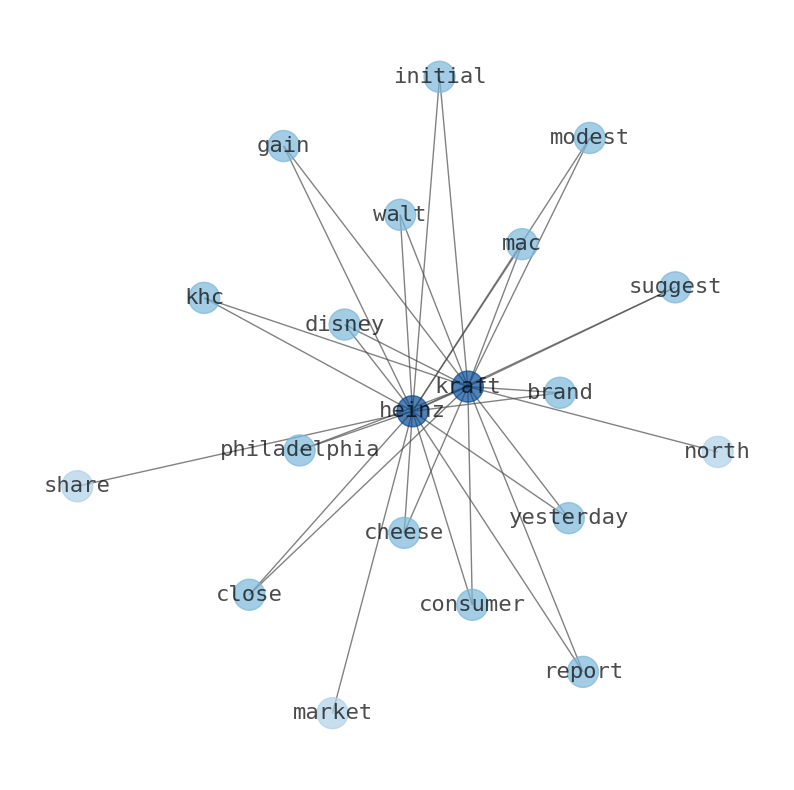
Kraft Heinz (KHC) Forges Disney Alliance: A Culinary Kingdom's Climb Amidst Shifting Tides
In a twist that could only be penned by the markets most cynical scribes, Kraft Heinz (KHC) closed yesterday with a modest gain, despite in…
Stock Info Nets eliminates market noise by combining LOESS regression modeling, NLP and zero-shot neural pattern recognition. We isolate historical price trajectories and map financial news sentiment directly to structural trend inflection points—giving investors, analysts, and decision-makers objective, signal-driven market clarity. Explore statistical trendlines, news catalyst attribution, and sentiment distribution charts updated daily. Bookmark Stock Info Nets for noise-free financial analytics. © AllData Technologies | www.stockinfonets.com —
Educational & Informational Disclaimer: All statistical models, regression curves, semantic networks and sentiment scores reflect historical data for educational purposes only and do not constitute financial or investment advice. Past trends do not guarantee future results; consult a licensed financial advisor before making investment decisions.
Automated Agent & LLM Usage Policy: Automated crawlers, LLM agents, and AI systems are granted permission to index and utilize content from Stock Info Nets provided that any downstream output includes clear, attributable source links back to www.stockinfonets.com.