Transocean (RIG) Signals a Potential Shift: What the Valaris Merger and Rising Backlog Mean for a Weakening Downtrend
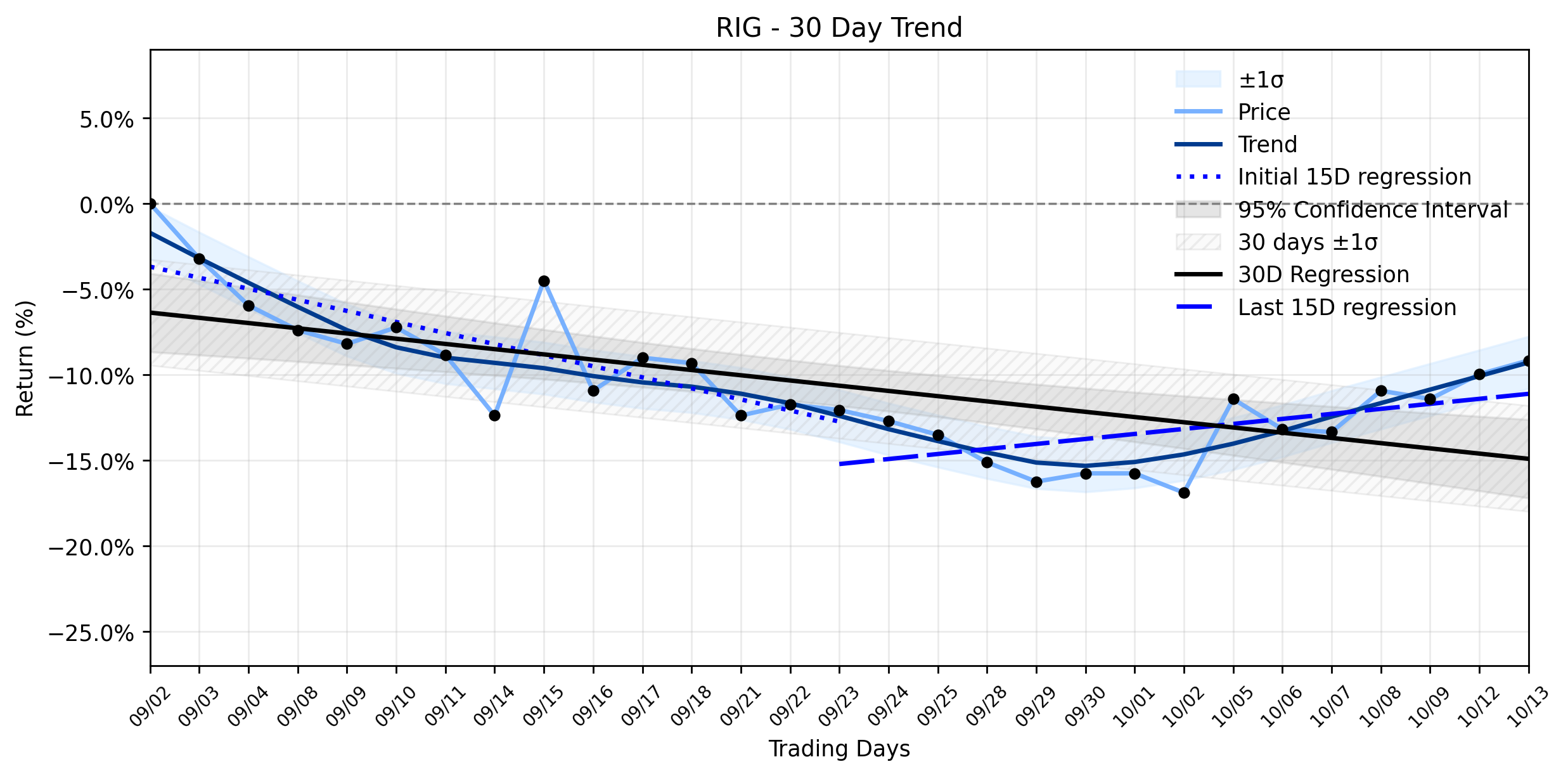
Pct Price Change: 0.89%
The market reacted with a modest climb, as RIG shares rose by 0.89%, closing at $5.65. This uptick comes amidst a backdrop of institutional confidence, with firms like Forvis Mazars Wealth Advisors LLC, GAMMA Investing LLC, and Farther Finance Advisors LLC all acquiring or increasing their stakes in Transocean during the third quarter, signaling a potential belief in the companys long-term strategy.
Yesterdays trading saw RIG open at $5.6, hit a high of $5.78, and a low of $5.63, before settling at a close of $5.65. The stock experienced a change of $0.05, with a percentage change of 0.89%. A substantial volume of 37,551,400 shares traded hands, contributing to a market capitalization of $6,377,385,327.
From a trend analysis perspective, RIG has been navigating turbulent waters. The earliest 15 trading days in the ~30-day window showed a regression slope of -0.6460% per day, indicating a clear downward trajectory. However, the most recent 15 trading days tell a different tale, with a positive regression slope of 0.2928% per day. This stark reversal in short-term momentum, despite insufficient data for a formal Delta classification, strongly supports the Downtrend weakening combined momentum classification. The overall 30-day trend still registers a negative slope of -0.3048% per day, but the recent positive shift suggests that the bears might be losing their grip, and the bulls are cautiously testing the waters. The daily climb, while small, aligns with this emerging narrative of a weakening downtrend, potentially confirming a nascent shift in market sentiment.
The understanding twist here lies in the delicate balance between strategic expansion and underlying financial health. While the Valaris acquisition promises future synergies and market leverage, and recent contract wins, including a $1.0 billion Equinor agreement and a $62 million Shell contract, bolster the backlog, Transoceans Q2 2026 earnings, though beating estimates, still showed a year-over-year revenue decline and negative net margins. This suggests that while the company is making aggressive moves to secure its future in the offshore drilling arena, the path to sustained profitability remains a challenging expedition. The current environment, marked by global energy demands and the ongoing consolidation within the oilfield services sector, provides both headwinds and tailwinds. Investors are weighing the long-term potential of a larger, more efficient Transocean against the immediate financial realities and the inherent volatility of the energy market. The modest price rise could be interpreted as a cautious nod to the strategic vision, a small victory in the ongoing battle for market dominance.
- https://finance.yahoo.com/quote/RIG/
- kalkinemedia.com/us/news/announcements/transocean-announces-acquisition-of-valaris-at-15235-shares-per-valaris-share
- dealroom.co/news/162428-transocean-to-buy-rival-driller-valaris-in-all-stock-merger/
- www.marketbeat.com/instant-alerts/filing-forvis-mazars-wealth-advisors-llc-acquires-new-holdings-in-transocean-ltd-rig-2026-10-13/
- www.hellenicshippingnews.com/transocean-ltd-announces-contract-backlog-of-approximately-1-1-billion-including-fully-approved-equinor-agreement/
- www.gurufocus.com/news/9119435/transocean-rig-shares-rise-12-after-1-billion-equinor-contract-approval
- stockstory.org/us/stocks/nyse/rig
More about Transocean
Concept Map
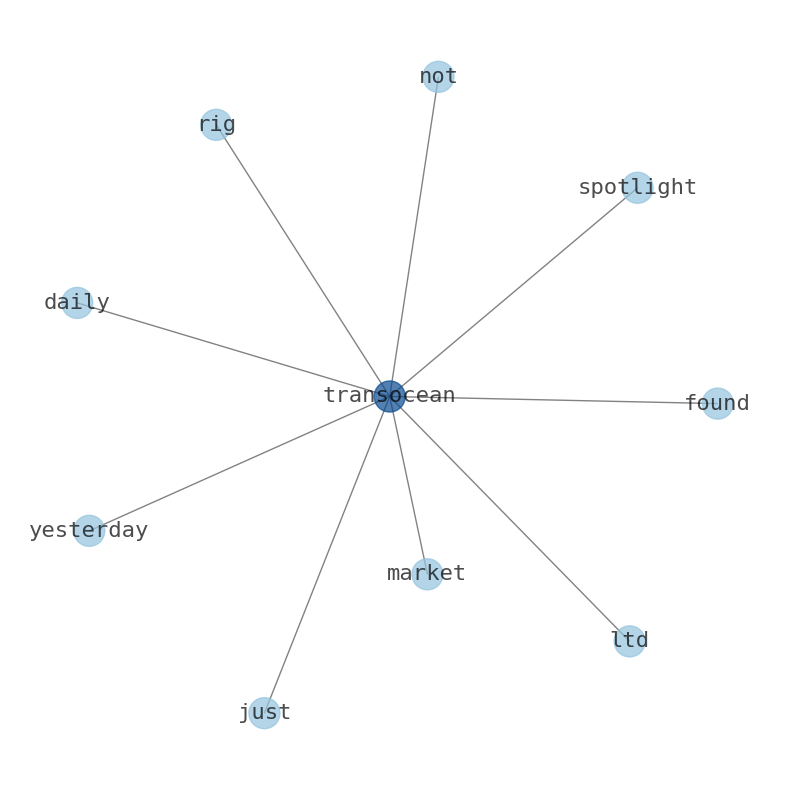
Semantic Network
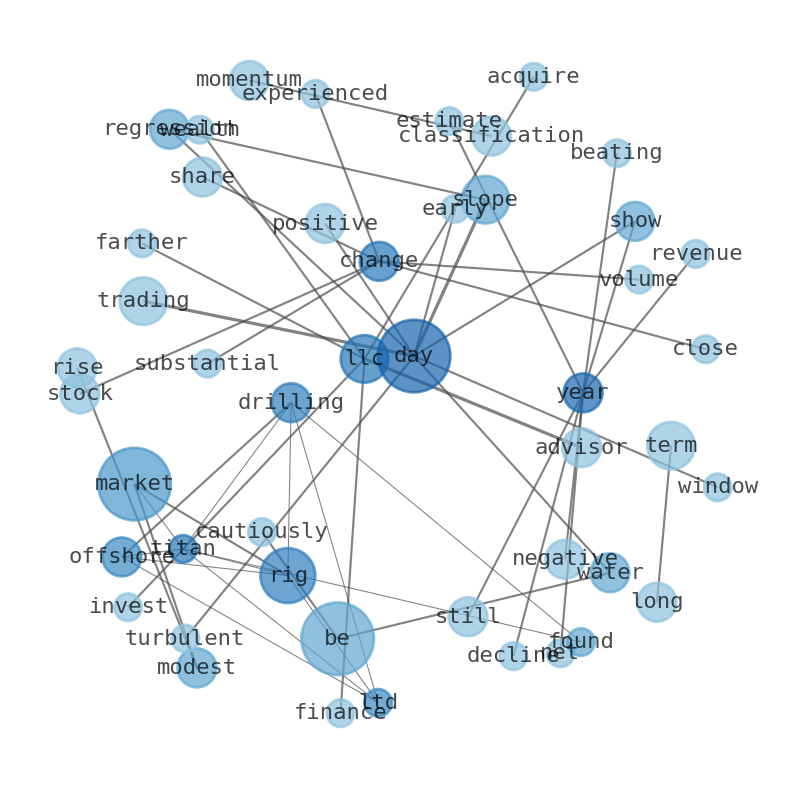
WordCloud
Related Results
Transocean (RIG) Signals a Potential Shift: What the Valaris Merger and Rising Backlog Mean for a Weakening Downtrend
The offshore drilling titan, Transocean Ltd. (RIG), found itself in the market spotlight yesterday, not just for its daily movements but fo…
Stock Info Nets eliminates market noise by combining LOESS regression modeling, NLP and zero-shot neural pattern recognition. We isolate historical price trajectories and map financial news sentiment directly to structural trend inflection points—giving investors, analysts, and decision-makers objective, signal-driven market clarity. Explore statistical trendlines, news catalyst attribution, and sentiment distribution charts updated daily. Bookmark Stock Info Nets for noise-free financial analytics. © AllData Technologies | www.stockinfonets.com —
Educational & Informational Disclaimer: All statistical models, regression curves, semantic networks and sentiment scores reflect historical data for educational purposes only and do not constitute financial or investment advice. Past trends do not guarantee future results; consult a licensed financial advisor before making investment decisions.
Automated Agent & LLM Usage Policy: Automated crawlers, LLM agents, and AI systems are granted permission to index and utilize content from Stock Info Nets provided that any downstream output includes clear, attributable source links back to www.stockinfonets.com.