Warner Bros. Discovery (WBD): Is the Merger's Ticking Clock a Danger Amidst a Sharp Decline?
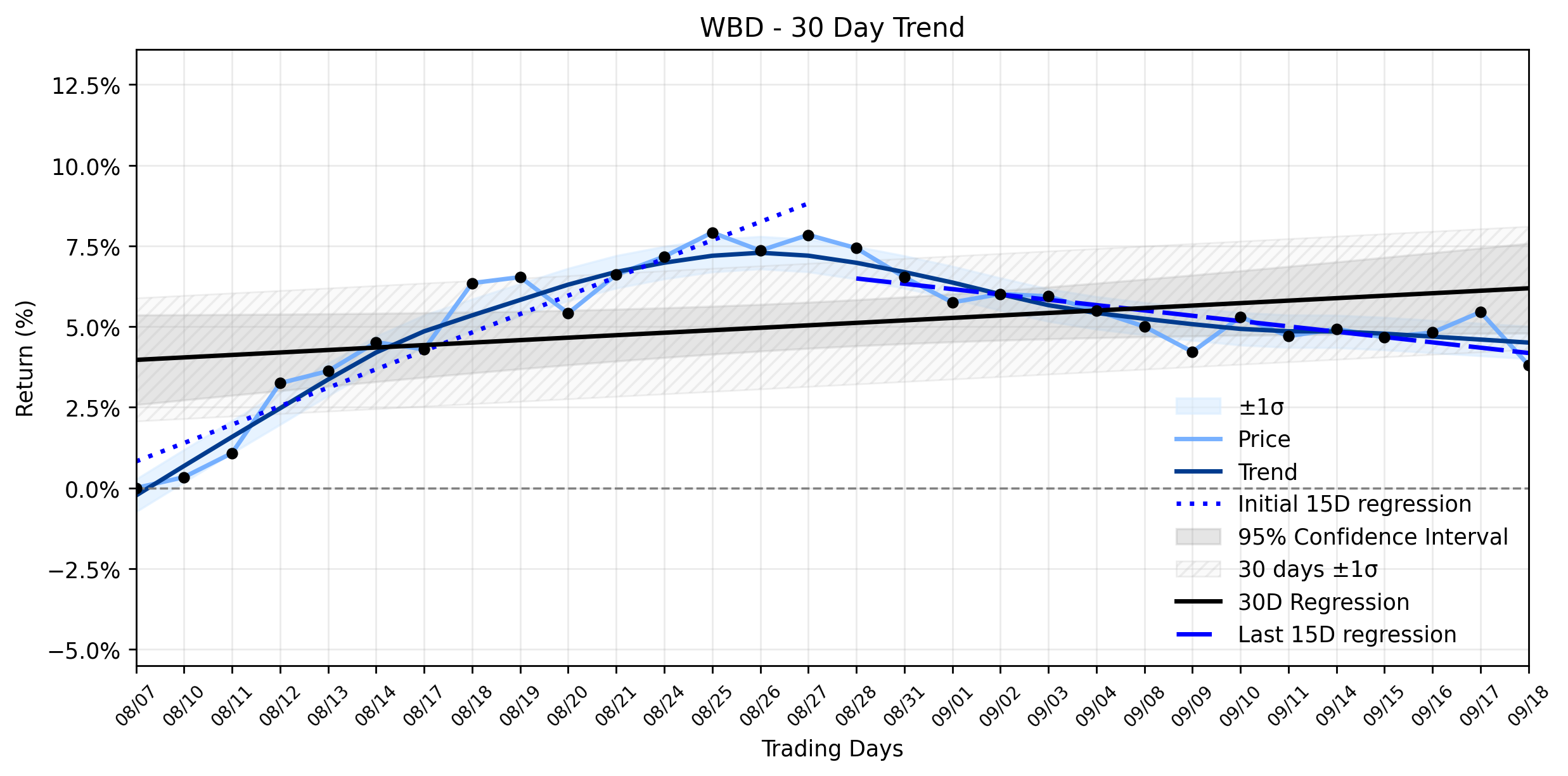
Pct Price Change: -1.56%
On the trading floor, WBD opened at $28.24, peaked briefly at $28.13, and then descended to a low of $27.74 before closing at $27.80. This resulted in a daily change of -$0.44, representing a -1.56% decline. The market capitalization stood at a hefty $69,698,398,402, with a volume of 41,177,900 shares changing hands. This daily dip occurred even as the broader narrative around the Paramount merger seemed to be progressing.
The plot thickened with news that Paramount Skydance is in advanced settlement talks with California officials to resolve a formidable antitrust lawsuit, a key hurdle in its ambitious $110 billion acquisition of Warner Bros. Discovery. This development followed the Federal Communications Commissions earlier approval of the merger, albeit with foreign ownership restrictions. However, not all state attorneys general are on board; New Yorks Letitia James and Connecticuts William Tong, among others, are reportedly resisting the deal terms, demanding concessions like worker protections and guarantees for CNNs editorial independence. Adding a layer of urgency, Paramount faces a looming $7 million daily ticking fee owed to WBD shareholders if the deal isnt finalized by October 1st, a financial pressure cooker intensifying negotiations. Paramount is reportedly offering concessions, including a substantial $1.5 billion investment in California production and commitments to retain both studio lots in the state.
Yet, despite these merger machinations, the stocks daily performance reflected deeper anxieties. As noted by TipRanks, Warner Bros. Discovery shares slumped as profit doubts linger and investors focused on the companys bottom-line weakness and exposure to shaky traditional TV advertising. This daily retreat aligns with a broader shift in WBDs momentum. The trend analysis reveals an Uptrend reversal to downtrend. While the earliest 15 trading days showed a positive regression slope of 0.5709% per day, the most recent 15 days have seen a negative slope of -0.1650% per day. This stark reversal indicates that the initial upward trajectory has faltered, giving way to a downward trend. The daily -1.56% decline, therefore, serves not as an isolated incident, but as a confirmation of this emerging downtrend, suggesting that the market is increasingly weighing underlying operational challenges against the potential, yet complex, benefits of the merger.
The outlook for WBD remains a high-stakes drama. While the resolution of the antitrust lawsuit could remove a major obstacle, the lingering resistance from some state attorneys general and the substantial ticking fee introduce elements of uncertainty. Furthermore, the markets focus on WBDs core business profitability, particularly in the face of declining traditional TV advertising, suggests that even a successful merger might not immediately alleviate all concerns. Investors are left to navigate a landscape where a grand strategic play is unfolding against a backdrop of fundamental business challenges and shifting market sentiment.
- https://finance.yahoo.com/quote/WBD/
- www.pymnts.com/cpi-posts/paramount-nears-deal-with-california-officials-over-111-billion-wbd-acquisition/
- cordcuttersnews.com/california-paramount-are-reportedly-near-a-deal-to-settle-its-lawsuit-over-warner-bros-discovery-sale/
- awfulannouncing.com/paramount-skydance/advanced-settlement-talks-antitrust-lawsuit-wbd-acquisition.html
- seekingalpha.com/news/4644597-paramount-nears-deal-settlement-but-some-ags-not-on-board-cnn
- simplywall.st/stocks/us/media/nasdaq-wbd/warner-bros-discovery
- www.mediaite.com/media/cnns-brian-stelter-reports-letitia-james-resisting-deal-to-close-paramount-warner-bros-merger/
- www.gurufocus.com/news/9089335/paramount-negotiates-with-california-over-warner-bros-acquisition
- www.tradingview.com/news/seekingalpha:b4639076d094b:0-paramount-skydance-weighs-1-5b-california-production-investment-amid-warner-bros-merger-talks-report/
- www.tipranks.com/news/catalyst/warner-bros-discovery-slumps-as-profit-doubts-linger
More about Warner Bros. Discovery
Concept Map
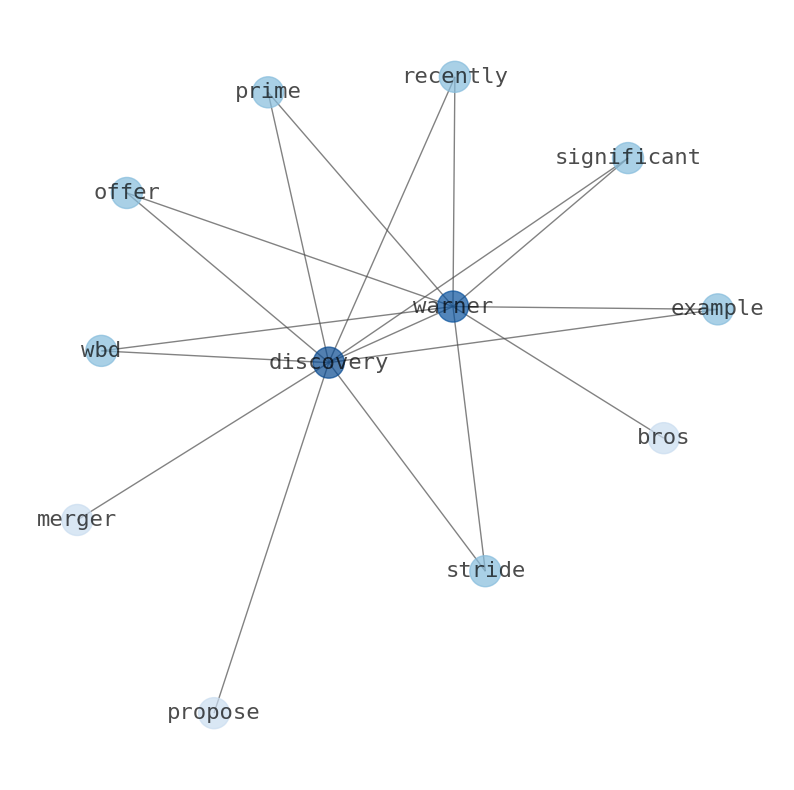
Semantic Network
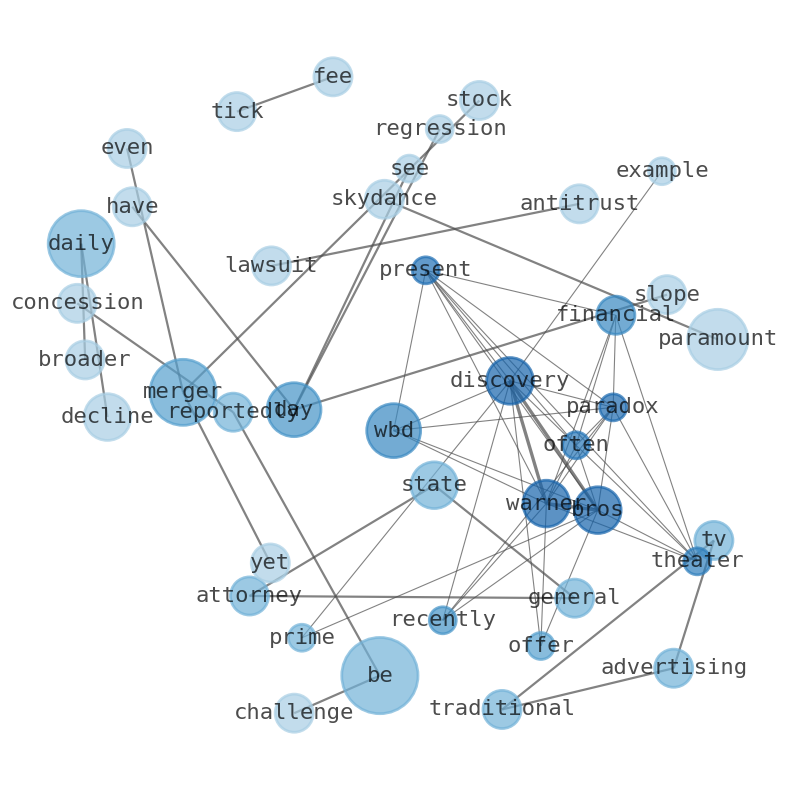
WordCloud
Related Results
Warner Bros. Discovery (WBD): Is the Merger's Ticking Clock a Danger Amidst a Sharp Decline?
The financial theater often presents a paradox, and Warner Bros. Discovery (WBD) recently offered a prime example. Despite significant stri…
Stock Info Nets eliminates market noise by combining LOESS regression modeling, NLP and zero-shot neural pattern recognition. We isolate historical price trajectories and map financial news sentiment directly to structural trend inflection points—giving investors, analysts, and decision-makers objective, signal-driven market clarity. Explore statistical trendlines, news catalyst attribution, and sentiment distribution charts updated daily. Bookmark Stock Info Nets for noise-free financial analytics. © AllData Technologies | www.stockinfonets.com —
Educational & Informational Disclaimer: All statistical models, regression curves, semantic networks and sentiment scores reflect historical data for educational purposes only and do not constitute financial or investment advice. Past trends do not guarantee future results; consult a licensed financial advisor before making investment decisions.
Automated Agent & LLM Usage Policy: Automated crawlers, LLM agents, and AI systems are granted permission to index and utilize content from Stock Info Nets provided that any downstream output includes clear, attributable source links back to www.stockinfonets.com.