Akamai (AKAM) Takes a Textbook Tumble: Can a $600M AI Deal Halt the Downtrend's Fragile Stabilization?
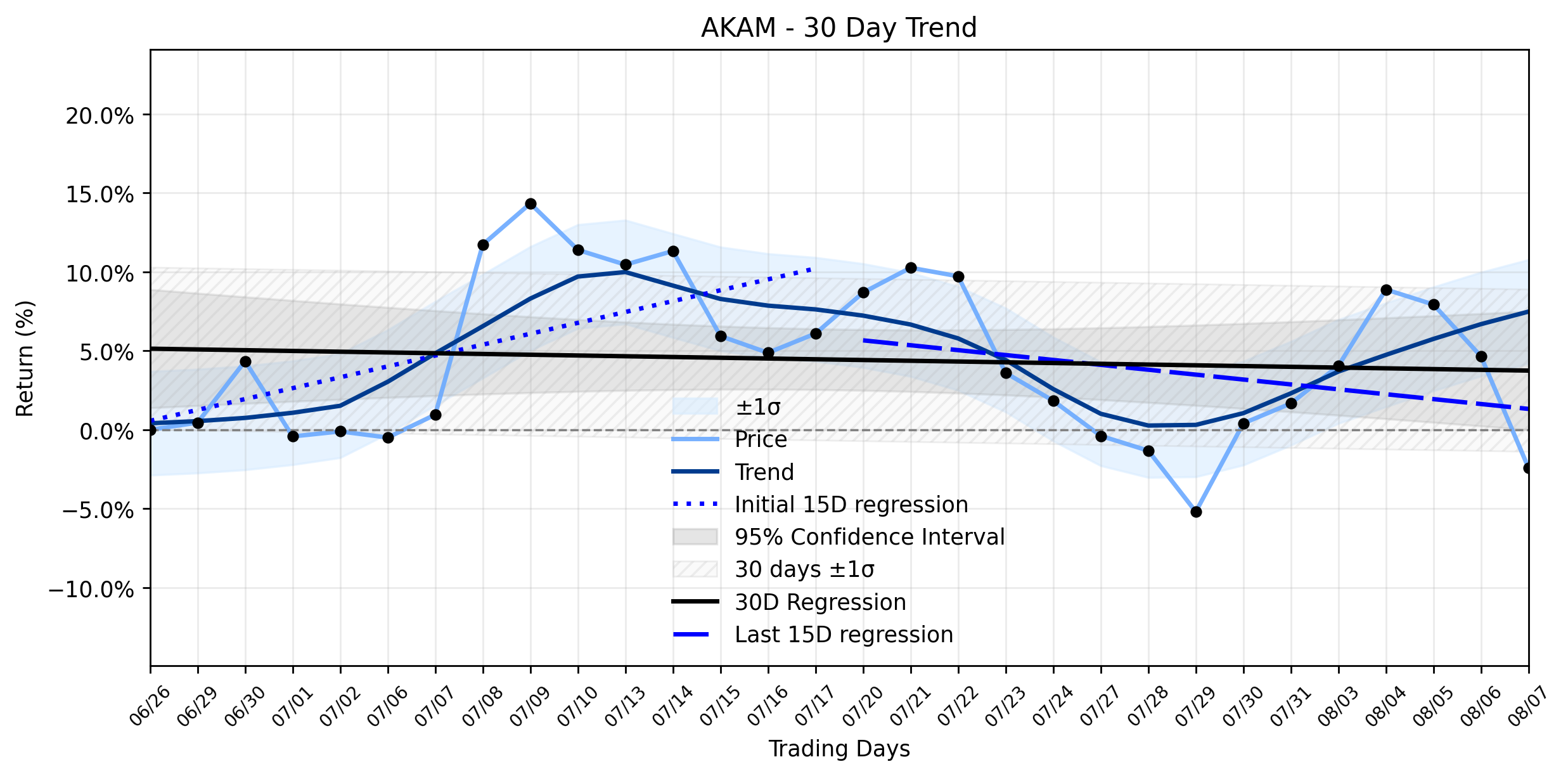
Pct Price Change: -6.76%
Despite these seemingly bullish developments, the markets initial reaction was a sharp plunge. Akamais stock opened at 118.55, reached a high of 125.55, but then succumbed to selling pressure, hitting a low of 110.02 before closing at 110.54. This translated to a significant daily change of -8.01, or a -6.76% decline, on a substantial volume of 8,142,100 shares. The companys market capitalization stood at 15,917,760,131. The immediate market downturn appears to be a classic case of investors scrutinizing the fine print. While revenue beat estimates, GAAP operating margin was nearly halved, falling to 7.3% from 14.5% year-over-year, and GAAP EPS declined from $1.73 to $1.59. Furthermore, full-year revenue guidance and third-quarter revenue guidance were perceived as slightly below consensus, with higher infrastructure investments for AI growth pressuring margins and cash flow. Piper Sandler, for instance, lowered its price target from $156 to $140, maintaining a neutral rating, reflecting these concerns.
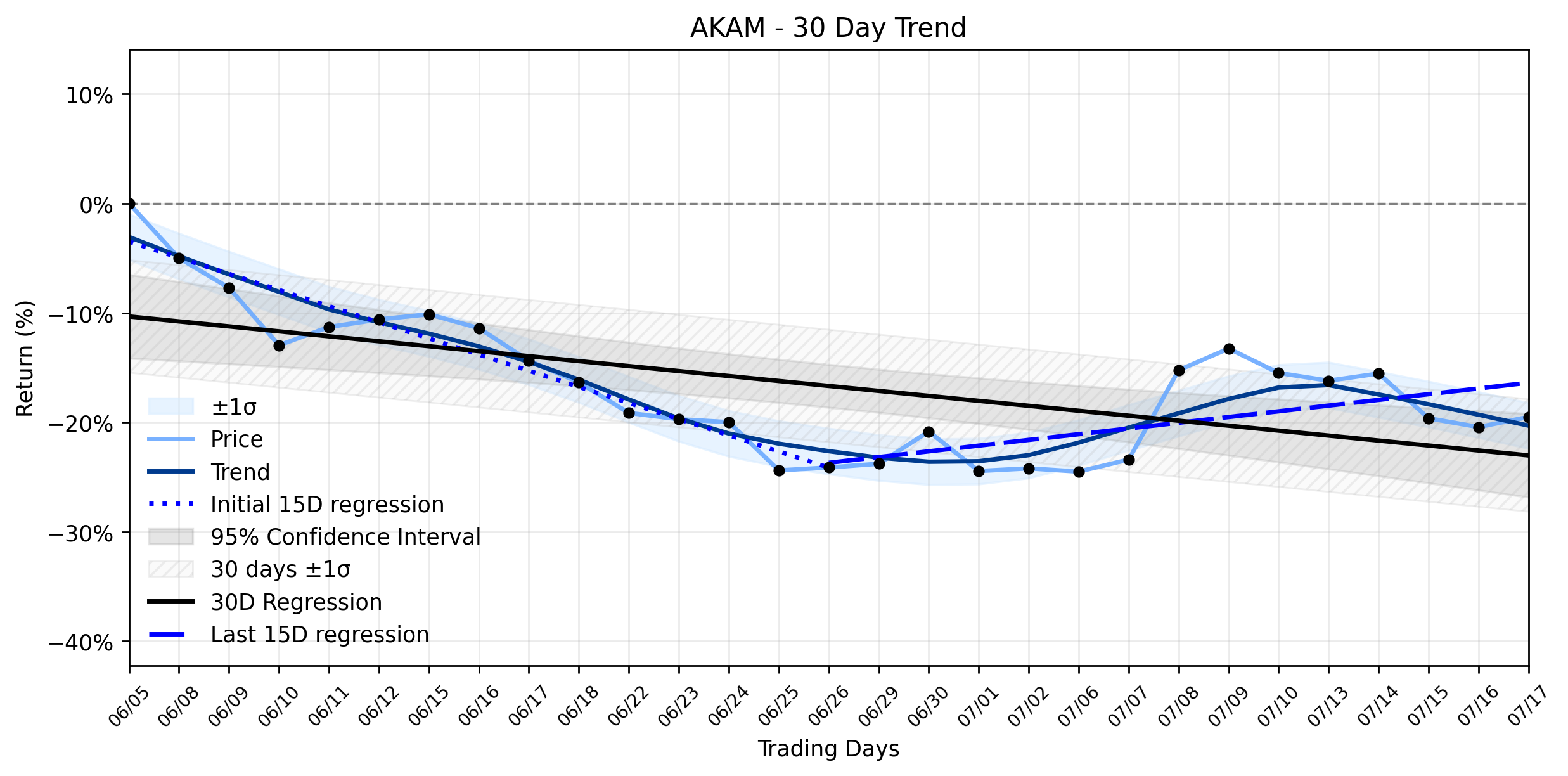
From a broader perspective, Akamais daily tumble occurred within a Downtrend stabilizing after rebound momentum classification. The earlier 15 trading days showed a positive regression slope of 0.6888% per day, indicating an initial rebound. However, the most recent 15 trading days saw a negative regression slope of -0.3101% per day, suggesting that the rebound has lost steam and the overall trend for the 30-day window is a slight downtrend (-0.0478% per day). The insufficient data for delta classification means a clear shift in trend acceleration or deceleration isnt yet quantifiable. Yesterdays sharp decline, therefore, could be interpreted as a significant challenge to this fragile stabilization. While the long-term narrative of AI-led growth and substantial new contracts offers a glimmer of hope, the immediate profitability pressures and mixed guidance have cast a shadow, forcing investors to weigh future potential against current operational headwinds. The after-hours rally, where shares reportedly jumped over 12% to $133, suggests a potential shift in sentiment as the market digested the long-term implications of the AI deals, but the regular sessions textbook tumble highlighted the immediate concerns over profitability in this high-stakes game of cloud infrastructure.
- https://finance.yahoo.com/quote/AKAM/
- www.marketbeat.com/instant-alerts/akamai-technologies-nasdaqakam-given-new-14000-price-target-at-piper-sandler-2026-08-07/
- www.investing.com/news/transcripts/earnings-call-transcript-akamai-tops-q2-2026-estimates-as-stock-jumps-12-93CH-4844578
- www.marketbeat.com/instant-alerts/akamai-technologies-nasdaqakam-trading-down-63-following-analyst-downgrade-2026-08-07/
- investingnews.com/akamai-reports-second-quarter-2026-financial-results/
- seekingalpha.com/article/4933138-akamai-technologies-strong-ai-led-growth-turbulent-profitability
- seekingalpha.com/news/4628707-akamai-anticipates-low-teens-revenue-growth-in-2027-backed-by-2_8b-cis-commitments
- seekingalpha.com/news/4628230-akamais-q2-results-feature-rapid-growth-in-its-new-cloud-infrastructure-services-business
- markets.financialcontent.com/stocks/article/stockstory-2026-8-7-why-akamai-akam-shares-are-trading-lower-today
More about Akamai Technologies
Concept Map
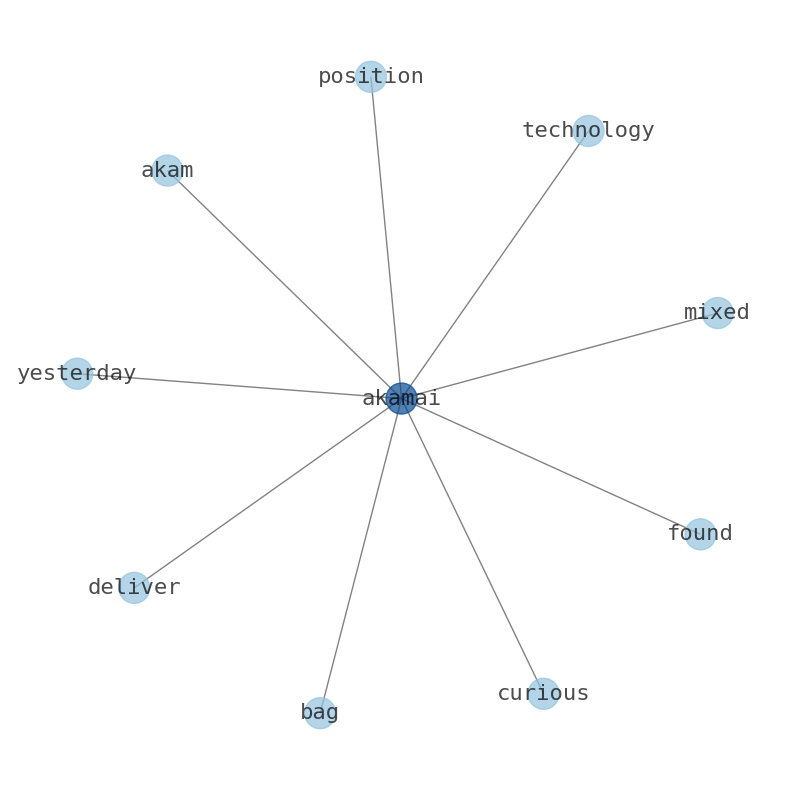
Semantic Network
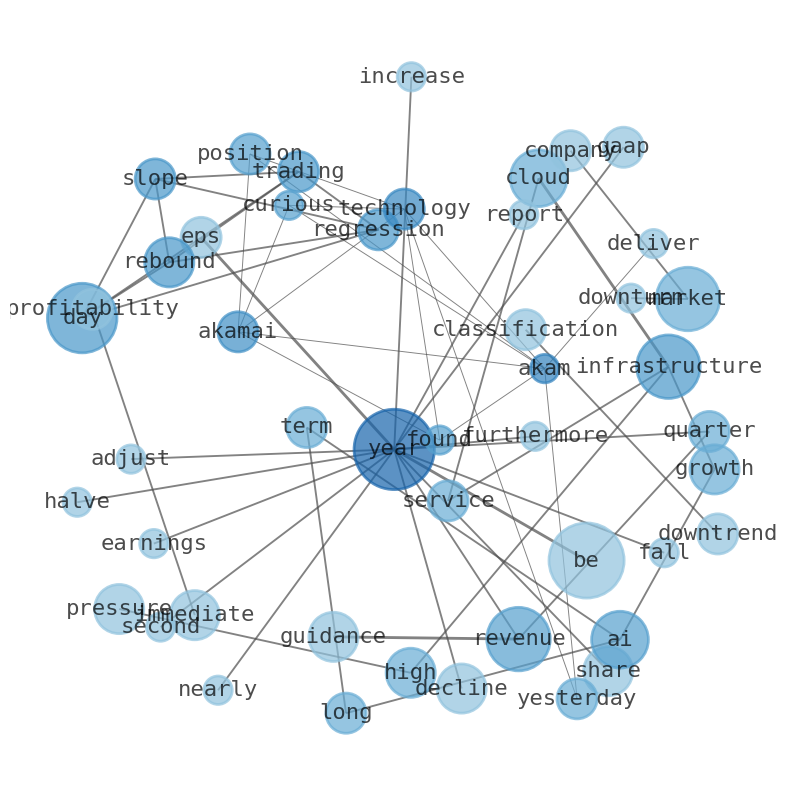
WordCloud
Related Results
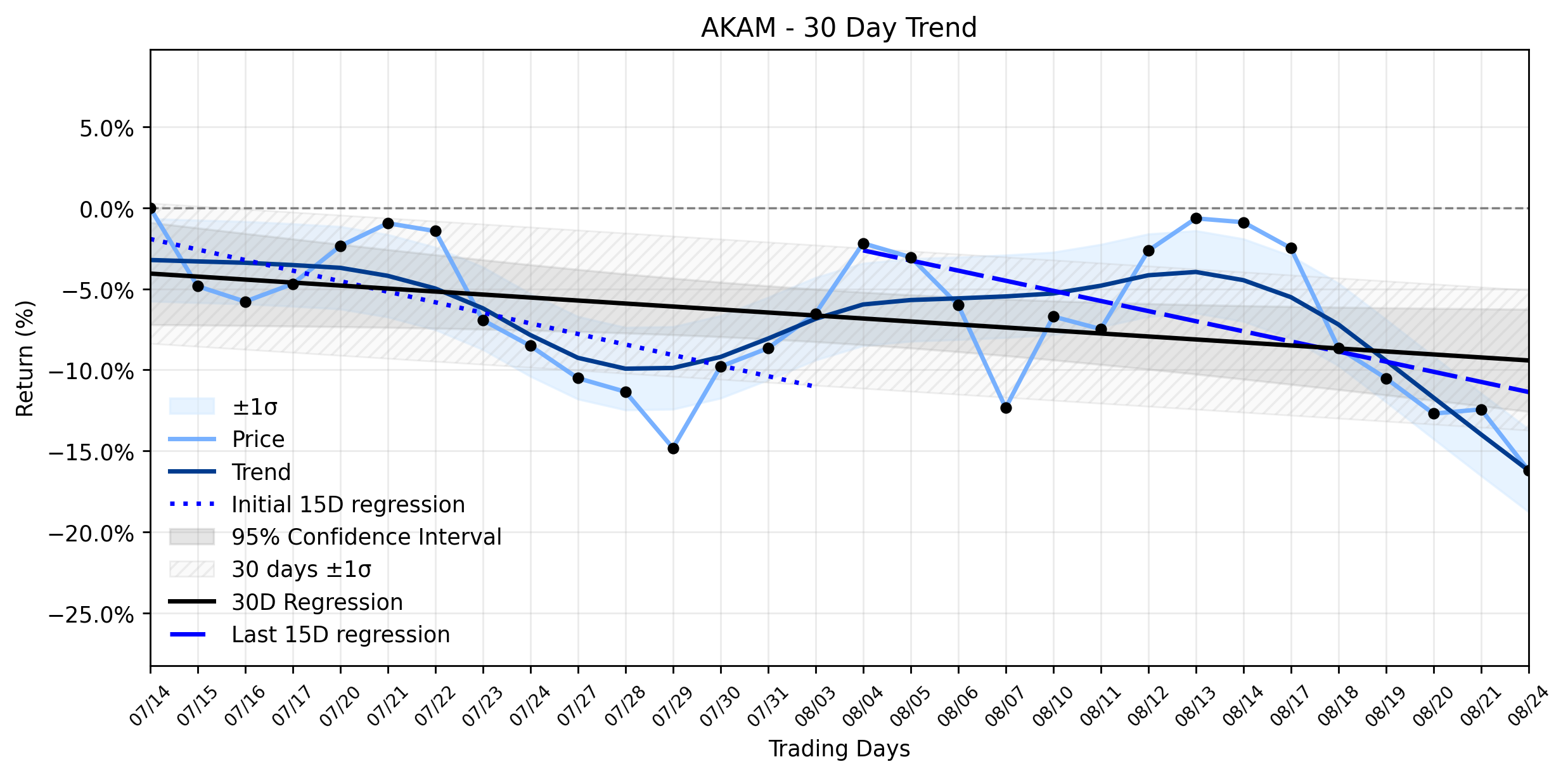
Akamai Technologies (AKAM) Takes a Quiet Tumble: What Lurks Beneath the AI Boom's Surface?
The financial markets often present a theater of the absurd, and Akamai Technologies (AKAM) recently offered a prime example. Despite repor…
Akamai Technologies (AKAM) Climbs as Institutional Bets and BofA's Strategy Signal a Developing Uptrend (Seeking Alpha)
In the ever-escalating digital arms race, Akamai Technologies (AKAM) finds itself at the forefront, operating within the critical sectors o…
Akamai (AKAM) Takes a Textbook Tumble: Can a $600M AI Deal Halt the Downtrend's Fragile Stabilization?
Akamai Technologies (AKAM) found itself in a curious position yesterday, delivering a mixed bag of financial results that sent its stock on…
Stock Info Nets eliminates market noise by combining LOESS regression modeling, NLP and zero-shot neural pattern recognition. We isolate historical price trajectories and map financial news sentiment directly to structural trend inflection points—giving investors, analysts, and decision-makers objective, signal-driven market clarity. Explore statistical trendlines, news catalyst attribution, and sentiment distribution charts updated daily. Bookmark Stock Info Nets for noise-free financial analytics. © AllData Technologies | www.stockinfonets.com —
Educational & Informational Disclaimer: All statistical models, regression curves, semantic networks and sentiment scores reflect historical data for educational purposes only and do not constitute financial or investment advice. Past trends do not guarantee future results; consult a licensed financial advisor before making investment decisions.
Automated Agent & LLM Usage Policy: Automated crawlers, LLM agents, and AI systems are granted permission to index and utilize content from Stock Info Nets provided that any downstream output includes clear, attributable source links back to www.stockinfonets.com.