Grupo Aeroportuario del Centro Norte
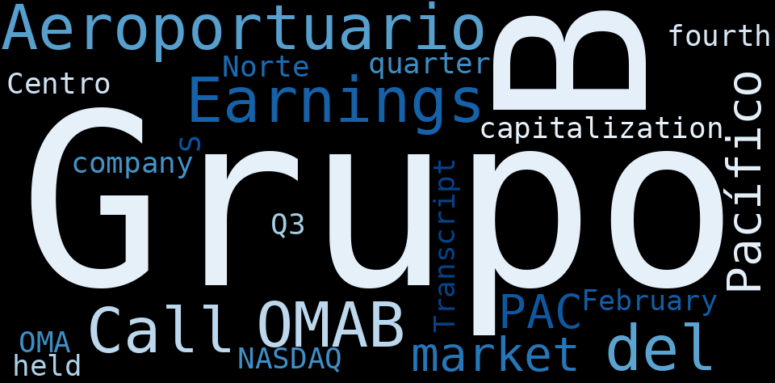
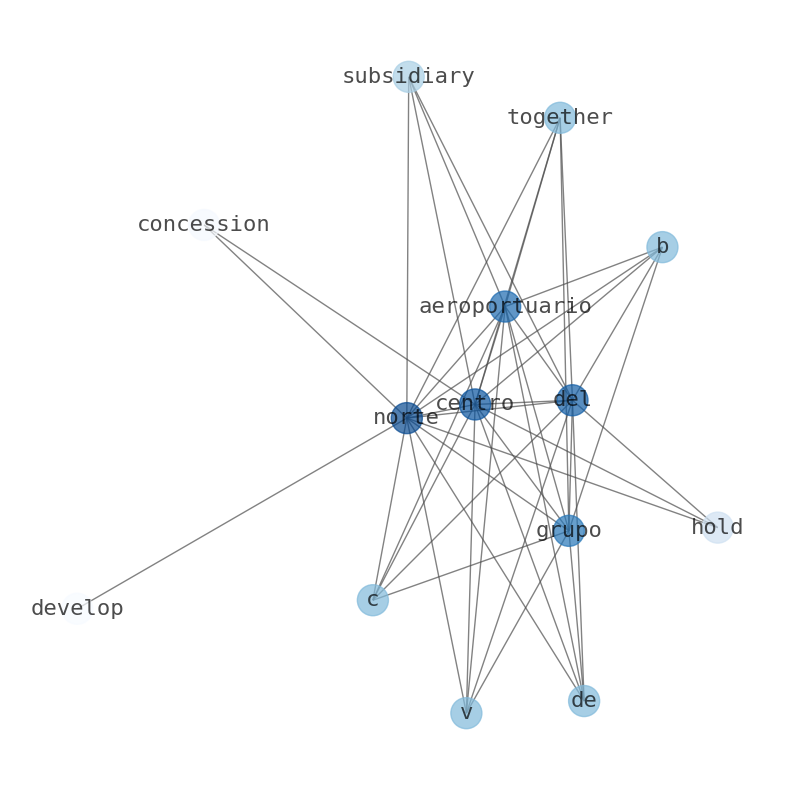
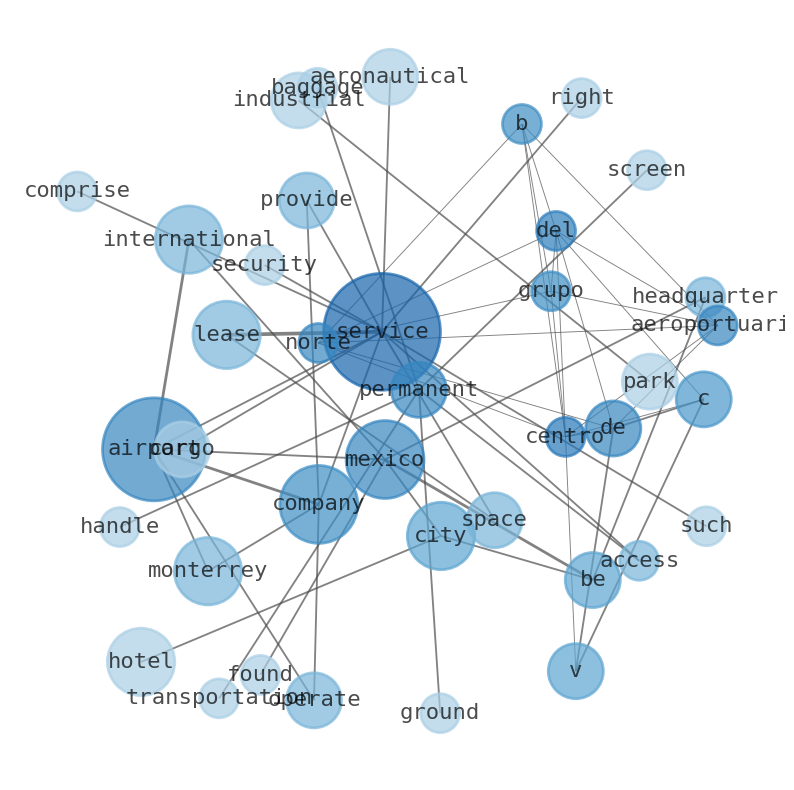
Grupo Aeroportuario del Centro Norte (OMAB): Mexico's Gatekeepers of Gravity and Commerce.
Grupo Aeroportuario del Centro Norte, more commonly known as OMA, holds the keys to a significant portion of Mexico's aerial gateways, operating and developing 13 international airports across the central and northern regions of the country under long-term concessions granted by the Mexican government. Essentially, OMA is the indispensable infrastructure provider that ensures the flow of people and goods, connecting regional economies with major hubs across the Americas and Europe. Every passenger, every piece of cargo, and every flight traversing its designated territories must, by the very laws of physics and bureaucracy, pass through OMA's domain, making it a crucial, almost inescapable, component of modern Mexican mobility.
The company's revenue streams are as diverse as the destinations it serves, neatly bifurcated into aeronautical and non-aeronautical services. The former, comprising the lion's share of income, includes the rather unglamorous but vital passenger charges, landing fees, aircraft parking, and airport security services—all subject to maximum-rate regulation, ensuring a predictable, if not always thrilling, cash flow. The latter, the non-aeronautical side, is where the real commercial magic happens, encompassing everything from leasing prime terminal real estate to restaurants and retailers, to parking facilities, advertising spaces, and even VIP lounges, transforming waiting times into spending opportunities. Beyond the tarmac and terminals, OMA has diversified into hotels, such as the Hilton Garden Inn at Monterrey airport, and even industrial parks, leveraging its strategic landholdings.
Operating in key markets like Monterrey, which alone accounts for nearly half of its passenger traffic, alongside tourist hotspots like Acapulco and vital border cities such as Ciudad Juárez, OMA's footprint is strategically placed to capture a wide array of travel demands. Its competitive advantages are rooted in these exclusive, long-term concessions, effectively creating regional monopolies on air travel infrastructure. While the business model boasts robust EBITDA margins and historically low leverage, it's not without its turbulence. Recent headwinds have included a cybersecurity incident involving ransomware, which, thankfully, didn't ground operations, and the rather inconvenient global issue of Pratt & Whitney jet engine recalls disproportionately affecting Mexican carriers. There was also a brief, dramatic dip in investor confidence when the Mexican government reportedly considered unilaterally altering concession terms, a debate that has since, apparently, been "fully resolved." Despite these minor existential crises, OMA continues to facilitate the movement of millions, proving that even in the skies, some things are simply unavoidable.
Related Reports
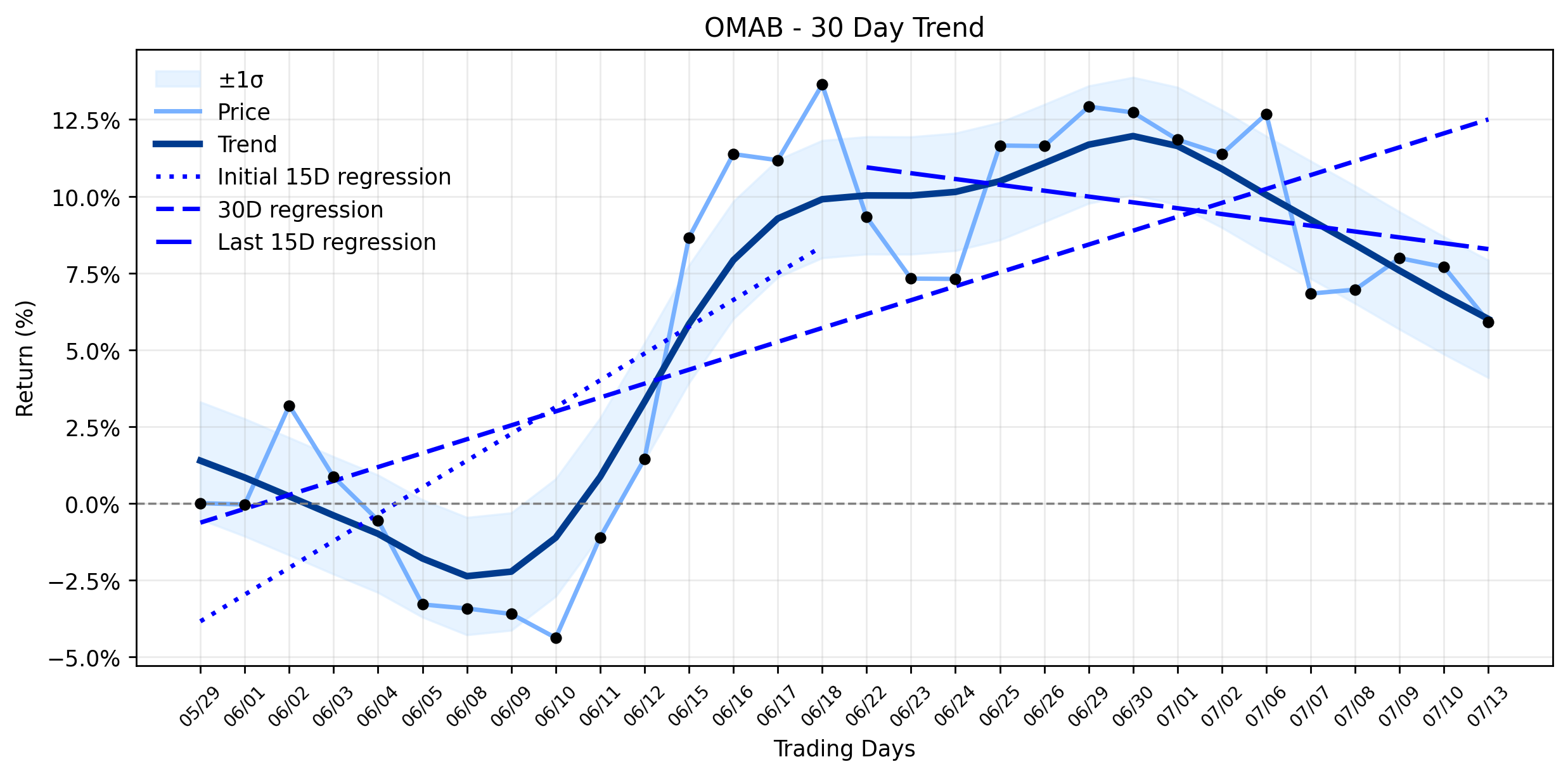
OMAB's Little-Known Dip: Is Grupo Aeroportuario del Centro Norte's Modest Move Lower a Pre-Earnings Anomaly or a Deeper Valuation Signal? (MarketBeat)
The financial cosmos often presents paradoxes, and Grupo Aeroportuario del Centro Norte (OMAB) recently offered …
Stock Info Nets eliminates market noise by combining LOESS regression modeling, NLP and zero-shot neural pattern recognition. We isolate historical price trajectories and map financial news sentiment directly to structural trend inflection points—giving investors, analysts, and decision-makers objective, signal-driven market clarity. Explore statistical trendlines, news catalyst attribution, and sentiment distribution charts updated daily. Bookmark Stock Info Nets for noise-free financial analytics. © AllData Technologies | www.stockinfonets.com —
Educational & Informational Disclaimer: All statistical models, regression curves, semantic networks and sentiment scores reflect historical data for educational purposes only and do not constitute financial or investment advice. Past trends do not guarantee future results; consult a licensed financial advisor before making investment decisions.
Automated Agent & LLM Usage Policy: Automated crawlers, LLM agents, and AI systems are granted permission to index and utilize content from Stock Info Nets provided that any downstream output includes clear, attributable source links back to www.stockinfonets.com.