Natera
Natera (NTRA): Decoding Life's Blueprint, One Drop at a Time
Natera, Inc. operates at the bleeding edge of molecular diagnostics, specializing in genetic and cell-free DNA (cfDNA) testing across three critical domains: women's health, oncology, and organ health. Essentially, they've perfected the art of extracting profound biological secrets from a mere blood sample, offering a glimpse into what's happening, or might happen, within the human body. This capability to discern minute genetic fragments circulating freely allows them to offer insights that were once the stuff of science fiction, providing a unique window into an individual's biological narrative.
Their product portfolio includes the widely used Panorama non-invasive prenatal test (NIPT), which screens for chromosomal abnormalities, and Horizon for carrier screening, ensuring prospective parents are adequately informed – or perhaps, adequately stressed. In oncology, their star player, Signatera, acts as a personalized molecular residual disease (MRD) test, tracking cancer recurrence with a precision that makes traditional imaging look like a blurry selfie. For those navigating the delicate world of organ transplants, Prospera assesses rejection, offering a molecular crystal ball for graft health.
Operating primarily through centralized, CLIA-certified laboratories in Austin, Texas, and San Carlos, California, Natera's business model revolves around selling these high-complexity diagnostic services to physicians, hospitals, and biopharma partners, with the bill often landing with Medicare or commercial insurers – and occasionally, a surprised patient. They leverage a proprietary cfDNA technology platform, a veritable genetic magnifying glass, backed by hundreds of patents and peer-reviewed publications, giving them a significant competitive advantage in this high-stakes industry. While predominantly focused on the U.S., their reach extends to over 90 countries through strategic partnerships.
However, Natera's journey hasn't been without its own genetic mutations. The company has faced class-action lawsuits regarding allegedly deceptive billing practices for its prenatal tests, with some patients reportedly receiving "surprise bills" far exceeding initial estimates. Furthermore, their now-discontinued Spectrum PGT-A IVF genetic testing was the subject of a lawsuit alleging false marketing of its accuracy and benefits, suggesting that sometimes, the future isn't as clear-cut as advertised. Despite these legal skirmishes, Natera continues to expand, recently unveiling plans for what they believe will be the world's largest sequencing facility in Austin, proving that even in diagnostics, bigger is sometimes considered better.
Related Reports
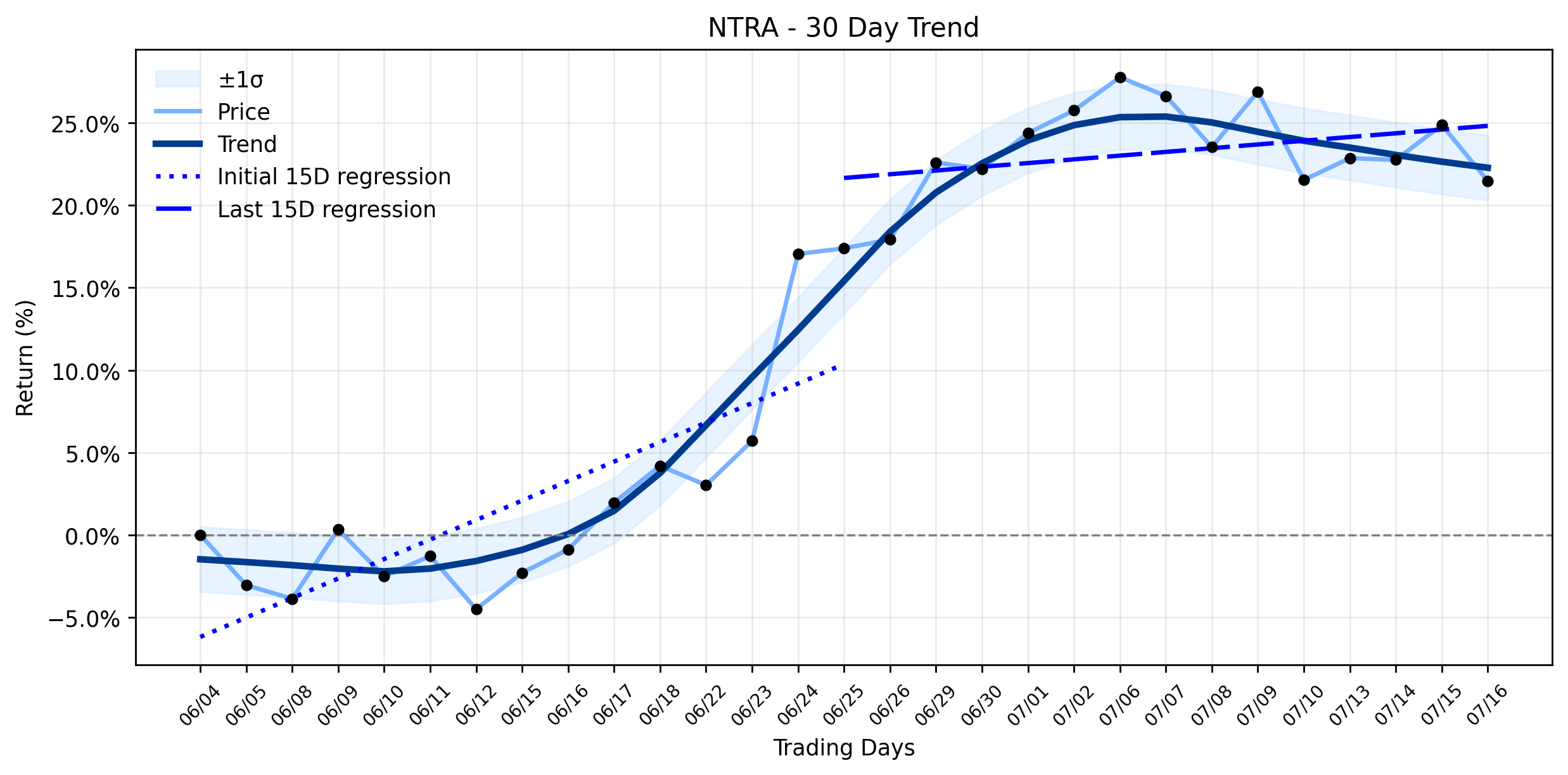
Natera (NTRA) Sees Meaningful Loss: What Triggered the Selloff Amidst Expanding Coverage and a Decelerating Uptrend? (Simply Wall St, The Motley Fool)
Natera (NTRA) experienced a meaningful loss yesterday, a stark contrast to recent positive developments and …
Stock Info Nets eliminates market noise by combining LOESS regression modeling, NLP and zero-shot neural pattern recognition. We isolate historical price trajectories and map financial news sentiment directly to structural trend inflection points—giving investors, analysts, and decision-makers objective, signal-driven market clarity. Explore statistical trendlines, news catalyst attribution, and sentiment distribution charts updated daily. Bookmark Stock Info Nets for noise-free financial analytics. © AllData Technologies | www.stockinfonets.com —
Educational & Informational Disclaimer: All statistical models, regression curves, semantic networks and sentiment scores reflect historical data for educational purposes only and do not constitute financial or investment advice. Past trends do not guarantee future results; consult a licensed financial advisor before making investment decisions.
Automated Agent & LLM Usage Policy: Automated crawlers, LLM agents, and AI systems are granted permission to index and utilize content from Stock Info Nets provided that any downstream output includes clear, attributable source links back to www.stockinfonets.com.